FOLLOWING THE BIOGRAPHY OF
GENERAL CLEMEMNTS MCMULLEN
IS A 374 PHOTO ESSAY AND TRIBUTE
TO HIS LIFE
Biography
Major General Clements
McMullen, USAF
Retired: 28 February 1954
Died:
9 January 1959
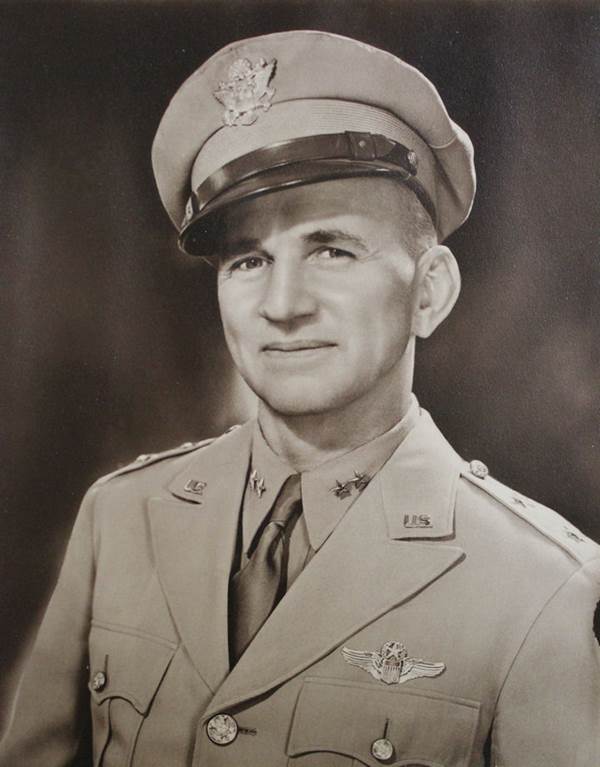
Major General Clements
McMullen
wearing
his US Army Air Corps uniform
This
biography is based on the primary source information from the estate of General
Clements McMullen, and other public sources.
General
Clements M. McMullen had a long and colorful career with military aviation. He
is held in high esteem and is considered to be one of our nation’s early air force aviation
pioneers. The general started his aviation career in the early ”Barnstorming”
days, flew as a military aviator during WWI in the United States, was the
winner of an air race and broke aviation speed records between the wars and
served during World War II and the Korean War as an able commanding general
officer. He continued to serve his country to 1954 as the Commanding General of
the San Antonio Air Materiel Area, Kelly Air Force Base, San Antonio, Texas and
retired on February twenty-eighth of the same year.
Clements
Manly McMullen was born to William A. and Rosa B. (Ramage)
McMullen on 5 February 1892. He was a native Floridian of Scotch ancestry
originally from Largo. He attended Washington and Lee University in Lexington,
Virginia from 1907 to 1911 and became a civil engineer. Prior to his entrance
into the military, he was an engineer for the state of Florida from 1911 to
1917.
With
the outbreak of World War I and having a love for flying, he first enlisted as
a private and then entered the School of Military Aeronautics at the Georgia
School of Technology in Atlanta on September 18, 1917. Upon completion of his
technical training as an air cadet, the young McMullen was sent to Kelly Field
outside of San Antonio, Texas for continued flight training. He was
commissioned a second lieutenant and received his wings on 6 March 1918 and was
placed in the Aviation Section of the Signal Reserve Corps and continued his
training in aerial combat.
His
first duty assignment was for training as a flight instructor at Kelly Field.
Lieutenant McMullen would be sent to Kelly Field five times during his entire
career. Kelly became his “home away from home” and he would eventually retire
from the US Air Force at Kelly Air Force Base thirty plus years later.
Completing
flight instructor training, Lieutenant McMullen was briefly stationed at
Gerstner Field, Louisiana where he studied pursuit tactics and taught combat
flying. However, this assignment was very short-lived and he found himself
being transferred once again. In July 1918 he became officer-in-charge of
flying at the Gunnery School at Rockwell Field, San Diego, California.
Lieutenant
McMullen trained and flew with some of the most well known pilots in American
military aviation history. Leaving Rockwell Field, he joined the 90th Aero
Squadron at Eagle Pass, Texas for border patrol duty. In the summer of 1919,
the famed Billy Mitchell organized the border patrols along the Mexican Border
and Lieutenant McMullen continued to play his part. In January 1920, he became
the flight commander with First Surveillance Group, located at Sanderson,
Texas.
Detaching
from the Reserve Corps, in 1920, Lieutenant McMullen was commissioned in the
Regular Army with the same rank and shortly after was promoted to First
Lieutenant on October 20, 1920. As a new First Lieutenant, he was, for a short
time, stationed at the Air Intermediate Depot, Montgomery, Alabama as the
Assistant Engineer Officer. In December 1921, he received yet another transfer
to the Air Service Primary Flying School located at Carlstrom Field, Arcadia,
Florida to continue his work as a pilot officer engineer in charge of the
machine shop and motor tests.
Carlstrom
Field was established in 1917. The Air Service Primary Flying School opened as
the center for training pilots of the Air Service branch of the US Army for the
war effort during World War I. It was a sizable air field with 90 building on
approximately 696 acres. However, because of its geographic location, it was
felt the Air Service Primary Flying School be relocated to an area with more
flying days in relation to weather. A study completed by the Air Service
recommended that the Air Service Primary Flying School be moved to Brooks
Field, San Antonio, Texas. On June 20, 1922, Lieutenant McMullen helped start
the move of the Air Service Primary Flying School to Texas. He was station at
Brooks Field, just across San Antonio from Kelly Field.
While
at Brooks Field, Lieutenant McMullen became the commanding officer of the 5th
Air Park, and later, the 62nd Service Squadron. After two years at
Brooks Field, he moved across San Antonio, and became the pilot engineer
officer of the San Antonio Intermediate Depot at Kelly Field. He was, once
again, stationed at Kelly in 1924.
While
stationed at Brooks Field, Lieutenant McMullen was asked to participate in a
rescue effort. A US Army pilot, First Lieutenant Charles F. Webber and US
Cavalry Colonel Francis C. Marshall were presumed lost on a flight leaving from
Rockwell Field, San Diego, California and heading for Fort Huachuca, Tucson,
Arizona on December 7, 1922. McMullen, along with other military pilots, were
involved with the rescue effort. Unfortunately, both men perished as their DeHaviland DH4B crashed east of Japacha Peak in the Cuyamaco
Rancho State Park, Califonia.
Another
tragic event took place while Lieutenant McMullen was stationed at Brooks Field
in 1923. The US Army Airship C-2 exploded and burned. The giant dirigible C-2,
the US Army’s biggest and best blimp was totally destroyed as it was being
taken from the hanger. The C-2 just had completed a successful flight to
California and back. Lieutenant McMullen witnessed and took a photo of the
disaster.
Lieutenant
McMullen continued his work at Kelly Field until he was ordered to the
Philippines in 1926. He was transferred to Camp Nichols in the Philippine
Islands for duty with the Second Observation Squadron and later transferred to
the Third Pursuit Squadron at Clark Field, Philippines Islands in October. His
tour of duty lasted approximately two years in the Philippines Islands and he
was sent back to the United States in July 1928 and was stationed at Wright
Field, Ohio.
Lieutenant
McMullen’s younger flying days were not without mishap. In March of 1919 he
notes he had “My first wreck, a Thomas-Morse Scout.” He was flying a
Thomas-Morse Scout and landing was anything but smooth. As the airplane landed,
he lost control and flipped the plane onto it back. In comparison to what could
have happened, there was minimal damage to him and the
airplane. Lieutenant McMullen was able to walk away from the wreck. As they say
in aviation, “any landing you make that you can walk away from is a good one.”
Though, in this saying, they never take note of the condition of the airplane.
There was another incident in which he had a forced landing and broke his arm.
He does not say much about this incident, however, recuperation and
convalescence was needed after the incident which took place in Colorado.
Lieutenant
McMullen was very much like any young modern aviator today. Flying was his
first love but he was also interest in cars, polo, golf, swimming in the ocean,
and hunting. He enjoyed showing off his new cars starting with his 1920 Hupmobile. Even as a major general in the 1950s, he
continued to have is photo taken standing next to his new cars. He played polo
and was involved government matches held on military bases in or close to areas
in which he was stationed. He played golf on regular bases and, as the
commanding general of the San Antonio Air Materiel Area in the 1950s, had a
driving range established at Kelly Air Force Base.
Living
in San Antonio, Texas gave him the opportunity to go on hunting trips into
Mexico. On one such trip he was dressed riding a horse with a ten gallon cowboy
hat looking very much like Gene Autry. On another hunting trip in 1925, he
recollects that all things did not turn out well. He was hunting with two
friends in Mexico, John L. Fogarty and Robertson, two other young aviators from
Kelly and Brooks Field. Fifty-five miles
in the middle of nowhere, and from the nearest garage, their car broke down.
With their collective knowledge about cars, they were able to solve the
problem, fix the car, finish their hunting and make it home.
The
short time between World War I and World War II was a period of aviation
advancement and experimentation. Air races became popular and aviators became
national and worldwide heroes. The military urged their aviators to participate
in competitions in order to gain knowledge and experience of the changes taking
place in aviation. One only has to examine a list of participants from one of
the air races to see that many of the aviators were representing the US Army or
US Navy.
Because
of his love of flying, the young Lieutenant McMullen entered a number of
aviation competitions and races. In 1923 he was in St. Louis, Missouri and won
the Liberty Engine Trophy Race in the National Air Races. The National Air
Races in 1923 were sponsored by the St. Louis Post Dispatch and held at St.
Louis Field, later renamed Lambert Field. McMullen represented the US Army and
won the race using a Fokker CO4 traveling at the amazing speed of 139 miles per
hour. His win made headlines.
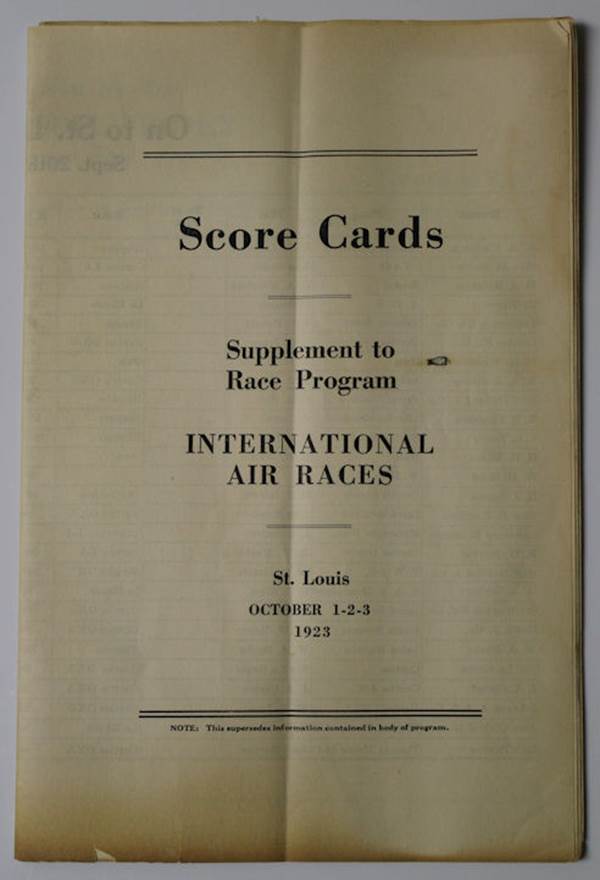
Score Cards, Supplement to
the Race Program,
International Air Races, St.
Louis, Missouri
October 1-2-3, 1923
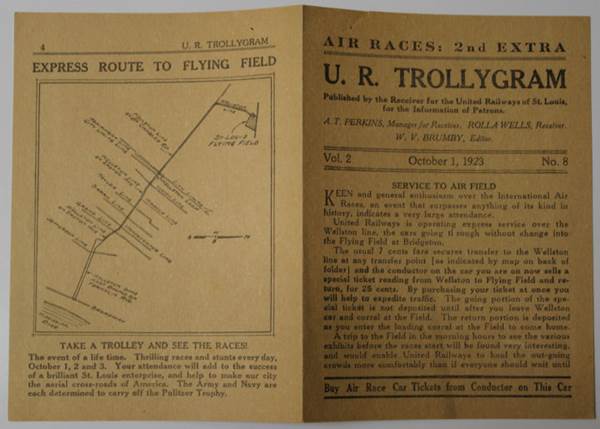
U.R. Trollygram
and route information to the
International Air Races in
St. Louis, Missouri, 1923.
Again
making headlines, in February 1930, Lieutenant McMullen along with Lieutenant W.W.
White would break a number of flying records. Using a Lockheed-Vega monoplane
powered with a single Pratt & Whitney Wasp engine, they broke the overall
flying record from New York to Buenos Aires with a registered flying time of 52
hours and 15 minutes.
In
charting their flight from New York to Buenos Aires, they used a flying route
that broke another aviation record and accomplished an aviation first time
event. As they flew to break the record to Buenos Aires, they also broke the
record for a flying time from New York to Miami, Florida. It was also the first
time a non-stop flight was made between the United States and the Panama Canal.
When the two young aviators reached their South American destination they were
given a hero’s welcome and their exploits were radioed around the world. When
Lieutenant McMullen was asked for his own views of the flight he stated:
“We have had a good run and
it is naturally
a source of satisfaction that
we have beaten
the time for the New York to
Buenos Aires
route. What is to me equally
thrilling is the
fact the we broke the New York
to Miami
record by such a large margin and
that we
were the first to bring a land
plane from
Miami to Cristobal.”
It is estimated that the total distance flown by McMullen and White was 6,870 miles with an average speed of 130 miles per hour. A month later, Lieutenant McMullen returned back to his duty station at Wright Field, Dayton, Ohio. On his return, the city’s leading officials gave him a welcome as a national aviation hero. When asked to comment on his exploits he stated “It’s all in a day’s work for an aviator.”
In
1926, Lieutenant McMullen married Miss Adelaide (Nancy) Palmer Lewis. Miss
Lewis had been married once prior on 15 August 1917 to Major Arthur Dow Newman,
US Army. Major Newman was accidentally killed in a government polo match on 1
July 1922. She had two children from her previous marriage, Edward Lewis Newman
born 19 April 1919 and Frank McCoy Newman born 12 September 1920. Lieutenant
McMullen adopted the two children and their names were legally changed to
McMullen. Miss Lewis was the daughter of Major General Edward Mann Lewis, West
Point graduate of 1886 and brother to Major General Henry Balding Lewis, West
Point graduate of 1913. Eventually, the McMullen family will have two more
children.
In
July 1928, Lieutenant McMullen entered the Air Corps Engineering School at
Wright Field, Dayton, Ohio. He graduated in June 1929 and remained at the
school as chief of the Repair Branch within the Experimental Engineering
Section. While on assignment at Wright Field, Ohio, Lieutenant McMullen was
blessed with the birth of his first biological child, Thomas Henry McMullen on 4
July 1929.
Lieutenant
McMullen received his first promotion in eleven years to captain on 1 September
1931. Shortly after his promotion to captain, he became chief of the Power
Plant Branch at Wright Field, in April 1932. As Chief of the Power Plant
Branch, Captain McMullen was responsible for the introduction of
turbo-super-chargers and fuel injection into actual operations in the US Air
Corps.
Wanting
to further his military aviation education and experience, Captain McMullen
entered the Air Corps Tactical School at Maxwell Field, Alabama in September
1933. In June 1934 he graduated and remained as Post Engineering Officer.
In March 1935, Captain McMullen was transferred to the General Headquarters Air Force, Langley Field, Virginia. He first assumed the duties of assistant to the Operations and Training Officer, G-3, In this position he was responsible for operations, including staff duties, exercise planning, training, operational requirements, combat development and tactical doctrine for the Air Force branch of the US Army. In July 1936 he was promoted to the rank of major and soon after became the head of G-3 for General Headquarters Air Force.
In
August 1937, Major McMullen was chosen to enter the Command and General Staff
School located at Fort Leavenworth, Kansas. He graduated in June 1938, was
transferred, and became Chief Engineering Officer at the San Antonio Air Depot
located at Duncan Field, San Antonio, Texas. With World War II looming as a
possibility in the not too distant future, the US Army Air Corps started a
rapid expansion program and promotions came much faster especially to
experienced pilots.
In
December 1940, Major McMullen was promoted to lieutenant colonel and, in March
1941, assumed command of the San Antonio Air Depot, Duncan Field, Texas. While
in this position he would submit a proposal for a 150-foot extension to the
Engineering Building at a cost of $434,000.00. The Engineering Department was
in dire need of space and suffered from a severe case of congestion. Another
proposal was submitted for the “Blitzkrieg Hanger.” This hanger would have
measured 120x200 feet with two-story lean-tos on either side. It would have
been used for final paint touch-up work, armament installation and minor
repairs. Because of congestion and overcrowded conditions much of this work was
done outside in adverse weather conditions. Neither of the proposed development
projects came to fruition while he was in command. However, he had laid the
groundwork for an expansion that was crucial once the United States entered
World War II.
Lieutenant
Colonel McMullen was brilliant at analyzing a logistical problem and coming up
with the appropriate solution. He was foresighted and could recognize pending
problems. In 1941 he pleaded for base reorganization between the four Army Air
Bases located in the San Antonio, Texas area. Kelly, Duncan, Brooks and Stinson
Army Air Bases were all located within a few miles of one another and very
close to the population center of San Antonio. Kelly and Duncan were adjoining
air bases. Each base generated a multitude of flights on a daily bases setting
the stage for a potentially dangerous situation. Recognizing the potential
danger, he wrote to the Chief, Maintenance Command and suggested various
solutions to remedy the problem. A number of his recommendations were taken
into consideration and eventually implemented.
On
December 7, 1941 the United States entered World War II with the bombing at
Pearl Harbor, on the Island of Oahu, Hawaii by the Empire of Japan. Lieutenant
Colonel McMullen’s career slipped into high
gear as a capable command officer. The exigencies of war created a lot of fast
promotions for individuals who had proven themselves capable of increased
responsibilities.
Now
on a war footing, and as the commanding officer of Duncan Field, he saw the
need for immediate expansion and development projects that would be essential
to the mission of the base and the overall U.S. war effort. He recommended that
there be additional railroad spurs to service new and enlarged warehousing
facilities, that a paint, oil and dope storage building be built, that a
chemical storage building be built and that six (6) temporary engine test
stands be built in lieu of the permanent four-cell construction types which
existed. Once again, many of his recommendations were completed but only after
he was transferred to a new duty station.
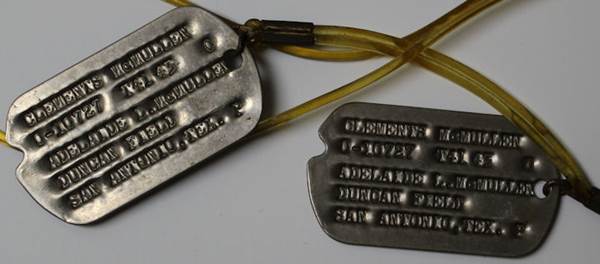
General McMullen’s “dog
tags” that he used as
A lieutenant colonel at
Duncan Field, San Antonio, Texas.
In
January 1942, Lieutenant Colonel McMullen was transferred from Duncan Field,
Texas and took command of the 3rd Air Service Area, with
headquarters in Tampa, Florida. In February 1942 he was promoted to full
colonel and in June 1942 was promoted to Brigadier General.
After
his promotion to brigadier general, he was transferred in August 1942 to the
Air Service Command Headquarters located in Washington, D.C. and was appointed
Chief of the Maintenance Division. The Gravely Point Depot located near the
Washington National Airport was experiencing numerous logistic problems that
impacted its overall effectiveness and, in turn, the general war effort.
Between the efforts of General McMullen and a special investigator appointed by
General Hap Arnold, the problems were pinpointed and a resolution was
determined.
Half
of the Army Air Corps aircraft that depended on parts from the Gravely Point
Depot were grounded because the parts could not be obtained. A logistical
problem existed in regard to the protocol required to order parts. The
logistics problem created an overall breakdown within the depot. Once the
problem was identified General Hap Arnold reacted swiftly to solve the problem.
General Arnold ordered the materiel office at Gravely Point to be closed and
that “logistics control” be centered in the Air Service Command (ASC)
headquarters in Dayton, Ohio. Shortly thereafter, in December 1942, General
McMullen was transferred to Patterson Field in Dayton, Ohio and assumed the
same position that he held while serving in Washington, D.C.
At
this point, the US Army Air Corps came to the conclusion that they needed an
expert supply logistics, engineer and maintenance person in the field to inspect
various locations within the European Theater of Operation. General McMullen
was considered to be the best person in the Air Corps to complete this task.
While officially stationed at Patterson Field, General McMullen was ordered to
the European Theater of Operations on an inspection tour. The tour took him to
locations in the African Middle and Far Eastern war theaters. Using a Douglas
B-23 Dragon named the Burma Roadster, tail number 9038,
he visited air bases, air depots and aerodromes within a 40,000 mile route from
South America to Africa, India and China. He then flew to General Eisenhower’s
Headquarters location to report the findings of his trip. Upon his return to
Patterson Field, Ohio, General McMullen also reported his finding to Major General
Walter H. Frank, commanding general of the Air Service Command. Proving himself
to be capable of higher responsibilities, General McMullen, while on his
inspection tour, was given his second star and promoted to major general in
April 1943.
General
McMullen recollected that there were some close calls during his inspection
tour. At one point, while in China, the depot being inspected was only 40 miles
from a Japanese air base. Getting in and out without detection was a task. At
another point, over Burma, they spotted a marauding Japanese plane and had to
duck into cloud cover. The guns on their plane had to be sacrificed for extra
gasoline tankage. If spotted, they would have been an easy target. A final
point of intrigue was in Egypt. As they were waiting to depart, a Wellington
bomber blew a tire on take-off and crashed within 50 feet of their plane.
Upon
his return to Patterson Field, Major General McMullen found out he was going to
be involved in other such tours. One such tour was an inspection of all supply
depots and air base stations within Alaska and the Aleutian Islands. The
inspection was accomplished between the 15th of September and the 1st
of October, 1943. In all, he flew 13,830 miles and visited 20 stations. His
recommendation after the inspection suggested the redistribution of supplies
and materiel in a more efficient manner coordinating the efforts through the
Air Service Command and the Air Transport Command Alaskan Northwest Route.
General
McMullen made an interesting observation and recommendation in regard to Nome,
Alaska in his report. He states that Nome, Alaska “lends itself to further
development due to its position to Russia and Siberia.” He recommended that
Nome be designated a permanent station and developed so at least one group of
fighters and one group of bombers be stationed there permanently during the
post war period. Was this a prophetic recommendation? It seems his
recommendation is based on the idea we were going to have problems with the
Soviet Union following World War II.
General
McMullen’s inspection tour of the European Theater of Operations and Alaska was
considered vital to the overall US war effort. He was awarded the Distinguished
Service Medal for his efforts. Both tours together covered more than 50,000
flying miles. He would fondly refer to the two travel tours as his 1943
Odyssey. There is some documentation that alludes to the name as the code name
for his 1943 operations.
On
17 September 1944, General Hap Arnold personally offered Major General
McMullen’s services to General George C. Kenney as the man to take over supply
and maintenance for the Far East Air Service. General Kenny accepted the offer
from General Arnold as he knew General McMullen “was tops in the supply and
maintenance field” and, in addition, was a personal friend of twenty-five
years. According to General Kenney, he had tried to get General McMullen in the
Pacific theater of operations for the past two years but without success as his
expertise was needed in other places. General Kenney requested that General
McMullen’s transfer be given top priority and that he be flown out right away.
In
September of 1944 General McMullen learned he was the commanding general of the
Far East Air Service. He reported to General Kenney on 13 October 1944 for
duty. General McMullen was to take care of the needs of the Fifth and
Thirteenth Air Forces in the Pacific Theater of Operations. He proved to be the
perfect person for the job and executed his responsibilities with precision. He
moved through the Pacific Theater of Operation with his headquarters first
located at Brisbane, Australia, then at Hollandia,
New Guinea and eventually at Fort McKinley in the Philippines.
Once
General McMullen arrived in the Pacific Theater of Operations his assignment
and duties were numerous. He was sent there for his expertise in air materiel,
maintenance and the administration of Allied air depots. One of his many
notable accomplishments involved Eagle Farm Airport in Australia. Eagle Farm
was a small airport located southwest of Brisbane but it potential as an Allied
Air Depot was essential to the Pacific War effort. In 1942, it was occupied and
being used by the US Army Air Corps as an active airdrome to reassemble and
test aircraft shipped in from the United States. The airport also included an
Air Technical Intelligence Unit (ATIU) to test and analyze captured Japanese
aircraft. Coordination and efficiency of supplies and material were given top
priority to maintain the war effort in the Pacific. Within a short period of
time, General McMullen greatly increased the overall effectiveness of Eagle
Farm and other Allied Air Depots in the area.
Hollandia, the largest settlement in
the Dutch western half of New Guinea was another point of concern. When the
Japanese occupied this area they constructed three airfields on the flat plains
between the Cyclops Mountains and Lake Sentani and
began construction of a fourth on the Coast of Humbolt
Bay. Once retaken by Allied forces, the airfields in this area became essential
to the Pacific war effort. General McMullen moved his headquarters into Hollandia in order to establish and coordinate effective
Allied Air Depots using the captured Japanese airfields. In addition, he
established supportive Allied Air Depots throughout the region.
While
stationed in Hollandia, General McMullen lost his
personal pilot and good friend, Colonel Peter J. Prossen.
Colonel Prossen had been with the general from the
beginning. He had been his personal pilot during his inspection tour of duty in
the European Theater, the Alaskan operation and traveled with the general as he
took command of the Far East Air Service. On May 13, 1945, Colonel Prossen left Sentani Strip, Hollandia at 2:20 in the afternoon to fly over Hidden
Valley. Losing altitude, the C-47 crashed into a canyon ridge. At the time of
the crash, Major Nicholson, the co-pilot, was piloting the plane. There were
three survivors to the crash.
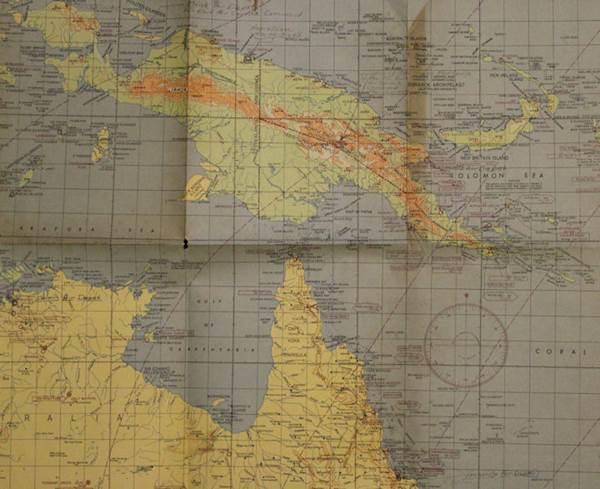
One of General McMullen’s
personal maps he used in the
Pacific Theater of
Operations to assist him in completing
his job. His personal notations
are marked at
numerous locations on the map.
The
Allies continued their push towards the Japanese mainland. Eventually, the
Philippines were recaptured by American Forces. On the 3rd of
September 1945, General McMullen was present when General Yamashita, the Tiger
of Malaya, surrendered to American forces at Baguio in Northern Luzon, the
Philippines and was presented with an original gold engraved copy of the
Instrument of Surrender. Though the Pacific war was coming to an end it did not
mean that his job was coming to an end. The end of the war produced an air
depot materiel logistics nightmare. Thousand of aircraft had to be moth-balled
and tons of support material and maintenance supplies had to be stored and
shipped back to the United States and other destinations as dictated by the US
Army Air Corps. Downsizing military stockpiles became a logistics problem
following the war. For his efforts within the Pacific Theater of Operation,
General McMullen was awarded his second Distinguished Service Medal for a major
contribution to the success of the Far East Air Forces.
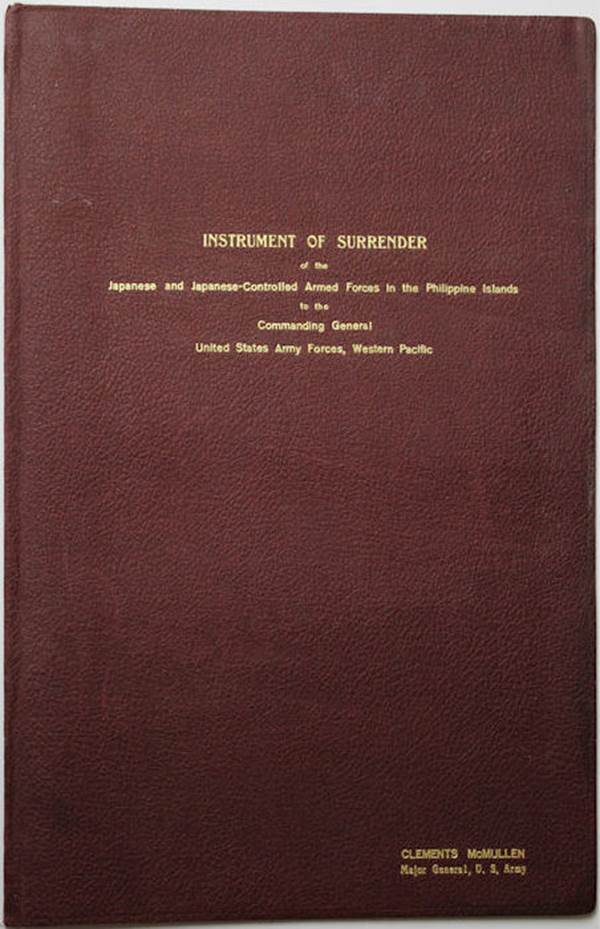
Original copy of the
Instrument of Surrender
of all Japanese Forces in the
Philippines to the United
States at the end of World
War II. Leather bound
with gold lettering designating
this copy to Major
General Clements McMullen,
U.S. Army.
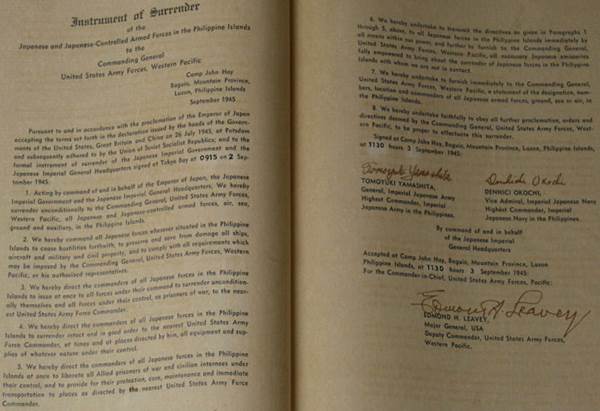
The signed two page document
found within the
gold engraved red leatherette
cover.
Following
the end of World War II, General MacArthur announced the amalgamation of the
Far East Air Forces and the U.S. Strategic Air Forces. The amalgamation created
the Pacific Air Command United States Army, PACUSA. General Kenney was given
command of PACUSA. In turn, General Kenney, in December 1945, appointed Major
General McMullen (“the best supply man in the business”) as Chief of Staff,
PACUSA with headquarters in Tokyo, Japan. General McMullen remained with PACUSA
till October 1946 at which point he was ordered to return to Air Force
Headquarters in Washington, DC.
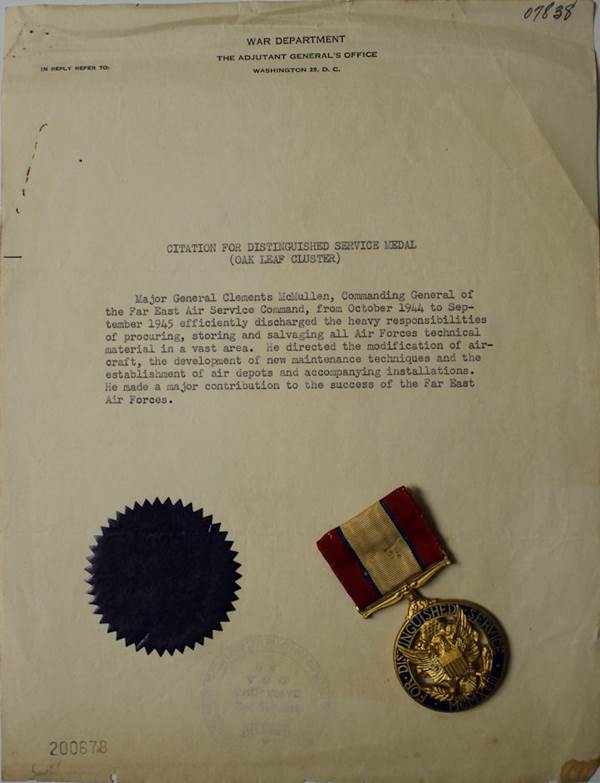
General Clements McMullen’s
citation which accompanied the Oak
Leaf
Cluster to the Distinguished
Service Medal.
At
this point, I would like to comment about the children of General McMullen and
their World War II experience. Edward Lewis McMullen, the general’s first son
by adoption, entered the military prior to World War II and received his
commission through OCS at Fort Sill. He was an American hero in the true sense
of the word serving the entire war as a forward observer in the 113th
Field Artillery Battalion, 30th Division. For his actions during
World War II, he was awarded the Silver Star, Bronze Star with oak leaf cluster
and the Purple Heart with oak leaf cluster. After the war he graduated from
Texas A&I University with a degree in petroleum engineering.
Frank
McCoy McMullen, the general’s second son by adoption, graduated from West Point
in 1943 and served during World War II in the Army Air Corps. Frank flew
missions out of England as first pilot in B-24s and B-17s. He flew with the 490th
Bomb Group, 8th Air Force and was awarded the Air Medal. He
continued his military career in the US Air Force following the war.
Both
Thomas Henry McMullen and
William C. McMullen, the general’s two biological sons, were too young to serve
in the military during World War II. Thomas started his college education at
St. Mary’s University, San Antonio, Texas, transferred to West Point and
graduated in 1951. He had a distinguished career in the US Air Force and
retired as a lieutenant general. William C. McMullen earned his wings in 1953
at Foster Air Force Base, Victoria, Texas and served with distinction.
In
the fast-moving, event filled postwar period, many changes were taking place
rapidly and in short succession in the Air Force. In November 1946, General
McMullen, for a short period of time, took command of the Eighth Air Force when
it was reactivated at Fort Worth Army Airfield, Texas. Two months later, in
January 1947, he relinquished his command of the Eighth Air Force to Brigadier
General Roger M. Ramey. General Kenney had other plans for his good friend
General McMullen.
Shortly
after General Kenney was named commander of PACUSA, the War Department felt he
would better serve his country and the Air force stateside. He was in demand as
one of the senior high ranking generals in the Air Force with invaluable
experience. In March 1946, General Kenney was named Commanding General of the
newly formed Strategic Air Command. In January 1947, General Kenney designated
General McMullen as the Deputy Commander of the Strategic Air Command. General
McMullen transferred to SAC Headquarters then located at Andrews AFB, Maryland.
In March 1947 he also assumed the duties of Chief of Staff of SAC while also
retaining the position of Deputy Commander. In line with his duties as Deputy
Commander and Chief of Staff of SAC, in April 1947 the general met with Captain
Charles E. (Chuck) Yeager at Wright Field, Ohio to discuss the prototype YP-84
(F-84), one of the first jets mass produced by the United States.
Major
General McMullen was in the position of Deputy Commander/Chief of Staff of the
Strategic Air Command from January 1947 to October 1948. While in this position
the Air Corps was separated from the US Army in September 1947 and became the
Department of the United States Air Force. General McMullen was officially
transferred from the Army Air Corps to the United States Air Force and retained
the rank of Major General in the post war/Cold War period of the United States.
If
General McMullen had a challenging period in his career it has to be the time
he spent as the first Deputy Commander and Chief of Staff of the Strategic Air
Command from January 1947 to October 1948. Major General McMullen was gifted,
resourceful and tough but all these talents would be no match for the
responsibilities and historical events he was about to face. The very qualities
of firmness (his nickname was
“Cement Head” McMullen) and stern dedication to the task at hand
that served him so well during World War II became a hindrance in the new post
war/Cold War world.
As
the commander of the newly formed Strategic Air Command, General Kenney should
have been present to his command on a daily bases and involved with its overall
administration. However, General Kenney found little time to devote to
commanding SAC. Besides being a senior air advisor to the newly formed United
Nations and Air Force representative to the Joint Chiefs of Staff, he was a
gifted public speaker often called upon to sell the idea of an independent U.S.
Air Force. Strapped with so many responsibilities, General Kenney failed to
make SAC a top priority until it was too late. Instead, he delegated broad
powers and the everyday running of SAC to his deputy, Major General Clements
McMullen. General Kenney should have never allowed this situation to take
place. General McMullen was an expert in engineering, logistics, air materiel,
supply and maintenance, not strategic long range bombing. He answered the call
to his new duties with sincere enthusiasm and devotion as he always had done in
the past but did so with the mind-set of logistics air materiel supply officer.
Following
World War II all military services were confronted with monetary constraints
and downsizing. The newly formed US Air Force was not immune to this process
but they fared far better because SAC was the only nuclear ready command ready
to deal a crippling blow to any adversary worldwide. As General Kenney declared
“Destruction is just around the corner for any future aggressor against the
United States. Quick retaliation will be our answer in the form of an aerial
knock-out delivered by the Strategic Air Command.”
Unfortunately,
SAC boasted about a capability which it did not posses. By the end of 1947 only
two of SAC’s eleven groups were combat ready. General McMullen was determined
to meet mandatory force reductions and at the same time increase efficiency. He
accomplished this through a two-fold program by which he purged SAC of
non-flying officers and allowed the aircrew to absorb the non-flying
responsibilities, and by instituting a cross training program whereby a pilot
could also be the navigator, bombardier and radar operator. Through the
two-fold program fewer personnel would be required and the efficiency levels of
existing personnel would be raised. Leading by example, General McMullen
combined the positions of Deputy Commander and Chief Of Staff for himself and
absorbed other SAC staff positions and organizations into his headquarters.
General McMullen expected the US Air Force to revert to its prewar levels of
highly professional and versatile small groups forced to economize and do
everything as in the 1930s.
There
was another problem that vexed the Strategic Air Command that was not the fault
of General McMullen or General Kenney. The command had no power or control over
the atomic stockpile. The atomic stockpile was under the control of the Manhattan
District and its successor, the Atomic Energy Commission. Even if all SAC
groups were combat ready operational, there were not enough atomic weapons or
trained personnel to go around. Many SAC groups would not have had the bomb in
case of war. It was estimated that it would have taken weeks to prepare a few
dozen bombs for an atomic defense.
The
storm clouds of the Cold War had been building since the end of World War II
and in February and June 1948 it seemed the storm was going to become a
tornado. In February 1948 a Soviet coup took place in Czechoslovakia and in
June, the same year, the Berlin blockade became a sobering reality. In
response, the United States answered the Soviet threat with the Berlin Airlift
also known as Operation Vitals. The Cold War slipped into high gear and once
again the world seemed to be poised for another shooting war. SAC was not ready
and the reality was disturbing to many ranking officers. General Hoyt S.
Vandenberg, US Air Force Chief of Staff, requested that Charles A. Lindbergh
inspect six SAC bases. Lindbergh filed his report in September 1948. Citing
General McMullen’s program, he stated that “SAC was suffering from low
standards of professionalism, morale and proficiency.” He continued to state
that there were many personnel disruptions and that cross training policies
“seriously interfered with training in the primary mission of the atomic
squadrons.” General Vandenberg replaced General Kenney the following month
along with his deputy commander, General McMullen.
It
is correct to say that the Strategic Air Command experienced setbacks while
General McMullen was Deputy Commander. However, a number of things were
accomplished while he was in command. The Hobson Plan of Reorganization of SAC
combat unit structure was introduced. The Hobson Plan is best described in the
book Strategic Air Command: The Development of the Strategic Air Command:
1946 – 1973 by John T. Bohn:
“Under this plan, wing
headquarters bearing the same numerical
designation as the bombardment and fighter
groups, were organized
and placed in a supervisory
capacity over all combat and support
elements on the base. Prior to this
reorganization, the base or
installation commander, who was often a
non-flying administrator,
was the immediate supervisor of
the combat group commander. The
Hobson Plan reversed this
unwieldy arrangement. It elevated wing
headquarters to the highest echelon of
command and placed the wing
commander in the position of
directing rather than requesting that
his flying activities be
supported. The flying activities remained
assigned to the combat group, which
was normally composed of
three combat squadrons and a
headquarters. The group commander
was directly responsible to the
wing commander. The remaining
functions were divided among three
groups, maintenance and supply,
airdrome, and medical, each of which
was assigned to the wing.”
In
1947, personnel assigned to SAC did not increase significantly but the scope
and volume of operations increased dramatically. SAC adopted the group character
and attitude of an elite force and experienced its first stage of growth
expanding from 279 aircraft to more than 700. The first SAC Maximum Effort
Mission was accomplished. Simulated attack missions were flown in the United
States using major metropolitan areas such as New York, Los Angeles and Chicago
as targets. One such mission was over New York on 16 May 1947 in which 101
B-29s theoretically dropped their bombs. Such missions over American cities
helped cultivate favorable public opinion and simultaneously trained flight
crews.
Arctic
aerial mapping missions were accomplished along with cold weather flying
studies. The 311th Reconnaissance Wing was involved in “Operation Eardrum,”
the aerial mapping of Greenland. Operation Snowman studied the feasibility of
landing on Greenland’s ice cap and established a weather station at Eureka
Sound. Operation Polaris studied cold weather landings and flying between
Iceland and Alaska. The Arctic studies provided invaluable information. Such
Arctic missions helped SAC learn how to live, work and fly in cold weather on
the Polar Cap. This information was
necessary in order to establish a “top-of-the-world” air route and possible
attack routes to and from the United States by the Soviet Union.
SAC
became a symbol to the rest of the world of American airpower. It gave credence
to President Truman’s diplomatic initiatives with both allied and enemy nations
during the Cold War. SAC flew numerous short-term rotations to a number of
allied nations in Europe and in the Orient. Through the short-term rotations,
aircrews obtained valuable training and demonstrated the long distant combat
capability of the United States. In addition, numerous training missions were
flown as “goodwill” flights to Belgium, Holland, England, West Germany, Italy
and France. A “Good Neighbor Flight” of six B-29s was made to Uruguay for the
inauguration of their president, Tomas Beretta. SAC became a key element in American
foreign policy, a role it played until the end of the Cold War till 1992 when
it was eliminated in the US Air Force reorganization.
Another
historical event took place while General McMullen was the Deputy Commander of
SAC. The event has become General McMullen’s public “claim to fame.” In July
1947, the Roswell UFO incident took place that involved the 509th
Bomb Wing located at Roswell Army Air Field, Roswell, New Mexico.
The
509th was under the direct command of the Strategic Air Command as a SAC base.
This wing was the designated group to drop the atomic bombs on Japan at the end
of World War II and thus the only nuclear capable atomic wing in the country.
Because of its experience with atomic weapons, the 509th was the
core atomic organization of the newly formed Strategic Air Command and
therefore under the direct command of General McMullen/General Kenney.
It
has been allegedly reported that General McMullen, acting as the Deputy
Commander of the Strategic Air Command, gave direct orders to create a cover
story for the incident and therefore create what has become known as the
government cover-up of the Roswell UFO incident. This biography will neither
prove nor disprove the historical allegations of a UFO cover-up. If the US
Government classified the situation, I am sure General McMullen, as a
professional Air Force Officer, responded in an appropriate manner to control
and contain the situation.
In October 1948, General McMullen was named commanding general of the San Antonio Air Material Area (SAAMA) located at Kelly Air Force Base, San Antonio, Texas. He was back in his area of expertise and ready to go full steam ahead. In the summer of 1949 the pace at Kelly Air Force Base was settling into a normal tempo following the end of the Berlin Blockade and airlift. However, on June 25, 1950, North Korea invaded South Korea and the US was in another shooting war. Kelly AFB and SAAMA responded with the Air Force’s top expert in logistics and air materiel at its helm.
Within
three days of the start of Korean hostilities the Air Materiel Command (AMC)
initiated Project Hold-Off that held back items going to other destinations and
gave those items priority for the Far East. General McMullen wrote an inspiring
message to SAAMA personnel explaining the mobilization and the sacrifice
requested of each individual. In an amazing response, Kelly Supply personnel
worked two shifts seven days a week and all requests for the Far East Air Forces
were processed within a twenty-four hour period of their receipt. In the months
to come, Kelly Supply employees would complete as much as 50 to 60 percent of
the overall work load of Project Hold-Off.
When
a request was made of supply, SAAMA personnel were ready to spring into action.
Kelly aircraft mechanics started working 24 hours a day. Individuals sacrificed
personal vacation time. Thousands of aircraft were being pulled out of storage
and they had to be readied for Korea. General McMullen monitored a hiring
program that swelled the ranks of all SAAMA departments in order to meet the
growing need of the US Air Force and the Korean effort. The Maintenance
Division alone jumped from 6,620 to 8,011 workers by December 1950 in order to
meet increased production schedules. At the end of 1952, 23,463 employees
reported to work on a daily bases. By General McMullen’s retirement in 1954,
SAAMA and Kelly Air Force Base was the largest employer in Texas and the
Southwest.
By
December 1950 it was clear to everyone the police action in Korea was not going
to end soon. By this time SAAMA had clear directives for the war effort but
also had to contend with the supplies and needs of the US Air Force within the
continental US. The Air Materiel Command (AMC) adopted the “Two-Zone Support
System” and SAAMA was responsible for bases within the United States west of
the Mississippi River, Pacific air bases and the Korean War effort. On 16
December 1950, President Truman declared a state of national emergency and the
draft was implemented. Kelly lost a number of its male employees to the draft.
To fill the vacated positions, General McMullen welcomed the “Kelly Katies” back into the work force. A number of these women
served during WWII and were back to resume their old jobs. By the end of 1951
there was 3, 297 women on the base payroll and the numbers continued to rise.
Within the same year, General McMullen representing SAAMA and Kelly AFB
received a Presidential Citation for employment of handicapped individuals.
A
massive training program was implemented under the guiding eye of General
McMullen. Experienced workers taught new workers by using “on-the-job-training”
(OJT) techniques. In addition, the Kelly Apprentice Training Program was
established which trained individuals for more complex jobs that required
extensive classroom training. The program was essential in helping to meet the
growing needs of skilled craftsmen. Even after the secession of hostilities on
27 July 1953, many of the Kelly training programs continued to educate the
large work force that was maintained after the war. The work force did not draw
down as had been in the past wars. Americans learned that the price of peace
during the Cold War was continued vigilance.
General
McMullen was a proactive commanding officer of SAAMA. He was not a desk general
but rather one that could be seen during the course of the day at a number of
locations gathering information and doing “hands-on” work. One of his largest
contributions was the mechanization of SAAMA. He became personally involved
with an extensive modernization project that brought the machine-age to Kelly
Air Force Base. In one such project,
General McMullen himself conceived an “aircraft loader.” He sent the blue
prints to the Kelly maintenance shop at which point a prototype was built. The loader was placed into use and the result
was that it took one-fourth the time to load and unload cargo from aircraft. In
another instance, Kelly boasted the largest conveyor system in the world
measuring 5,564 feet long. The cargo loader, conveyor systems and overall
mechanization project was so successful that corporations across the country
sent representatives to Kelly to observe what they had done. The corporations
that came to Kelley were impressed. The following are comments made by one such
corporation and published in the local newspaper:
“May I say that if the
entire Federal Government, and military
establishment in particular, was operated
as efficiently as your
base the state of the nation
would be the best in our history.”
The reaction from related American industries was positive. The mechanization breakthroughs initiated at Kelly AFB created the impetus for future innovations in material handling at major commercial airports. In a popular reaction to the mechanization project two new words entered the vocabulary of Kelly employees and related corporations. People started referring to the “McMullenization” of SAAMA in the hopes that others could “McMullenize.”
On
numerous occasions General McMullen would take time out of his busy schedule
and walk amongst the civilian and military personnel at Kelly and stop to
listen to what they had to say. He was always open to good ideas and
constructive feedback. A monetary rewards program was established for ideas
that saved the US Air Force and, in turn, the US Government money. General
McMullen tried to make every Kelly employee and serviceman feel like they were
an integral and important part of the system. On numerous occasions he would
issue certificates of award and use other forms of public recognition to
support their efforts. He also used the base newsletter, Kelly Air Force
Base Flying Times, for kudos and accolades for the employees and
servicemen. His rapport with the employees at Kelly made him very popular and
they would fondly refer to him as “General Mac.”
From
the very beginning of his command General McMullen tried to generate good
feelings amongst the employees and military personnel under his command. He took
command in October 1948 and the following December landed at Kelly Air Force
Base dressed up as Santa Clause in a Sikorsky R-5 helicopter named “Santa’s Express.” With the Air Force Band at Kelly playing Christmas
music he gave out candy and gifts to the children of civilian employees and
military personnel. No one could say “General Mac” did not have a sense of
humor.
During
the early years of the Cold War, America’s deterrent against a Soviet threat
was the Consolidated-Vultee (Convair)
B-36 Peacemaker. The B-36 was our long-range bomber that could deliver a
nuclear blow to any adversary at any point in the world. Initially, SAAMA was
the maintenance depot for the for the Pratt and Whitney R4360 engines used on
the B-36. By the spring of 1952, through Project SAM-SAC (Specialized Aircraft
Maintenance-Strategic Air Command), SAAMA had complete responsibility for the
B-36 and XC-99 within the western bi-zonal area. Whether it was engine
maintenance, crash repair, or a modification, SAAMA, under the command of
General McMullen, was responsible for maintaining SAC’s nuclear might.
As
an experienced Command Pilot, General McMullen sought every opportunity to fly.
In 1951 he wanted to establish himself as a contemporary record holder. In May
an altitude record was established by the B-36 at Kelly Air Force Base reaching
42, 250 feet. Piloting the B-36 was Colonel Theodore W. Tucker. The B-36
remained at the record breaking altitude for about an hour. The following day,
the plane took off again but this time with General McMullen at the helm. The
aircraft remained at the record breaking height but this time for more than two
hours. Though he did not set a higher altitude, he did break the endurance
record for the height recorded the day previous. General McMullen felt
continued flight experience allowed him to resonate with the pilots in his
command.
The
XC-99, also built by Consolidated-Vultee, was SAC’s long-range cargo carrier and the world’s largest land
based aircraft. In 1950, Kelley became the home for the XC-99 so the aircraft
could be properly maintained. There was only one XC-99 built. General McMullen,
recognizing the popularity of the XC-99, recognized its value as a tool for
positive public relations between the city of San Antonio and SAAMA. As the
largest employer in San Antonio, he wanted the city to feel as if they were an
important part of the Kelly Air Force Base family. School children, civic
organizations, newspaper reporters and Kelly employees were permitted to walk
through the aircraft and experience its huge size and amazing capabilities.
General
McMullen never lost a chance to foster good public relations between Kelly, the
city of San Antonio and the other military bases in the area. A yearly ten-day
cultural and patriotic city wide celebration called Fiesta San Jacinto became
the focus of his energy for building bridges amongst the civilian and military
populations. He took great pride in leading the military organization that
co-operated with Fiesta groups in staging various events. On numerous
occasions, he allowed Kelly and SAAMA personnel to become involved with Fiesta
events, opened the doors of Kelly and invited “King Antonio” to review his
troops, provided luncheons for Fiesta dignitaries, brought in military marching
bands and provided parade floats in the hopes of raising positive public
support.
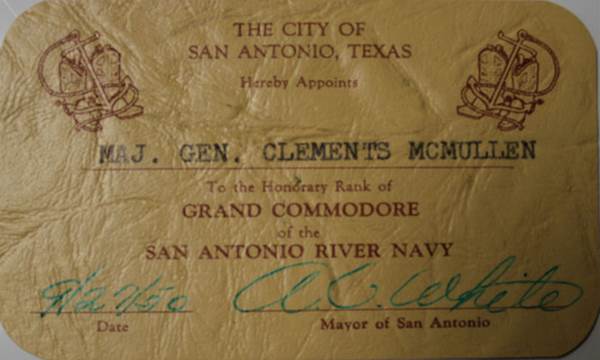
For his civic dedication to
San Antonio, Texas
Major General Clements
McMullen
Was awarded the honorary
rank of
Grand Commodore of the San
Antonio River Navy
By Mayor White in September
1950
General
McMullen was popular with Kelly employees because he let them know they were
important to him. Military personnel had housing provided. However, civilian
employees could not find adequate housing. In addition, many of the civilian
workers did not understand the intricacies of owning a home. To alleviate this
situation, General McMullen established the “Buy-a-Home” program in March 1951.
Consultants were made available to Kelly employees to explain and assist with
mortgages and financing. Numerous homes were obtained for Kelly employees along
with savings amounting in the thousands of dollars. The program was such a
success that General McMullen was presented with a Resolution Commendation from
the San Antonio Home Builders Association and the National Association of Home
Builders on 13 April 1952.
The
date 20 October 1952 was special to General McMullen. It was the day he
celebrated 35 years of active duty in the service of his country. His entire
career was spent in the air arm of the country whether it was the Army Air
Corps or the United States Air Force. Quite a number of the 35 years were spent
at Kelly one way or another. He started his flying career at Kelly during World
War I. As he continued his career, he was stationed at Kelly in 1920, 1925,
1938 and finally in October 1948. General McMullen liked his work at Kelly and
loved the people at Kelly and in San Antonio. He was quoted saying “I think it
would be nice to go on serving at Kelly for the rest of my life.”
One
last large project had to be accomplished before General McMullen retired. Due
to the large number of employees going to and coming from Kelly, road
congestion and parking was always a problem especially at the changing of the
shifts. To help solve this problem, he needed the help of the city and county
for legal issues and the Federal Government for funding. General McMullen
sparked the idea of a four lane super highway that would run from Kelly AFB to
the north side of San Antonio and bus routes that would be added so as to
alleviate parking. From the period in which the project was suggest to 1954,
before his retirement, General McMullen worked vigorously with city and county
officials for the expansion of Stephenson Road and also assisted in obtaining
one-million fifty-thousand dollars in
federal grants to finance the new artery. Construction on the road started in
February 1954, the same month in which General McMullen retired. For his work
in making the expansion a reality, and in recognition of all that he had done
for San Antonio as the Commanding Officer of SAAMA, Kelly AFB, the City Council
voted unanimously to name the Stephenson Road expansion in honor of Major
General Clements McMullen.
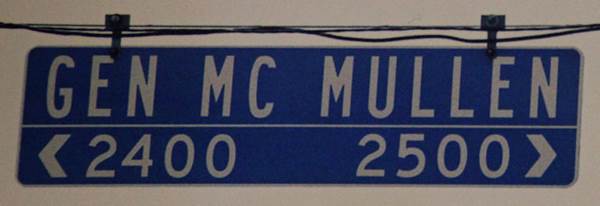
General
McMullen Drive sign as it appears
today
in San Antonio, Texas.
General
McMullen retired on 28 February 1954 at the age of 62 with 37 years of active service
to his country. Upon his retirement, he was the oldest active pilot in the
United States Air Force and in command of the largest air depot in the world.
He was one of the longest serving local commanders in the history of Kelly AFB
and was loved and admired by both the civilian workers and the officers and
airmen under his command.
Prior
to his date of retirement, General McMullen attended a series of luncheons and
farewell parties sponsored by groups from Kelly AFB and the City Council of San
Antonio at which he was the guest of honor. “General McMullen Night” was on
February 26 at which point he made his farewell address to his beloved Kelly
AFB family. His retirement date was marked by one of the largest military
celebrations in the history of the service.
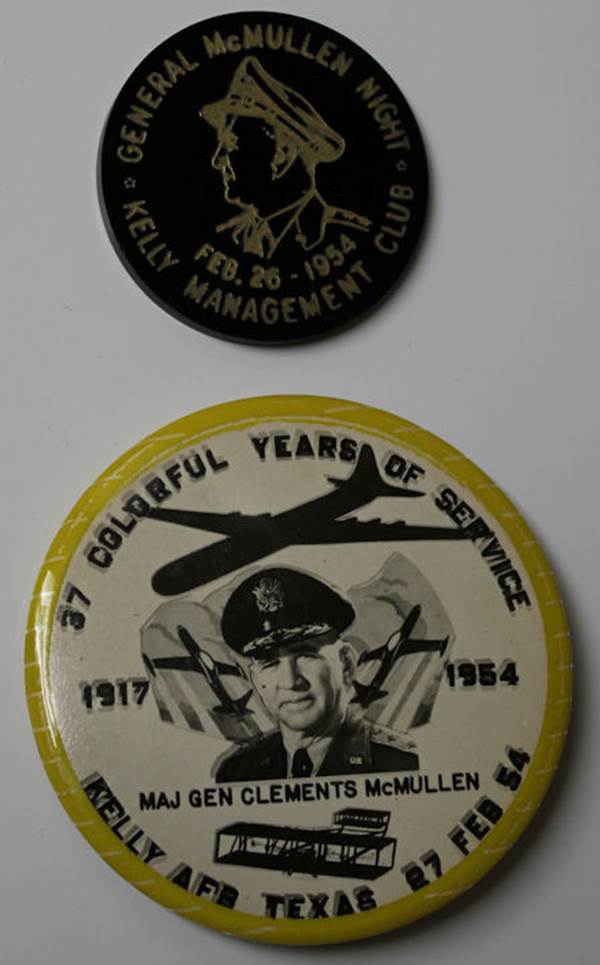
Token and button
given
as
a memorial souvenirs to those who
attended
“General McMullen Night”
by
the Kelly Management Club and
at
his retirement ceremony.
The
celebration was attended by thousands of Kelly AFB civilian employees and
military personnel, 62 active and retired USAF generals and 238 city, county
and federal distinguished guests. The US Air Force Band played while 1,800
troops passed in review and an aerial salute flew overhead which included
General Mac’s Queen, the XC-99. General McMullen was awarded his second palm to
the Distinguished Service Medal, the third highest military award of our
nation. General Edward W. Rawlings, Commander of Air Materiel Command,
presented the DSM palm to General McMullen and in closing said “It’s hard to
comment on the end of such a career. He has done a terrific job for the Air
Force and we are going to miss him.” Tears were seen in the eyes of many at the
conclusion of the ceremony as the band played “The Eyes of Texas Are Upon You.”
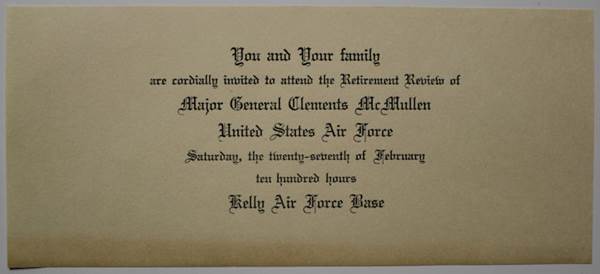
Original invitation sent out
to those who were
Invited to the retirement
celebration for
Major General Clements
McMullen
On February 27, 1954 at
Kelly Air Force Base.
General
McMullen and his wife decided to make their retirement home in San Antonio.
Because of his reputation for leadership and sound fiscal management, many in
San Antonio felt he was destined for an important position, maybe even become
city manager. There were many who thought he could “McMullenize”
San Antonio. General McMullen never pursued any lofty city political position
but rather became an active civic worker behind the scenes. Becoming a member
of the Chamber of Commerce, he was named a chamber director and became chairman
of the chamber’s Industrial Committee. In this position he helped organize the
Greater San Antonio Development committee and was a member of that group’s
original executive committee. General McMullen was also a board member for
Wolff & Marx, a department store in San Antonio.
Determined
to keep busy in retirement, General McMullen accepted an appointed as San
Antonio’s chairman of the American Korean Foundation. The national organization
sought funds for the general and industrial rehabilitation, housing and
education in South Korea following the war. He emphasized that the maimed and
handicapped be allowed to work as an integral part of South Korean industry. He
was instrumental in raising local public awareness as to the plight of war
ravaged South Korea. He emphasized that a strong South Korea was crucial in the
struggle against Communism and the continued peace in Asia and the world.
Retirement
also allowed the general to spend much more time with his beloved wife and
lifetime soul mate, Nancy. She was always at his side and was the perfect
military wife. San Antonio, Texas was their final home. On many occasions they
enjoyed Texas BBQ and played Bridge with their friends. As a poet, General
Clements McMullen expressed the love he had for his wife Nancy a few months
before he died.
“Easter 1958
To my darling:
To let my heart sing, on
this one Easter Day
There follows hereto a short
and humble Lay:
“To my one and only
Beautiful
Whose care has been so dutiful
During this sad time of life
When I’ve needed the help of
a sweet wife
With this little gift,
presented today,
I hope just to show, in a
very small way
My deep appreciation and
continuing love
With thanks to the Master
who guides from above,
That we long ago together
were so happily joined
And the name “Nancy
McMullen” was blessedly coined.”
Clements McMullen
Badly ailing but still here”
General
McMullen’s death came as a surprise and with little warning on 9 January 1959.
He had been in poor health a year prior to his death as he was diagnosed with a
chronic heart condition. He was admitted to Lackland
AFB hospital for further treatment of his condition but suddenly died at 6:15
a.m. He was buried at the National Cemetery at Fort Sam Houston in San Antonio
with full military honors.
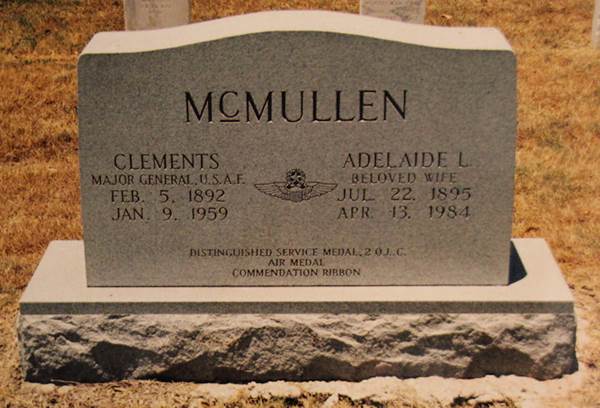
The
grave site of Major General Clements
McMullen at the
National Cemetery at Fort
Sam Houston in San
Antonio, Texas
Major
General McMullen was rated a command pilot, combat observer and technical
observer. He had flown a multitude of different types of AAF and USAF fighter
and bomber aircraft including the XC-99. His awards included the Army
Distinguished Service Medal with two oak leaf clusters, the Air Medal, World
War I Victory Medal, American Defense Service Medal, American Campaign Medal,
European-African-Middle Eastern Campaign Medal, Asiatic-Pacific Campaign Medal
with three service stars, World War II Victory Medal, Army of Occupation Medal
for Japan, Philippine Liberation Ribbon with service star and the Philippine
Independence Ribbon.
General
McMullen was one of the charter members of the Order of Daedalians,
a military society founded by Billy Mitchell in 1921 to commemorate all
commissioned pilots who flew during World War I, the first war our country
fought using aviation. He was a member of the Institute of Aeronautical
Sciences, the Air Force Association, was listed in Who’s Who In America
from 1944 to 1954, listed in Who’s Who in American Aeronautics Third Edition
1928, is listed in The Cambridge
Dictionary of American Biography, and is listed in The Biographical Dictionary of World War II General and Flag Officers
by R. Manning Ancell, 1996. The city of San Antonio,
Texas honored General Clements McMullen by naming him to the position of
“Honorary Alcalde (mayor) of La Villita”
and by naming a drive/street in his honor, General McMullen Drive. He was also
an honored Freemason.
The
Order of Daedalians has honored General McMullen’s
memory by instituting an award in his name that is given to this day. The Major
General Clements McMullen Weapons System Maintenance Award is a Daedalian trophy presented annually to a USAF unit (wing
level) for the best weapon system maintenance records for the preceding year.
It was first awarded in 1960.
In
October 1961, General McMullen’s wife, Nancy established the McMullen Trophy in
honor of her late husband. The “McMullen Trophy” was presented each year to the
San Antonio Air Materiel Area individual who submitted a suggestion having the
greatest value to the United States Air Force. The “greatest value” was usually
defined as the suggestion that saved the US Air Force the most money or was a
cost cutting idea. General McMullen had a reputation of cost cutting and “McMullenization.”
“The
evil that men do live after them while the good is oft interred with their
bones…” (Julius Caesar by William Shakespeare) I believe the passage
written for the play Julius Caesar by Shakespeare is descriptive of General
McMullen’s contemporary public image. As humans we tend to accentuate the
negative and forget the positive. He was a dedicated professional US Air Force
officer with a distinguished career, a true patriot and American. His achievements
and successes were many and he worked his way through the ranks based on his
merit expertise and exceptional abilities. He served his country during two
wars and never flinched when it came to getting the job done. Hopefully,
history will remember him for his accomplishments.
Research
Paper by:
Bro.
John Schlund, SM
8
April 2007
Revised
7
September 2010
Revised
11
February 2011
Revised
19
February 2011
Revised
25
May 2011
Revised
2
June 2011
LIFE PHOTO ESSAY
AND TRIBUTE TO
MAJOR GENERAL
CLEMENTS MCMULLEN, USAF
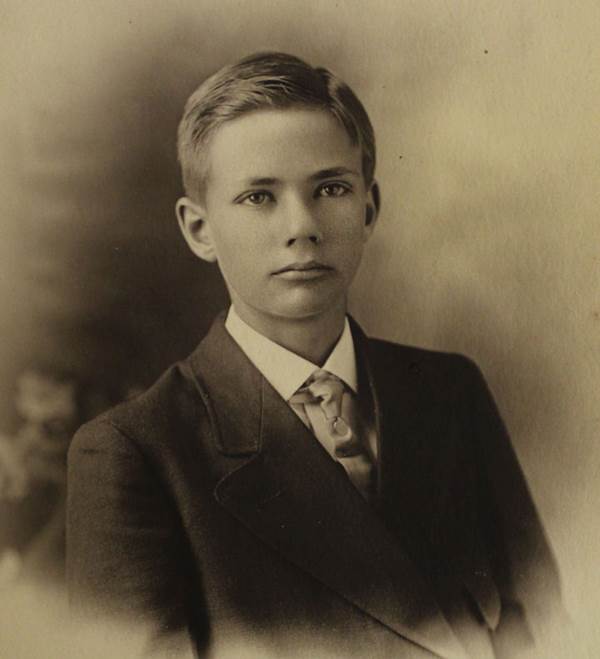
The young Clements McMullen at
graduation from
elementary school In
Largo, Florida 1905.
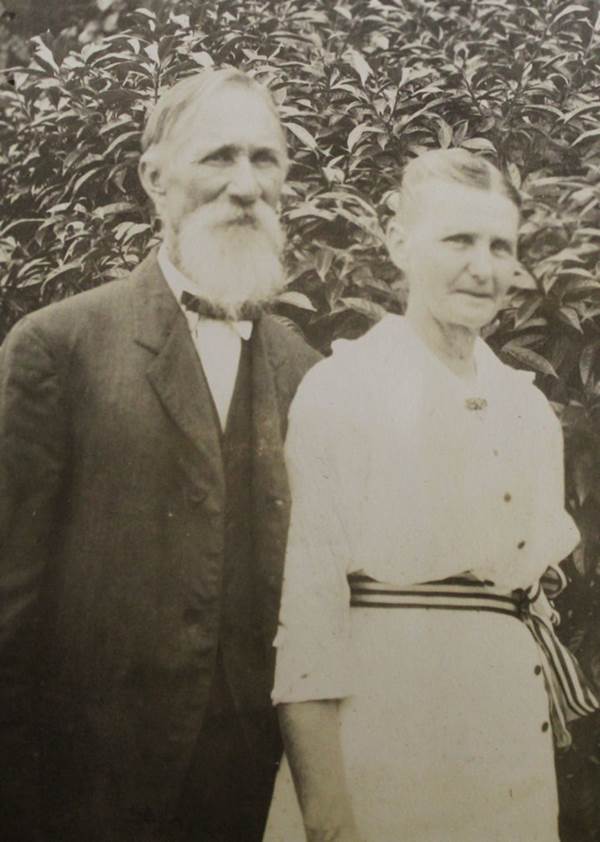
William A.
and Rosa B. (Ramage) McMullen.
The mother
and father of Clements.
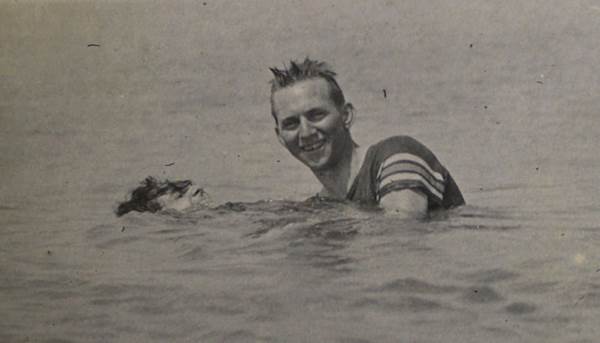
As a teen swimming with a friend off the
shores
of Largo,
Florida.
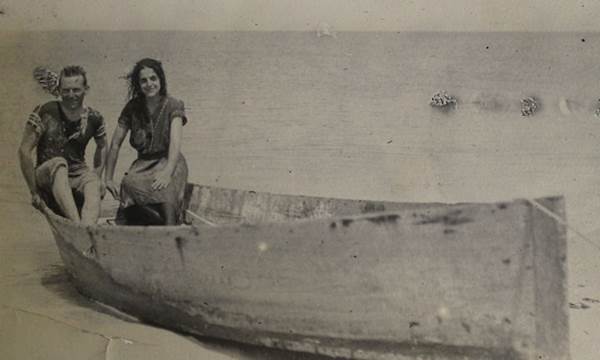
As a teen with his friend in his boat of
the shores
of Largo,
Florida.
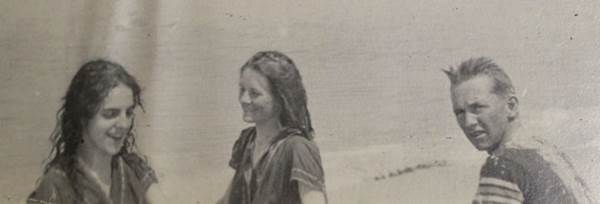
On the beaches of Largo, Florida
with his
friends.
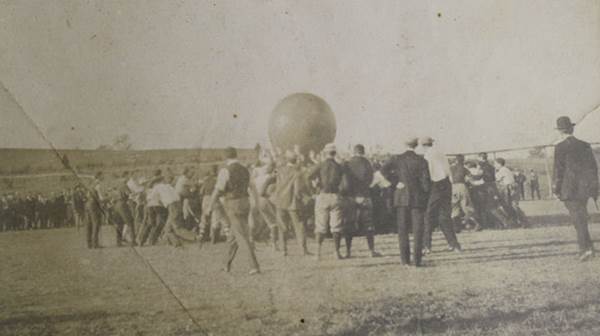
Enjoying a
lighter-than-air balloon at a county fair.
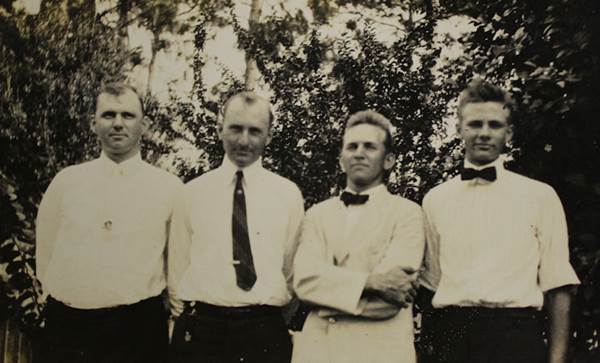
After graduation from Washington and Lee University
in
Lexington, Virginia as a civil engineer for the state
of
Florida, 1911 – 1917. Civil engineer Clements
McMullen is second from right.
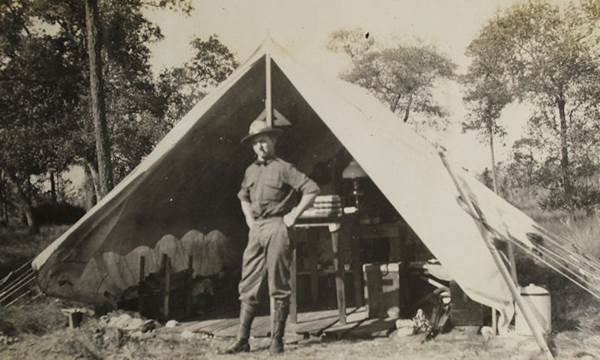
Clements McMullen as an engineer in field
bivouac, 1911 – 1917.
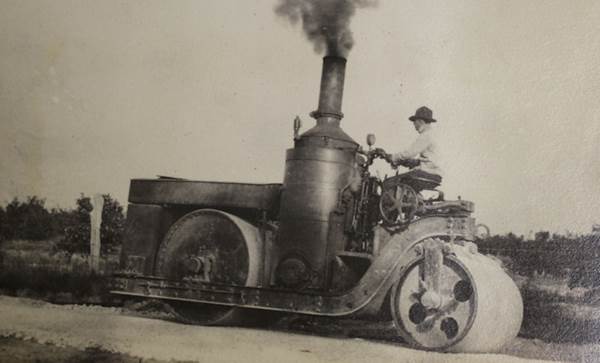
An old steam roller working on roads for
the
state of Florida
when General Clements McMullen
was a civil
engineer, 1911 – 1917.

From the
estate of General Clements McMullen. An original panoramic
photo of the
entire US Army Air Corps in 1916. Marked at the
bottom of the
photo the general writes “The entire US Air Force,
1916 –
Rockwell Field, San Diego, California.” The officer pilots
standing in front
are identified (left to right) as: B.Q. Jones;
T. DeWitt Milling; Taliaferro; T. Bowen;
Sutton; Joe Morrow;
Captain Goodyear; Kirkland; A.S. Cowan;
C. Chapman; B.D.
Foulois; Mueller;
Spike Gieger; Carberry; Netherwood;
and
Captain Dodd. In 1916, the young
McMullen was not yet
involved but very
interested in aviation.
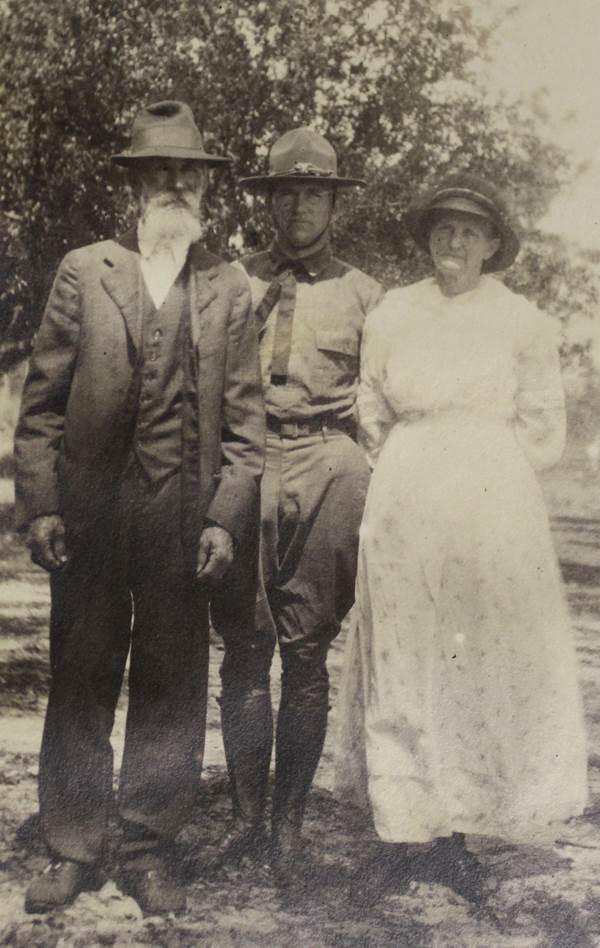
1917 as Private Clements McMullen prior
to his
appointment to aviation
school.
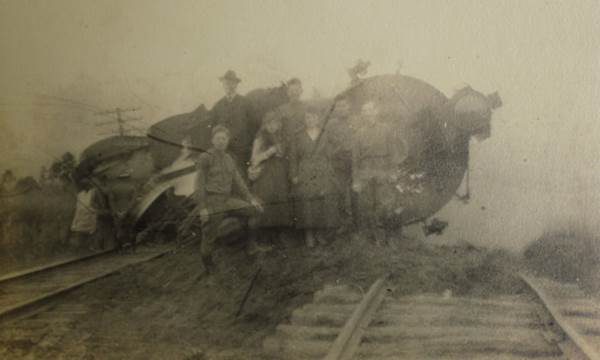
1917 – Aviation Cadet McMullen writes on
the rear of this
photo, “Enroot to
New York, construction equipment for
overseas shipment,
November 1917. We had a train wreck
in North
Carolina.
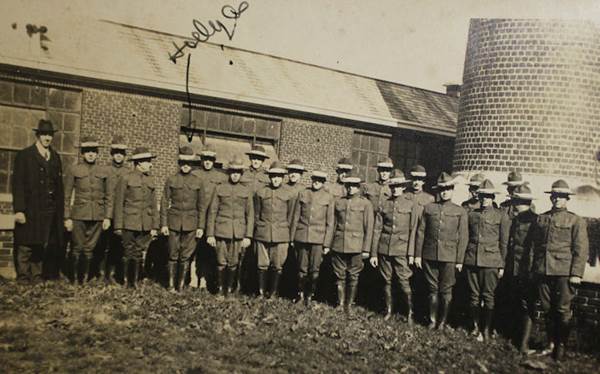
General
McMullen’s aviation graduation class, 1917.
The 13th aviation cadet class
at Georgia Tech School
of Military
Aeronautics graduating on or about
10 November 1917. Cadet McMullen is
located last
on the right
side. He drew an arrow to another cadet,
James P. Hodges who eventually became a
major
General in
the US Air Force and retired in October 1951.
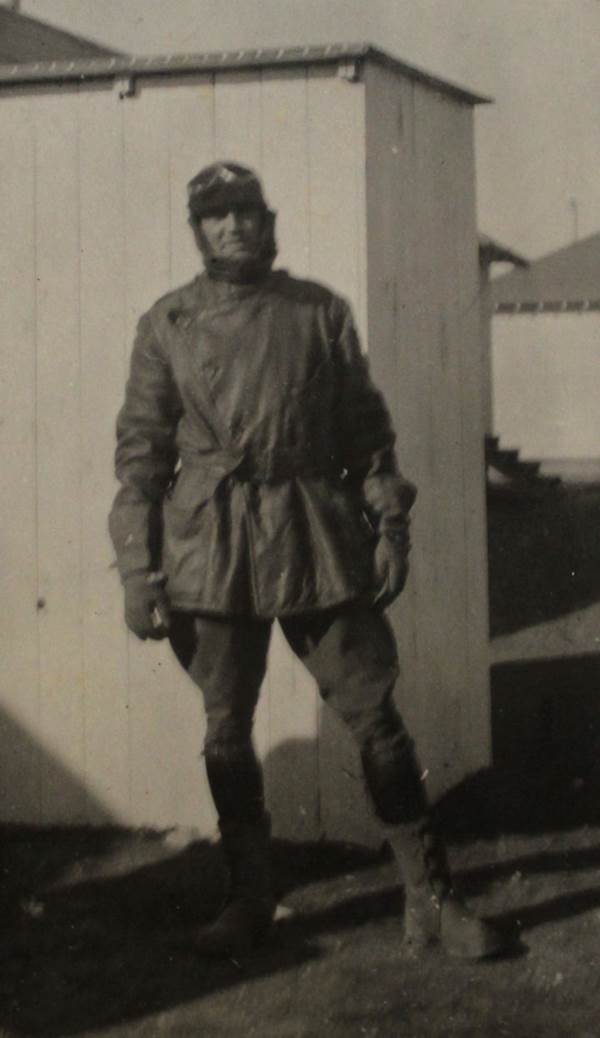
At Kelley
Field for continued flight training, 1918.
Sent to his family, the photo is marked
“Yours Truly.”
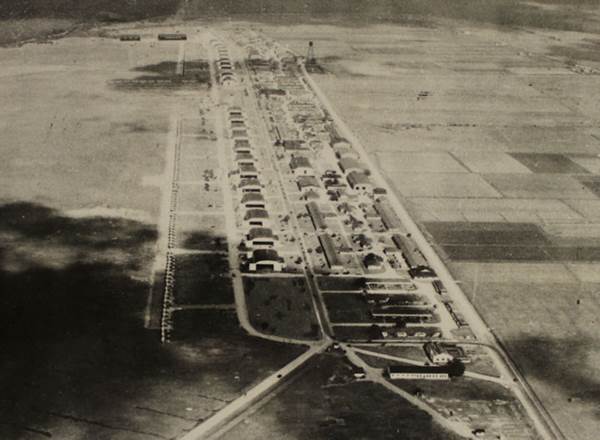
Aerial view
Kelly Field, San Antonio, Texas, 1918.
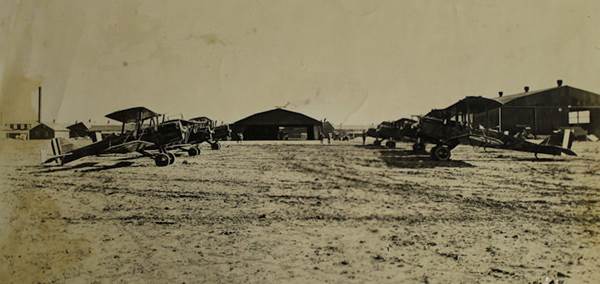
Marked on
the rear as Kelly Field, 1918.
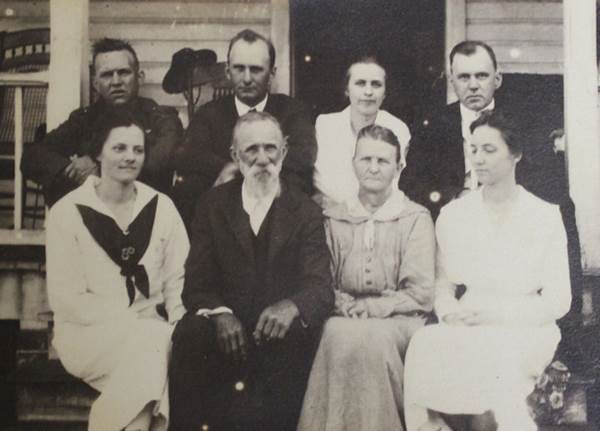
After receiving is
wings, Lieutenant
Clements McMullen has his
Picture
taken with his family in Largo, Florida, 1918.
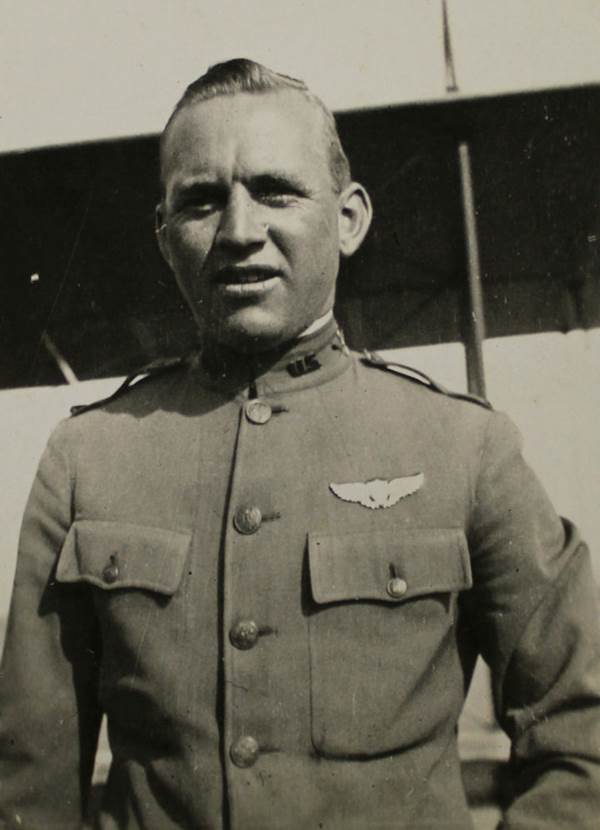
The young proud
receiving his wings, 1918.

In July 1918, Clements McMullen became
“officer-in-charge”
of
flying at the Gunnery School
at
Rockwell Field, California. An original
panoramic photo taken in 1918. The photo is marked Air Service
Flying School, Rockwell Field, San Diego, California,
November
23, 1918. Lieutenant McMullen is located second row, 12th
position from the right.
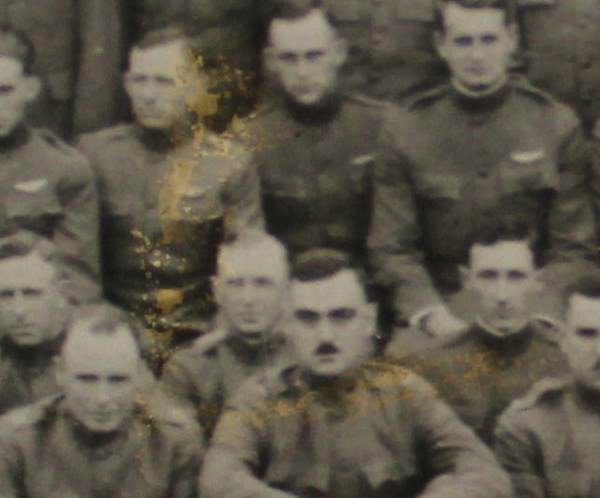
A blow-up of the panoramic view above, Lieutenant
Clements McMullen is second row, middle.

Another original panoramic photo marked as Rockwell
Field,
Air Service Flying School, San Diego, California, 1918.
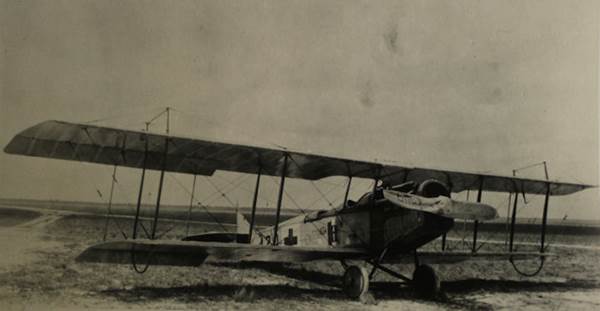
Photo marked “First US Hospital Aircraft – 1918
Curtiss Jenny JN6H – 180 HP Hispano Suiza Engine.
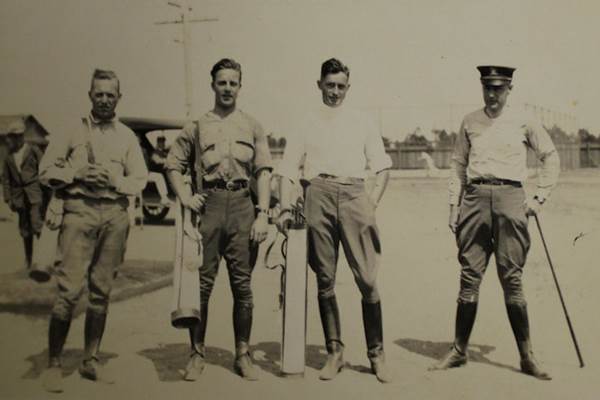
As a person who played golf. Photo taken
in 1918
at a golf
course in Colorado. The photo is marked
McMullen
(far left), Lovell and Smith. The fourth
Person to the far right is not
identified.
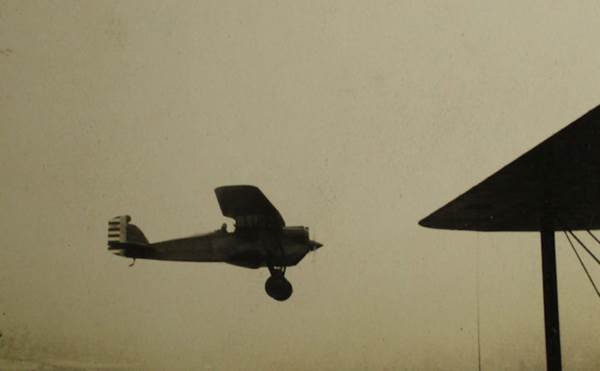
Inscribed on the rear “D-7 Fokker
fighter of World War I
A superior
airplane.”
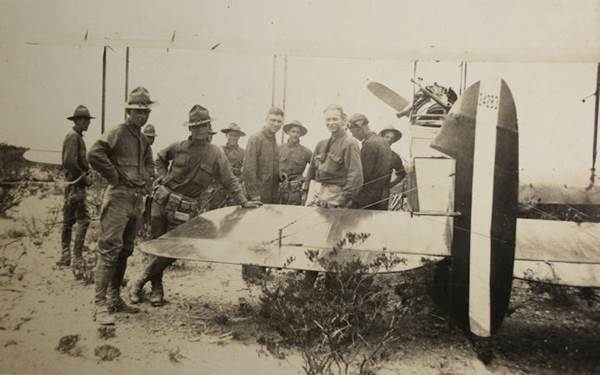
Photo taken in 1919 of Major David McKelvey Peterson
(third from
right) just prior to his aviation accident and
death on March
16, 1919. Major Peterson was a World
War I flying ace who flew with the Layfayette Escadrille
and the United
States Army Air Service.
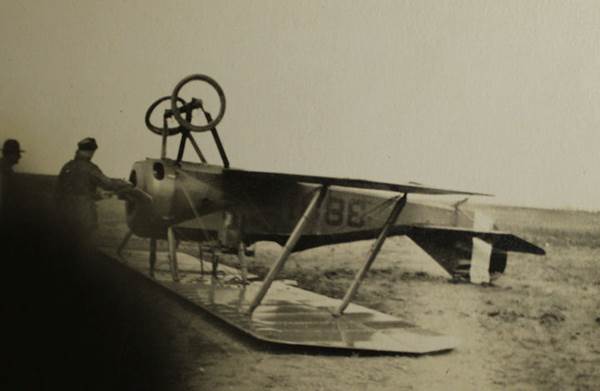
A photo from
March 1919. General Clements McMullen
Remarks “My
first wreck, a Thomas-Morse Scout.”
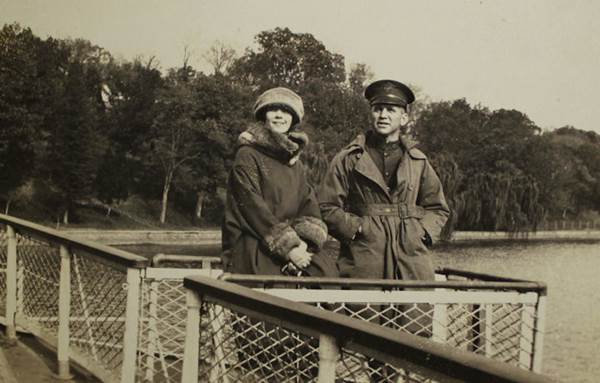
Lieutenant McMullen and friend at a
location
in Pueblo
Colorado, April 1919.
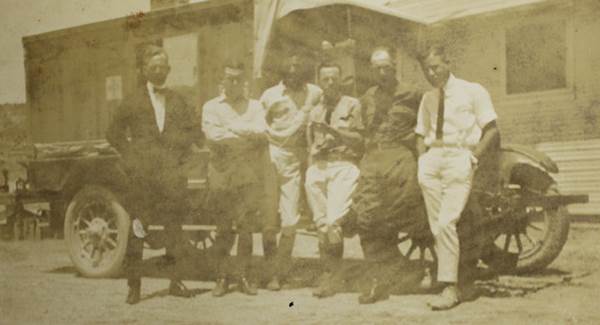
A photo marked as being taken in 1920.
Also marked
is Clements
McMullen (far left) Wallison, Fogierty,
Woodruff and
Sauchison.
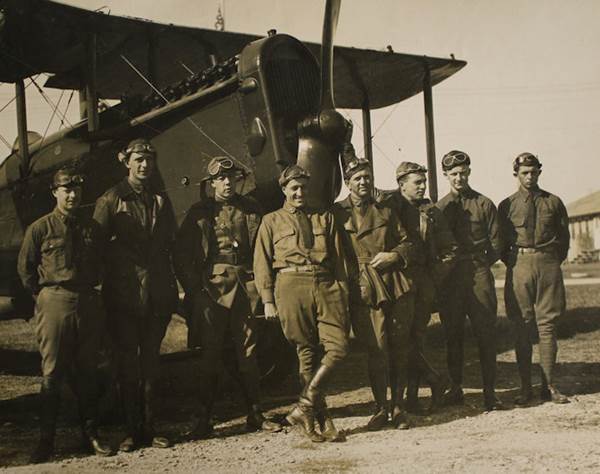
General Clements McMullen as a young lieutenant
with
some of his aviator friends. Standing in
front
of a DH-4B at Brooks Field, Texas in 1922.
Left to Right: Lieutenant Webster, Lieutenant Hewitt,
Captain Rust, Major Royce, Lieutenant McMullen,
Lieutenant Corkille, Staff
Sergeant Horgan and
Staff Sergeant Long.
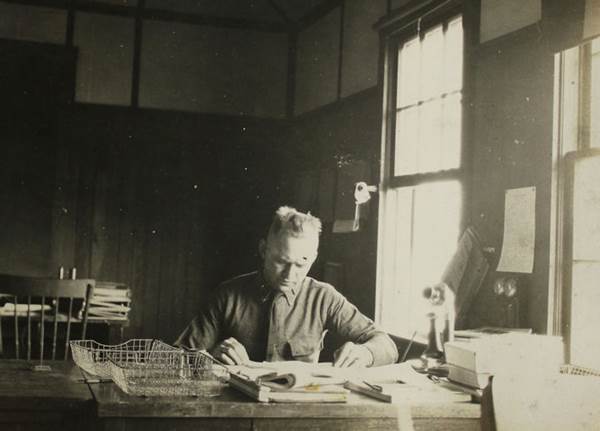
Lieutenant Clements McMullen works at his desk
As the Engineering Officer Primary Flying School
Brooks Field, Texas, October 1922.
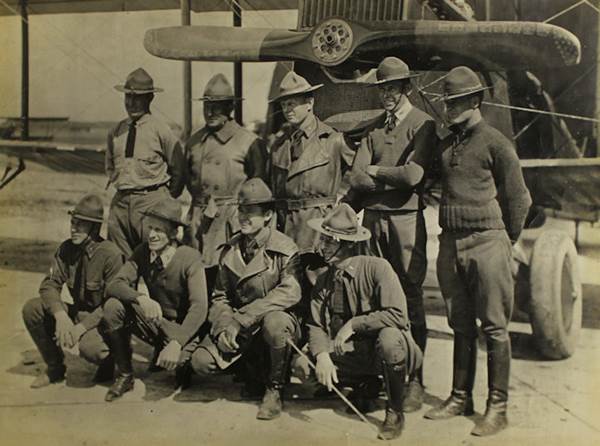
Additional
unidentified early military aviator friends.
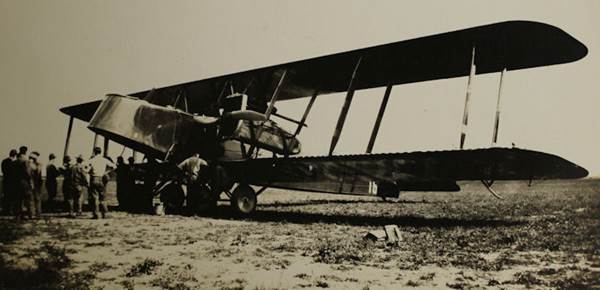
Martin MB-2 Bomber early 1920s.
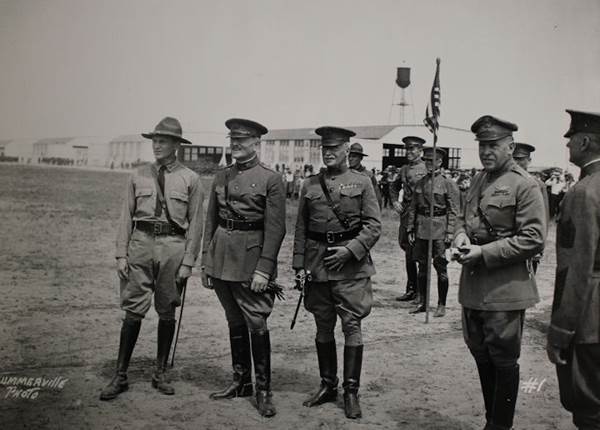
March 1921: General Pershing Inspects
Kelly Field.
General John Joseph (Black Jack)
Pershing second from
the left. To
the left of General Pershing is Major Frank
Maxwell Andrews. Major Andrew eventually
became a
Lieutenant General and was killed in
Iceland during World
War II. Andrews Air Force Base was named
in his honor.
To the right of Pershing is Major
General Edward Mann
Lewis,
father-in-law of General Clements McMullen. To the
far left is
Lieutenant Colonel John Howard, Commander of
Kelly Field.
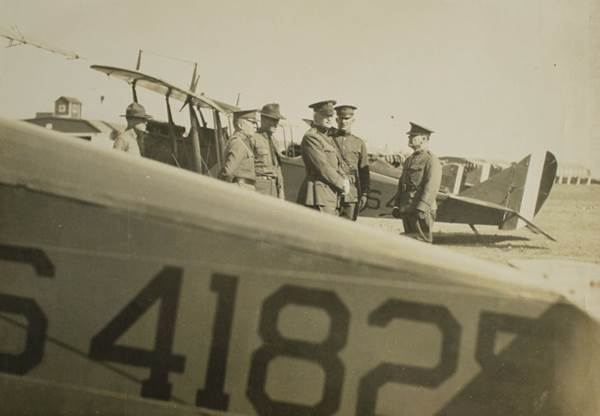
General Pershing continues his
inspection of Kelly Field.
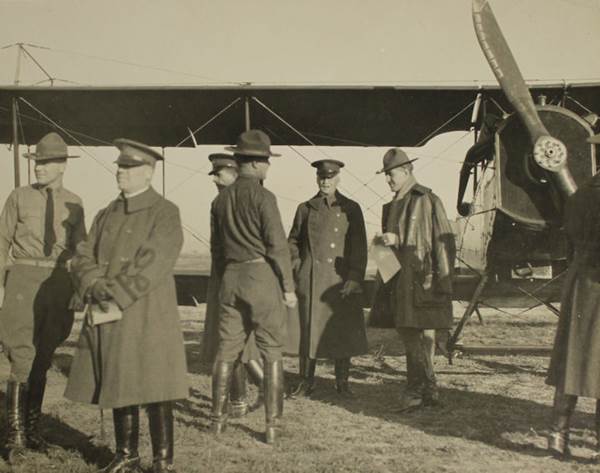
A cold March day, General Pershing
continues his
inspection of Kelly
Field.
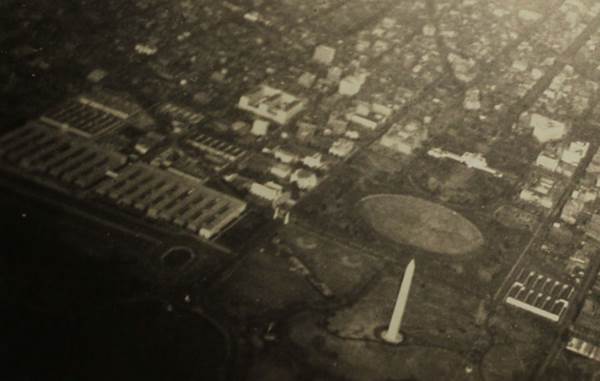
In 1921, Lieutenant McMullen flies over
the nations’
capital and
photographs the Washington Monument.
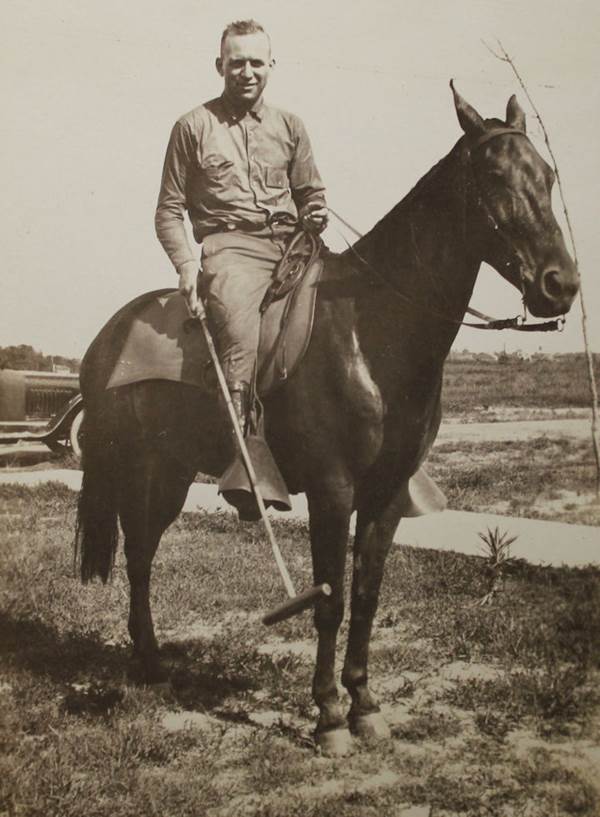
Lieutenant McMullen enjoys playing Polo
while
stationed at Maxwell
Field, Montgomery, Alabama.
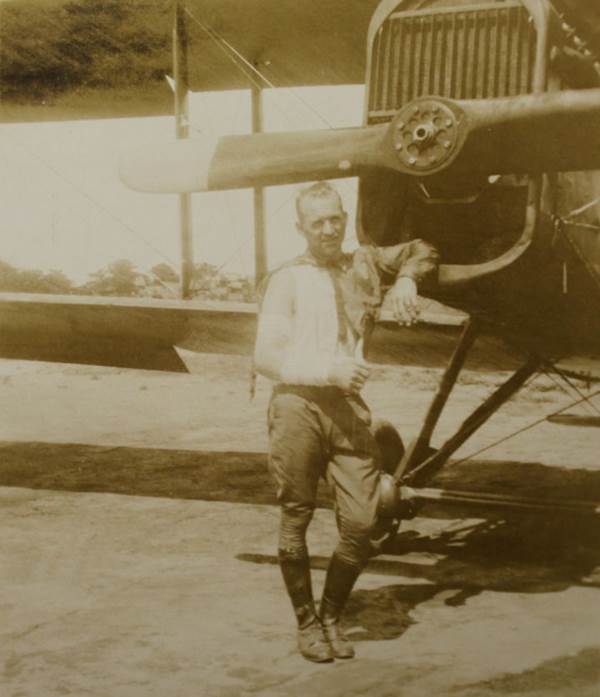
The young Lieutenant McMullen standing in
Front of his airplane wearing a sling
and cast on his
right arm. He
makes a notation that says “I broke
my arm in a
forced landing on 3 July 1921.” The
forced landing was
at Maxwell Field, Montgomery,
Alabama.
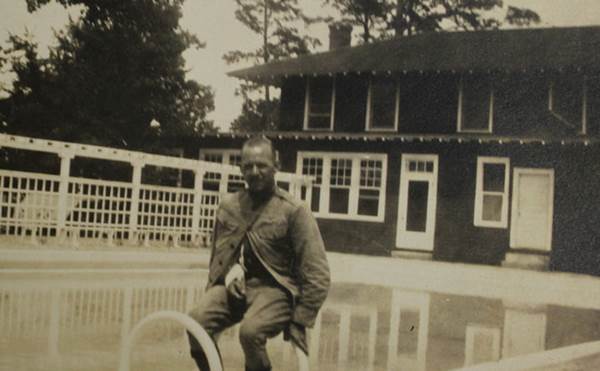
Continuing to wear the sling and cast on
his broken arm,
the young
Lieutenant McMullen convalesces from his
forced landing at
the side of a pool located at the
country club
located in Montgomery, Alabama.
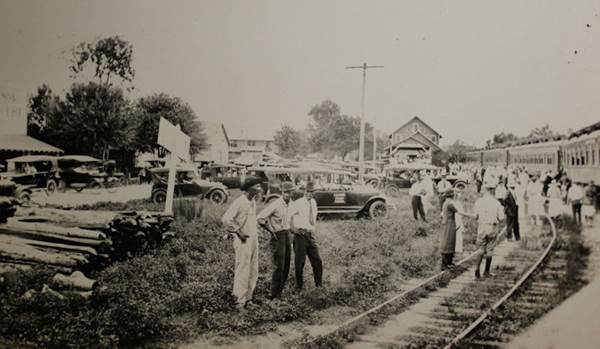
The photo above depicts the Air Service
Primary
Flying School at Carlstrom Field,
Arcadia, Florida
being moved in
1922 to Brooks Field, San Antonio,
Texas. McMullen was the commanding
officer of the
5th Air Park at Carlstrom
that eventually became
the 62nd
Service Squadron at Brooks Field.
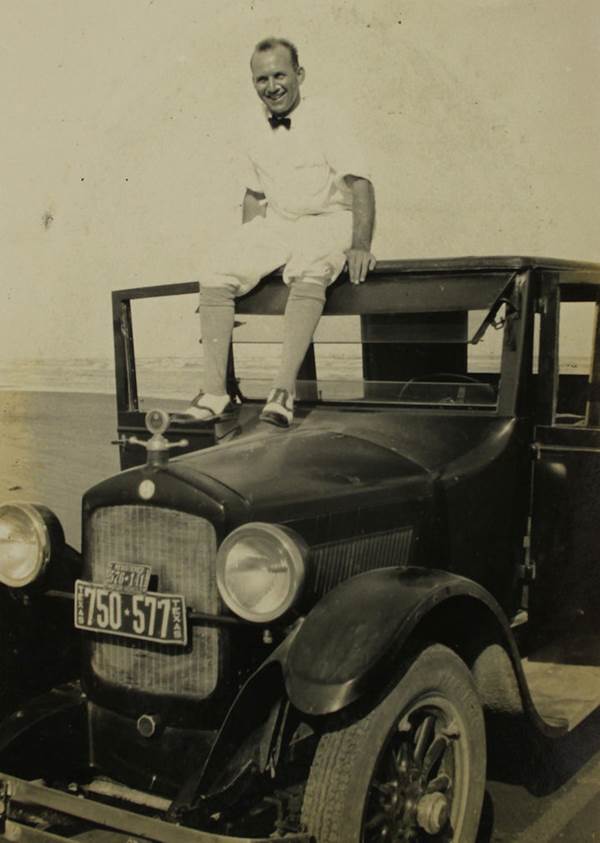
The smiling young Lieutenant McMullen
shows of his
new 1920 Hupmobile that he purchased while stationed at
Brooks Field, Texas in 1922.
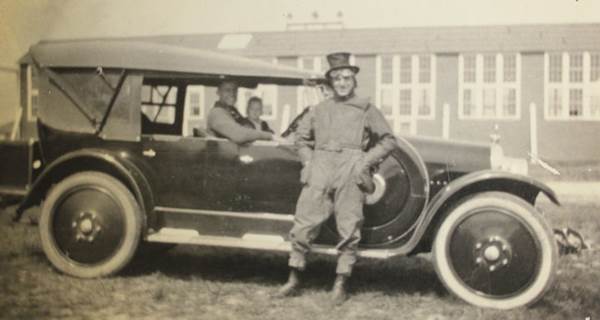
The young aviator in 1922 at Brooks
Field, Texas playing
around and having
his photo taken while wearing a top hat.
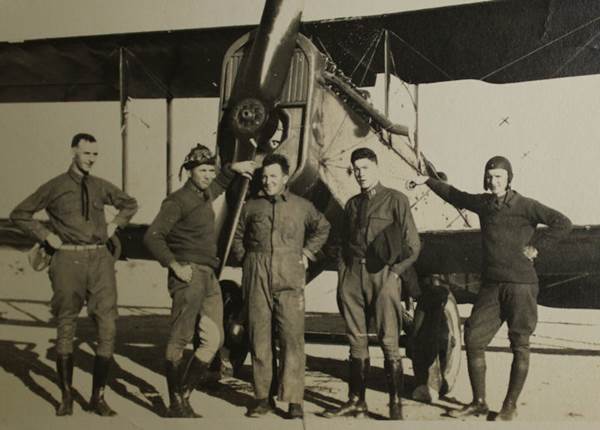
On special
assignment December 1922. Rescue mission
for US Army
pilot First Lieutenant Charles F. Webber
and US Cavalry
Colonel Francis C. Marshall who crashed
just below and
east of Japacha Peak in the Cuyamaca
Rancho State Park, California. The
aviator and cavalry
officer were on a
flight from Rockwell Field, San Diego,
California
to Fort Huachuca landing in Tucson, Arizona.
Standing left to right, the aviators
pictured above are
identified as Webster,
McMullen, Cockily, Rust and
Sergeant.
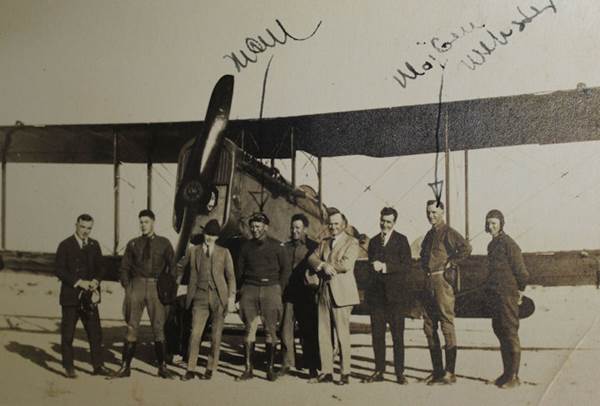
December 1922, the rescue team
photographed with
reporters. McMullen
makes a notation with arrows
on the
pictures to himself, “me” (fourth from the left)
and to Webster
(second from right) who eventually
will become
Major General Robert M. Webster, USAF
who retired in
October 1954.
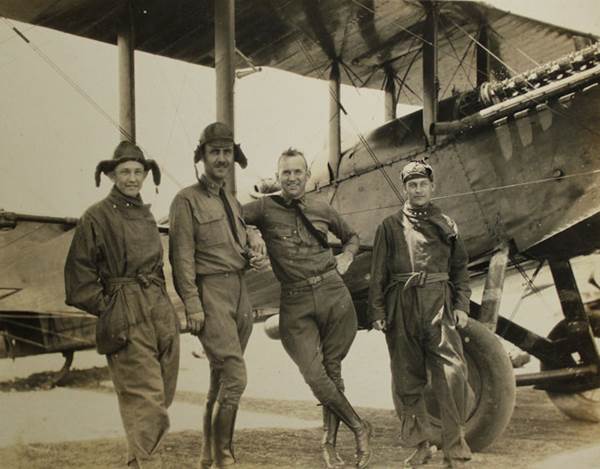
Photograph dated 1923. Lieutenant
McMullen, second
from right,
stand with another military pilot aviator to
his left and
two other individuals. He refers to the
other aviator as
Bruce Neil.
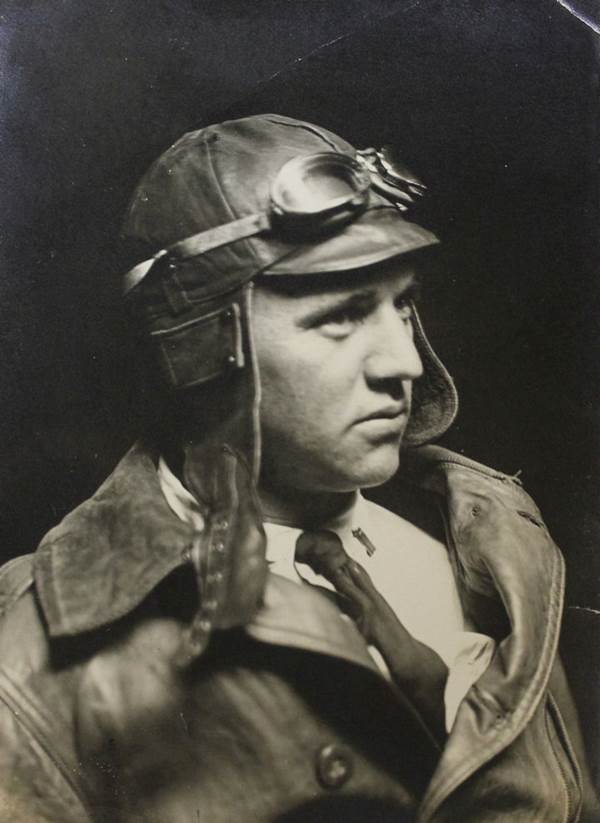
The young Lieutenant
Race in the National Air Races held in St. Louis,
Missouri.
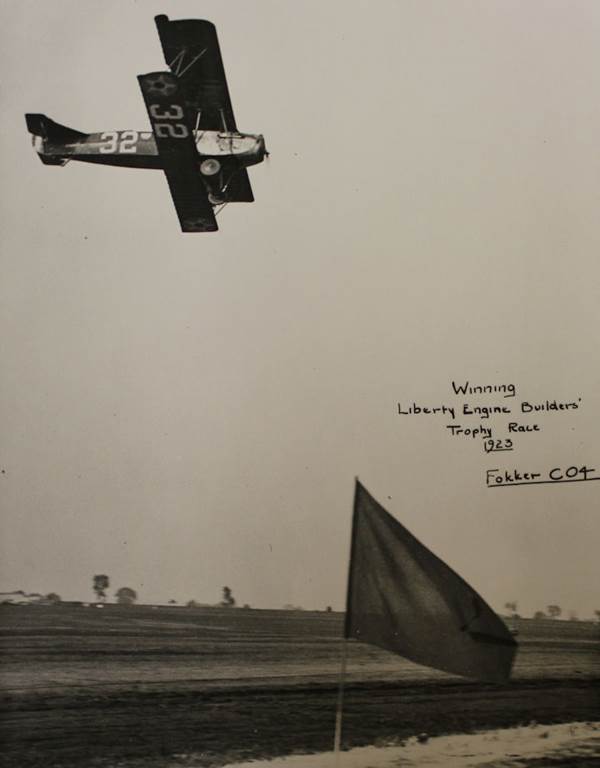
A frozen moment in time. Lieutenant Clements
McMullen as he is actually winning the Liberty Engine
Trophy Race in St. Louis, 1923
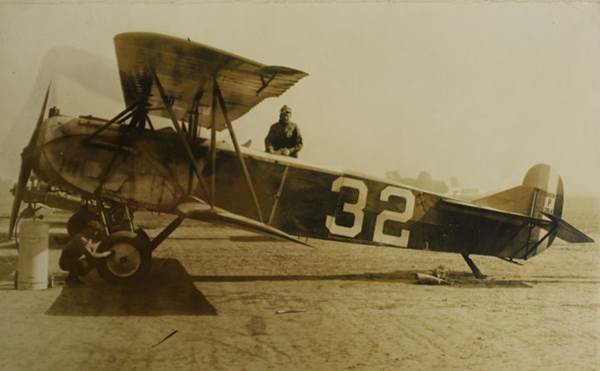
Lieutenant Clements McMullen with the
Fokker CO4 number 32 that he used to win the
Liberty Engine Builders Trophy Race in St. Louis,
1923.
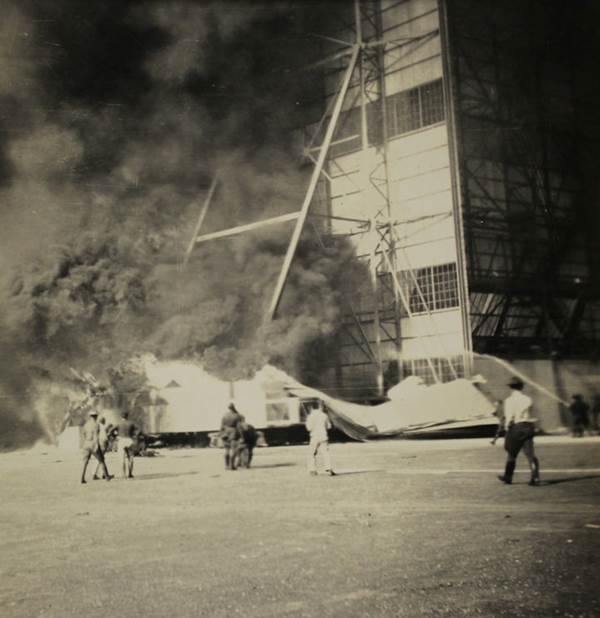
Lieutenant McMullen was stationed at
Brooks Field,
San Antonio, Texas on October 17, 1923
when
the US Army
Airship C-2 burst into flames. It was
The US Army’s biggest blimp and had just
successfully
completed a flight to
California and back.
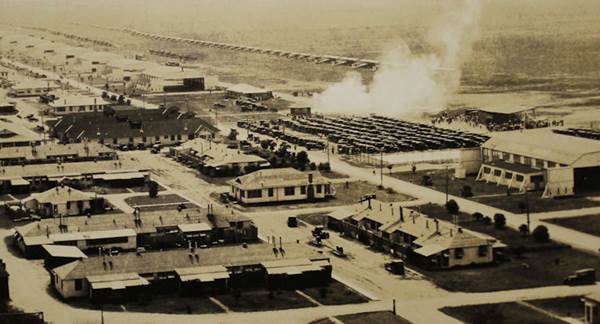
Notation of the photo reads “Captain
Duncan laying
smoke screen at
Kelly Field, San Antonio,
25 November 1923.”
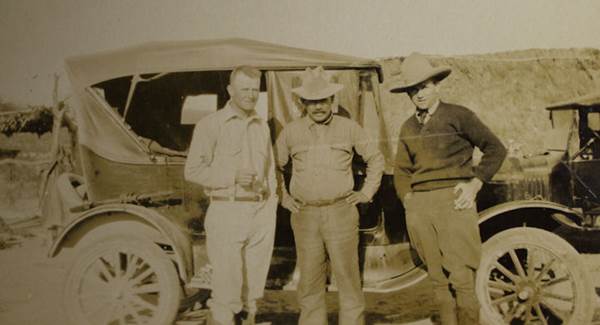
Notation on the photo reads “Firing a
salute at Kelly
Field, San
Antonio, Texas.”
In 1925, Lieutenant McMullen and two
friends named
Fogarty and Robertson decided to go on a
hunting and
camping trip into
Mexico. McMullen is wearing the
cowboy hat to the
right.
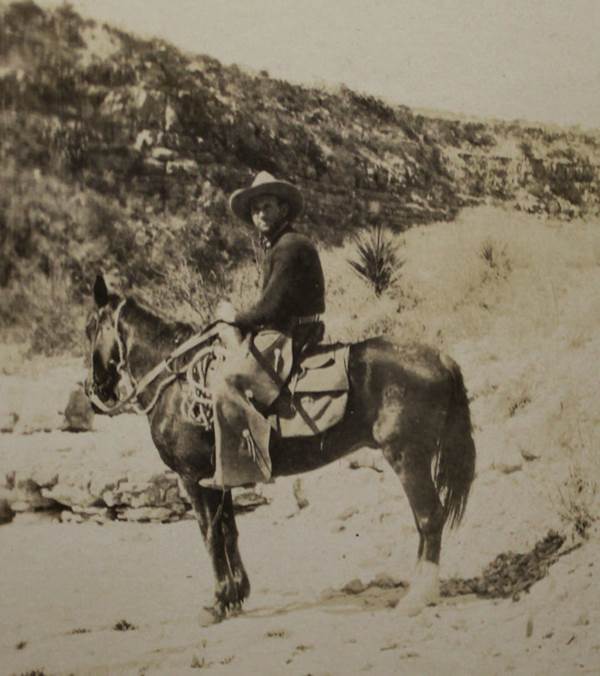
Lieutenant McMullen as a cowboy on
horseback
Looking very
much like Gene Autry.
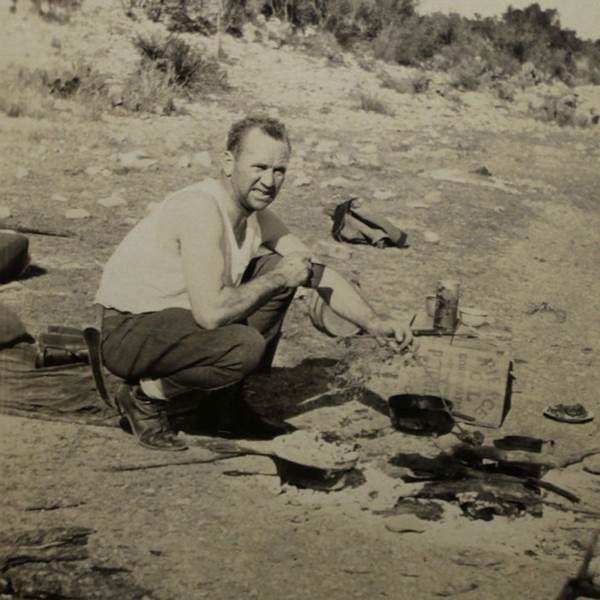
The photo is marked “McMullen as cook.”
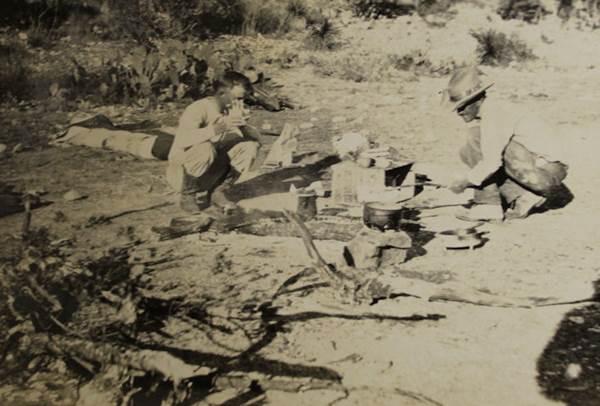
On the same
Mexico hunting trip in 1925. The photo
is marked on
the rear “Fogarty and Robertson.”
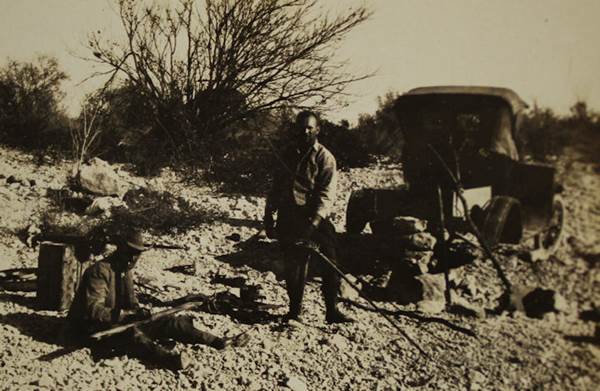
Lieutenant
McMullen standing. The inscription on the
rear of the
photo says “We repair our car 55 miles
from the nearest
garage in Mexico.”
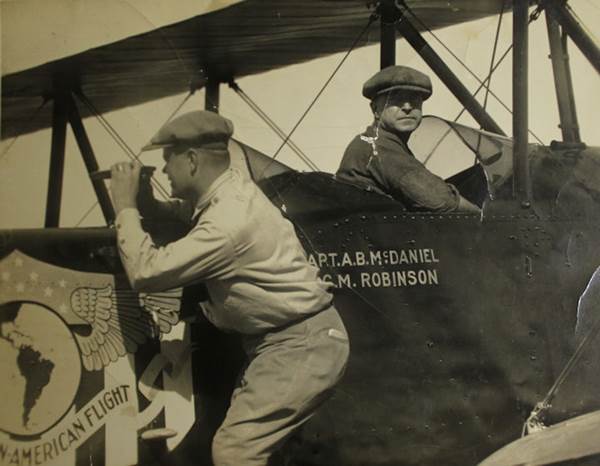
Pan-American
Goodwill Flight of 1926. With their
OA-1A mphibian aircraft, named The San Antonio,
Captain A.B. Daniel (pilot) and
Lieutenant Charles
M. Robinson (co-pilot) check out the
field prior to
departure. Their
plane was one of five in the Pan-
American flight which began December 21,
1926 in
San Antonio, Texas and ended in
Washington, D.C.
They were greeted in Washington, D.C. by
President
Calvin
Coolidge for their epic flight. Within three weeks
their historic
flight was eclipsed by the solo trans-
Atlantic
flight of Charles A. Lindbergh.
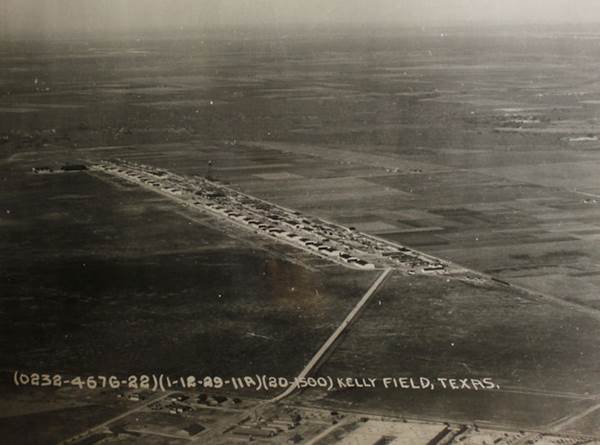
The photo is identified as Kelly Field,
Texas,
January 12, 1929 at 11:00 AM
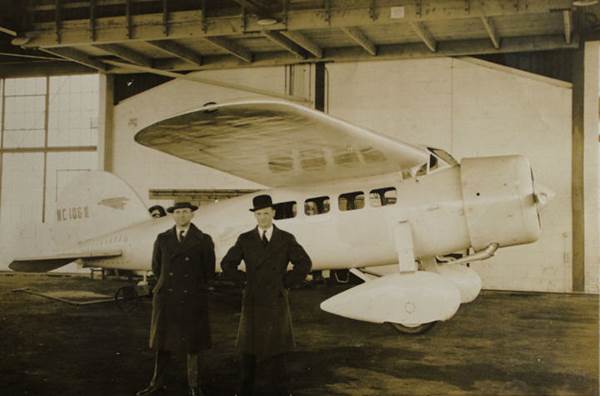
Breaking
world flying records. Prior to their flight.
White standing in front of the Lockheed-Vega monoplane
in
which they broke the flying time from
New York to Buenos Aires, 1930.
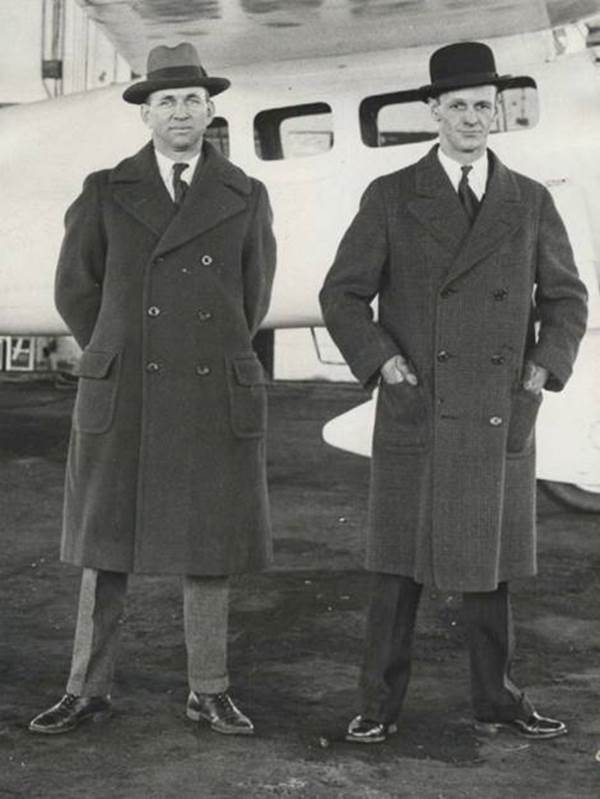
International Newsreel Photo 1930
Prior to their flight.
McMullen and Lieutenant W.W.
plane
at the Newark Airport, New Jersey.
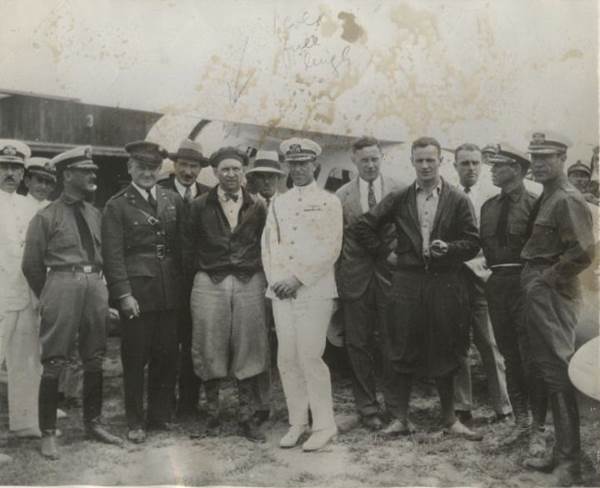
Associated Press Photo 26 February 1930
McMullen and White photographed on their arrival
at
Las Palmas Airfield. Left to Right: Commander
Melgar, Chief of the Las Palmas Airfield; the American
Military Attaché, Captain Harold Harris; Lieutenant
Clements McMullen; Commander Harold B. Grow, Chief
Of the Peruvian Air Forces; Lieutenant White; and
Sergeant Majors of the Peruvian Army, Alvarillo
and
Chilardi. McMullen front row and third
from
the left.
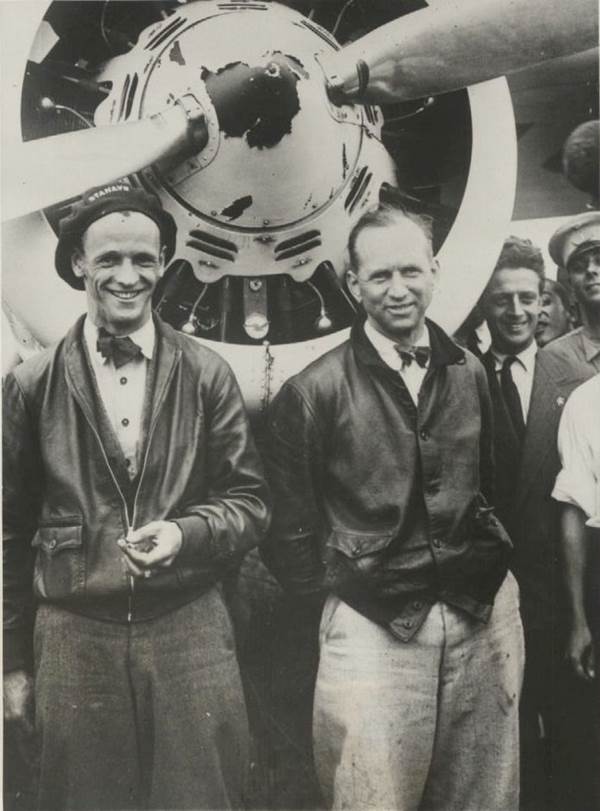
Associated Press Photo 5 March 1930
Lieutenants McMullen and White photographed on their
their
arrival at the Argentine army aviation field
El Palomar from
their
flight.
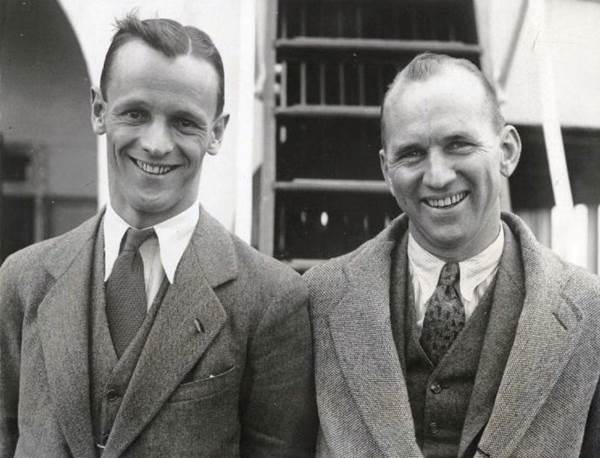
Associated Press
Photo 26 March 1930
Lieutenants
McMullen and White shown on the deck of the
Southern Cross on
their return to the United States
after
making aviation history.
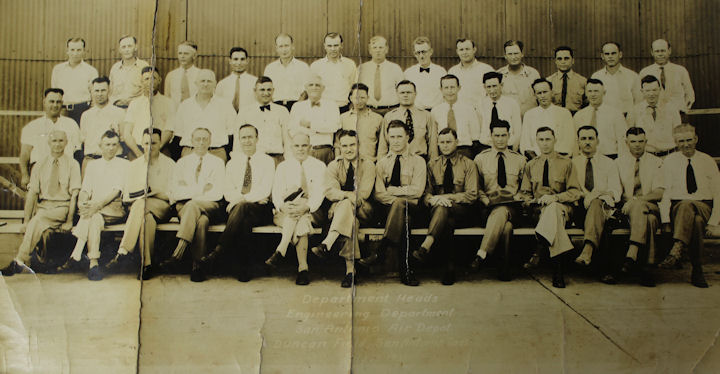
Department heads, Engineering
Department, San Antonio
Air Depot,
Duncan Field, San Antonio, Texas.
July 15, 1931
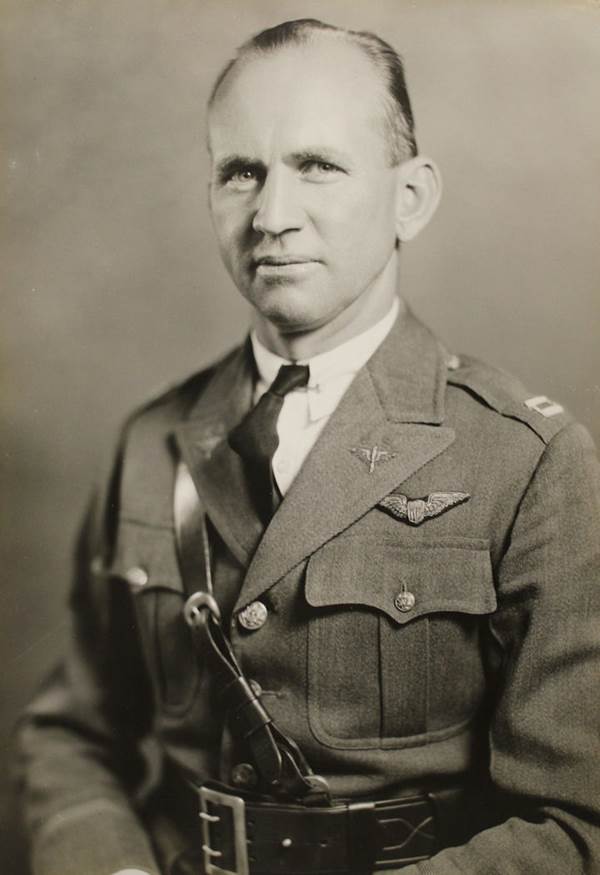
His first promotion in eleven years to
captain on
1 September 1931.
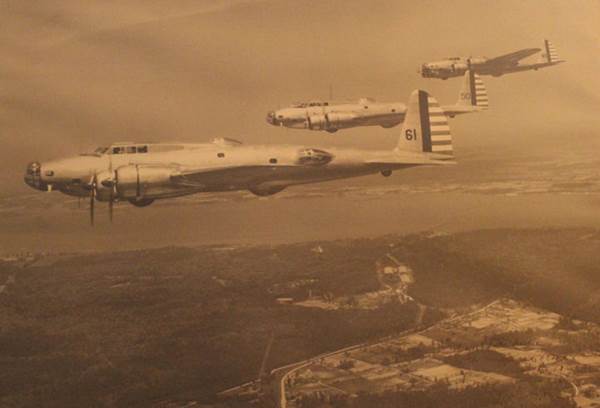
Flight of Y1B-17 over Langley Field, May
12, 1937.
The inscription on the photograph reads:
“To Major
C. McMullen, with the compliments of the
2nd
Bombardment Group, Robert Olds, Lt.,
Col.,
AC
Commanding.”
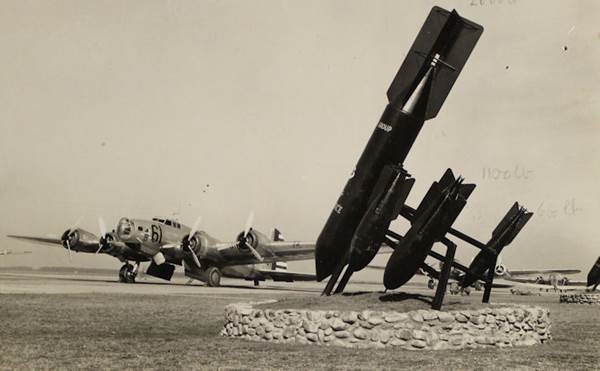
YB-17 Flying Fortresses on a goodwill
trip to Buenos
Aires, Argentina in February 1938. Lt.
Col. Robert
Olds was in command of the goodwill
flight.
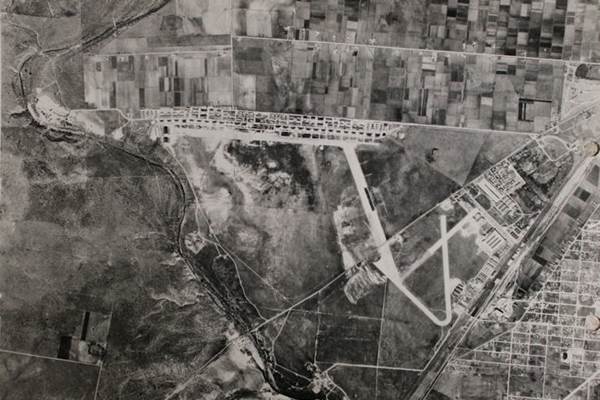
Aerial photo
of Kelly Field, January 1938.
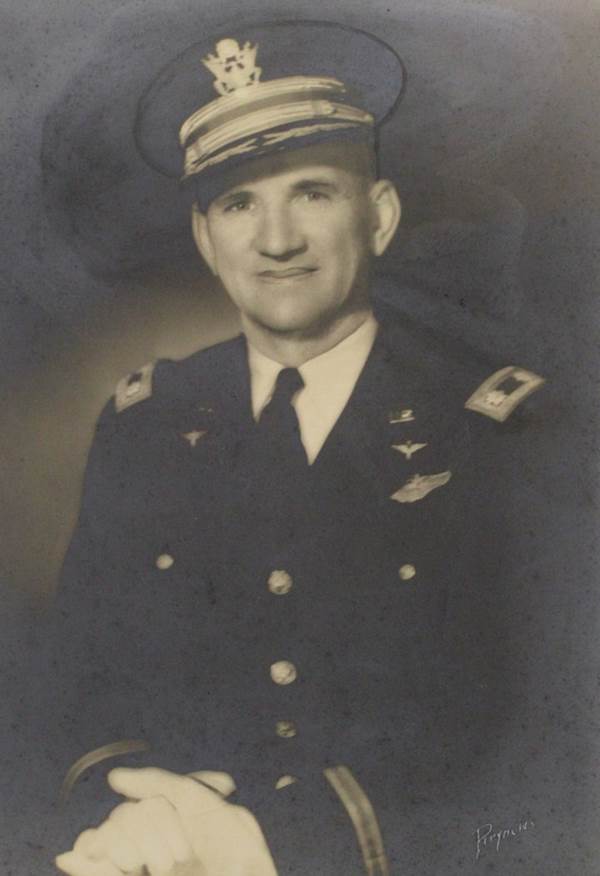
December 1940 as Lieutenant Colonel
wearing the
US Army Air Corps dress blues.
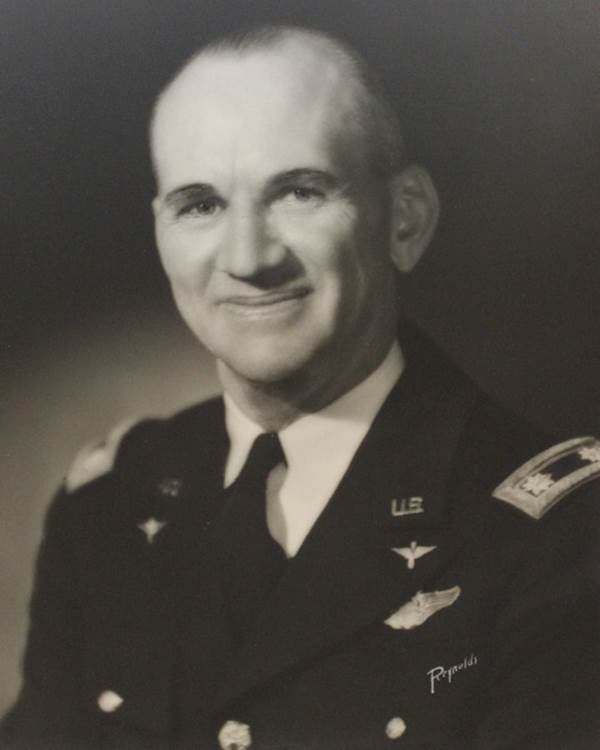
December 1940 as Lieutenant Colonel
wearing the
US Army Air Corps dress blues.
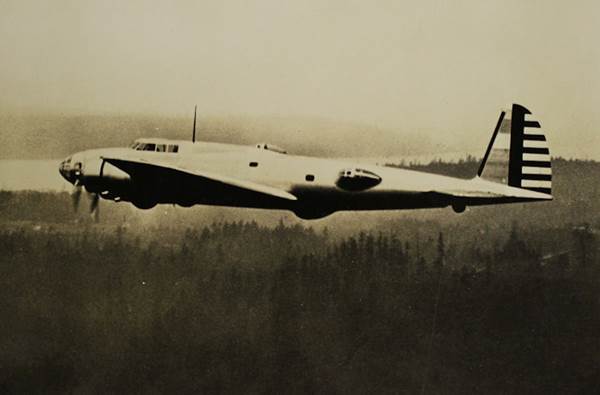
The only markings on the rear of the
photo say “B-17.”
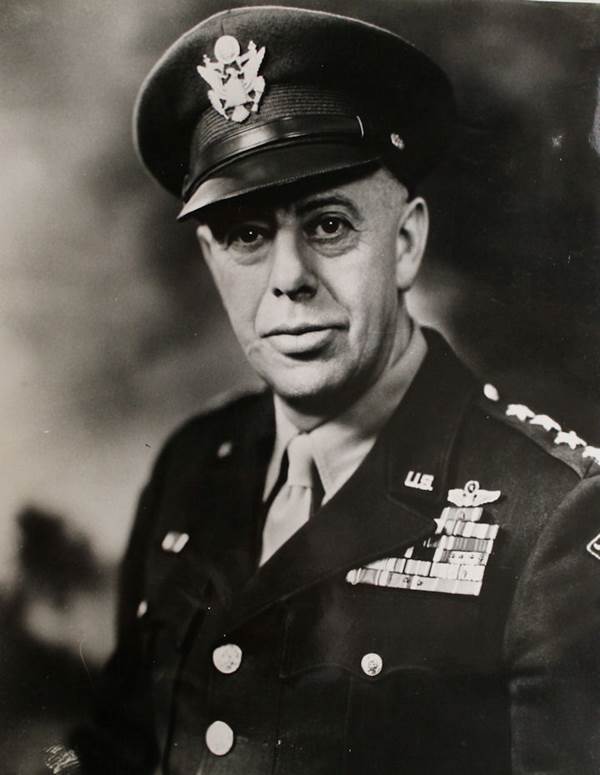
A life time friend, General George C.
Kenney,
US Army Air
Corps.
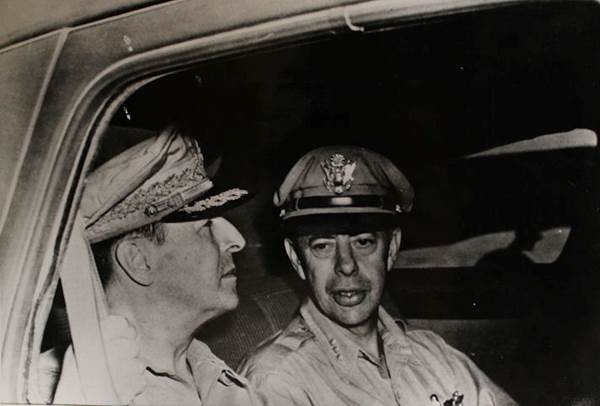
Photograph of General George C. Kenney
with
General Douglas MacArthur, 1942.
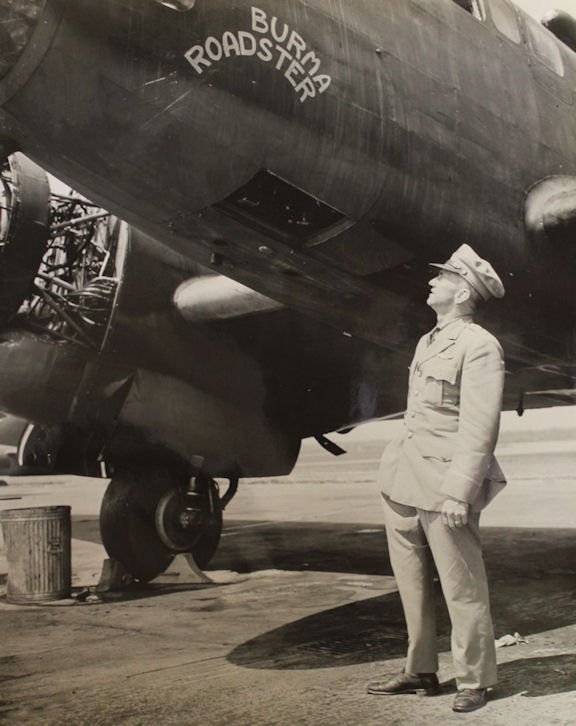
On an inspection tour of the European
Theater
of Operations
in 1943. General McMullen looking
up at his
Douglas B-23 Bomber named the
Burma
Roadster.
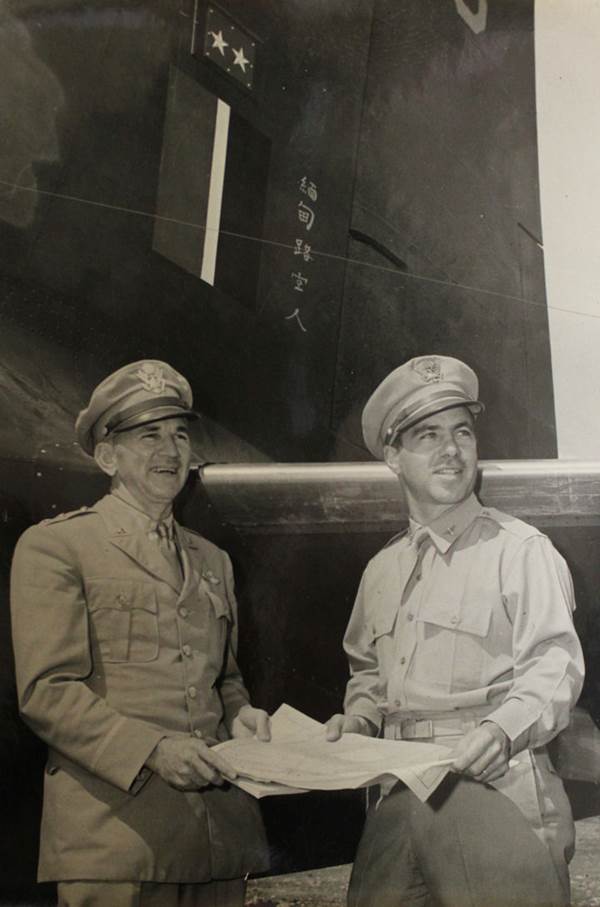
Major
General Clements McMullen and
his pilot, Lt. Colonel
Peter J. Prossen near the
tail of the Burma Roadster. Notice the
two stars for
the general’s rank
located on the tail of the plane.
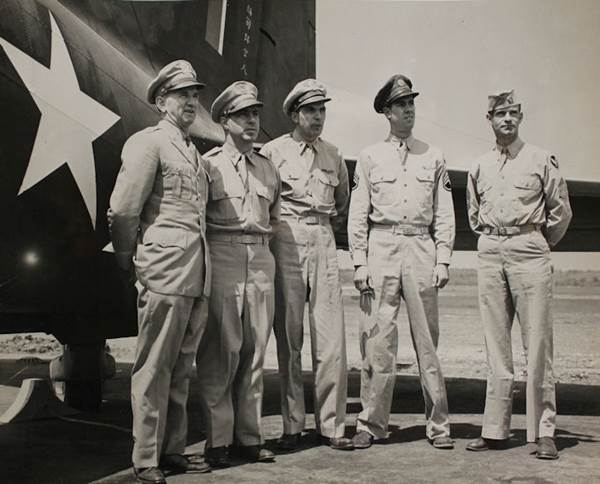
The crew of the Burma Roaster left to
right:
Major General Clements McMullen, Lt.
Colonel Peter J.
Prossen, Lieutenant
William R. Knezevich and
Two unidentified enlisted members.
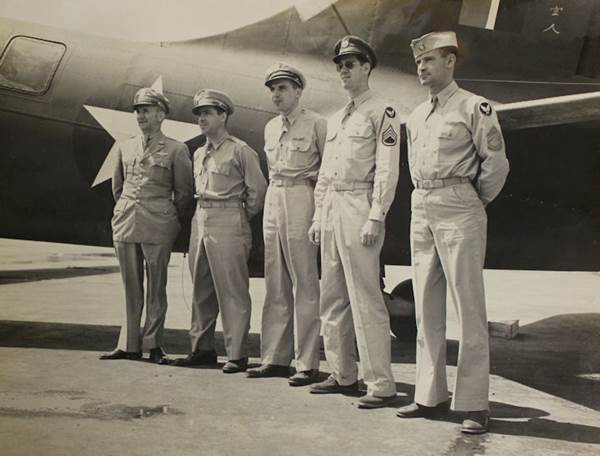
The crew of
the Burma Roaster.
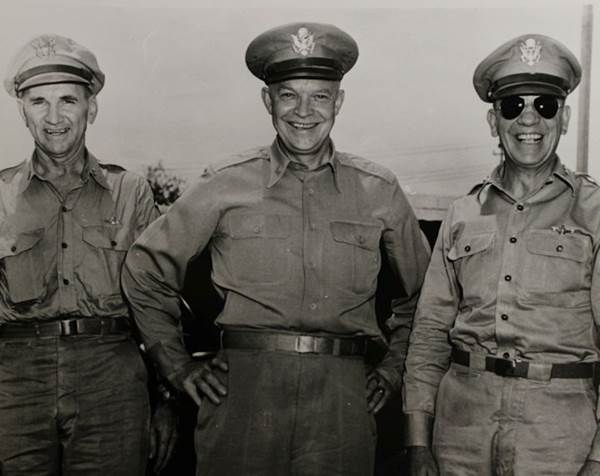
General McMullen, far left, at the end
of his 1943
ETO
inspection tour reporting to General Eisenhower.
The following 25 photos were taken by
General McMullen during his inspection
tour of the
European
Theater of Operations in 1943.
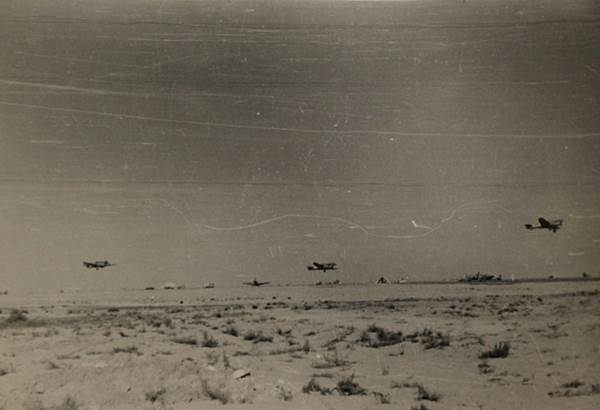
A forward
airdrome just before Tripoli, March 1943.
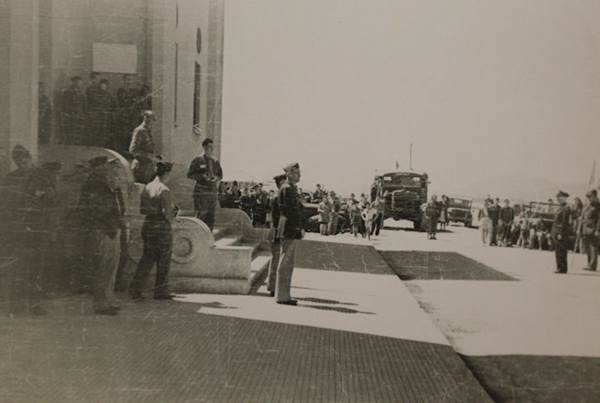
Officer and enlisted personnel getting
ready
for inspection
in Casa Blanca, Morocco, March 1943.
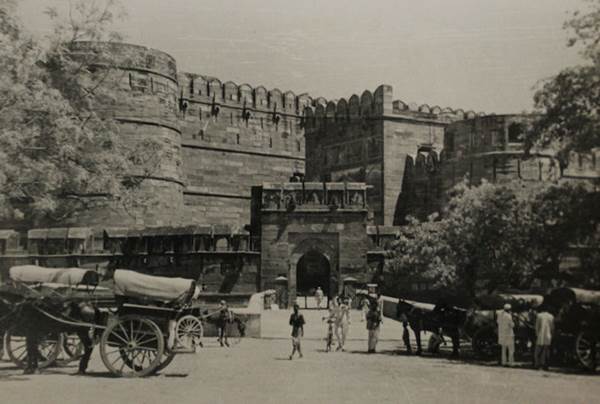
Touring the
battlements of Marrakesh, Morocco.
He remarks on the rear of the photo,
“The infantry’s ideal.”
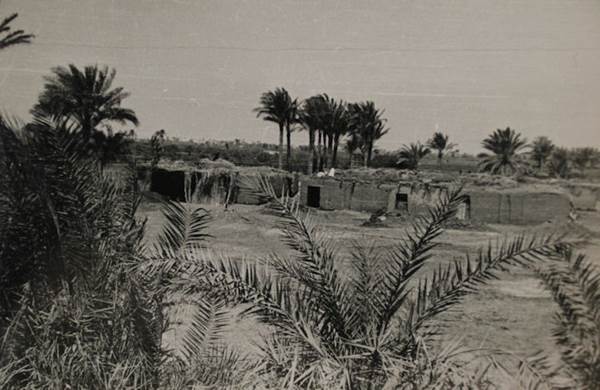
Inscription on the rear of the photo
reads, “Quarters,
Bitter Lake, Suez Canal, March 1943.”
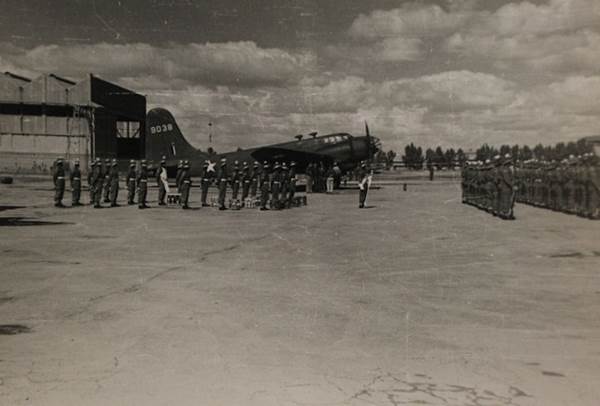
Inspection of the US Army Air Corps Air
Depot
at Guna, Eritrea, March 1943. General
McMullen’s B-23, the Burma Roadster, tail
number 9038 is
seen in the background.
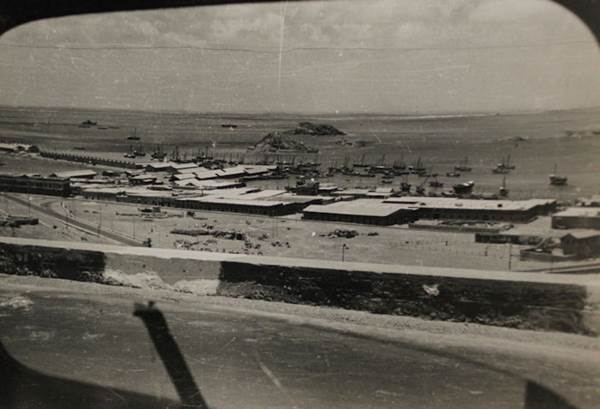
Flying into Massawa, Eritrea, March 1943.
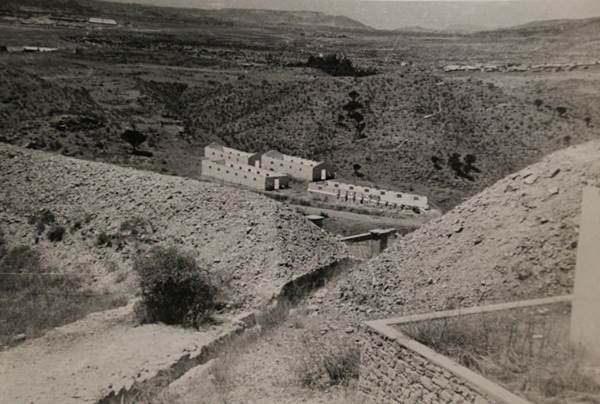
Inspecting building for possible use at Gura,
Eritrea.
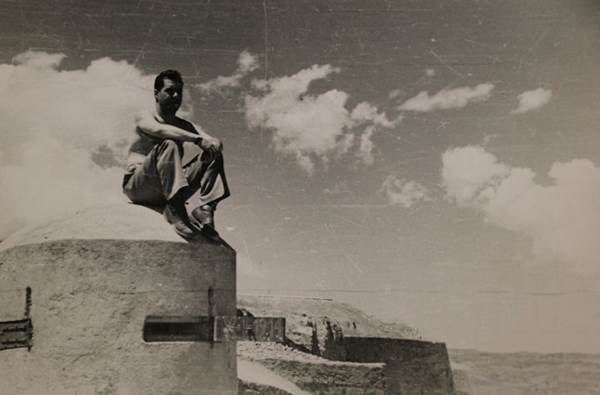
General McMullen’s pilot Lt. Colonel
Peter J. Prossen
sunning himself
while sitting on a machine gun
turret in Eretria.
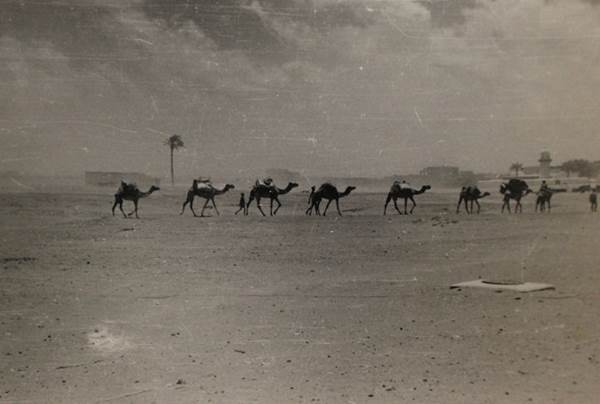
Western Sahara, March 1943.
A camel caravan as it crosses the desert
near Imdur.
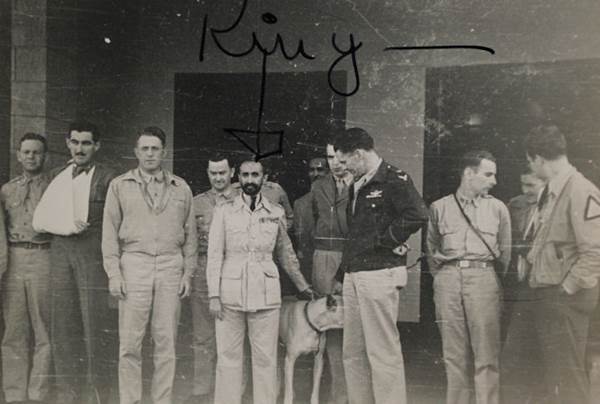
In Addis-Ababa, the capital of Ethiopia,
King
Haile Selassie pictured with officers of
the
US Army and Air Corps, April 1943.
General McMullen draws an arrow to the king
on the photo.
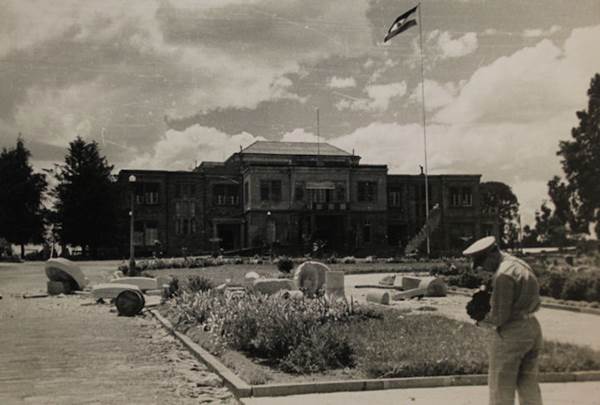
Visiting the Ethiopian capital building
in
Addis-Ababa, April 1943.
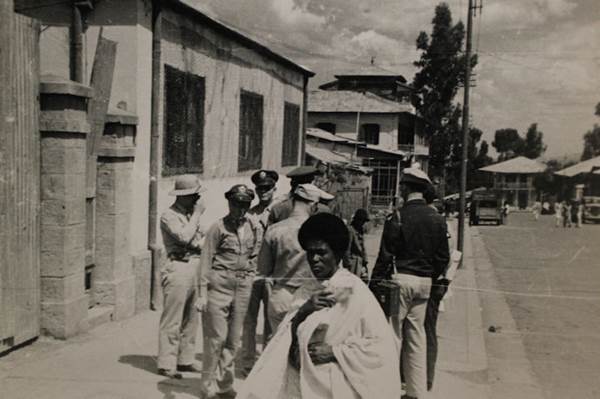
Officers of the US Army Air Corps on the
streets
of
Addis-Ababa, April 1943.
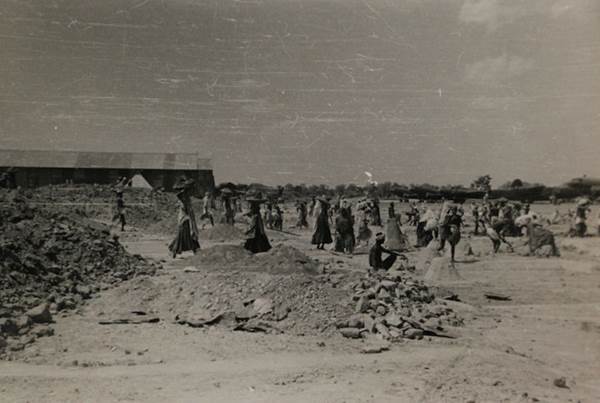
In Dhaka,
Gambia. Building an airdrome by hand
with native
workers, April 1943.
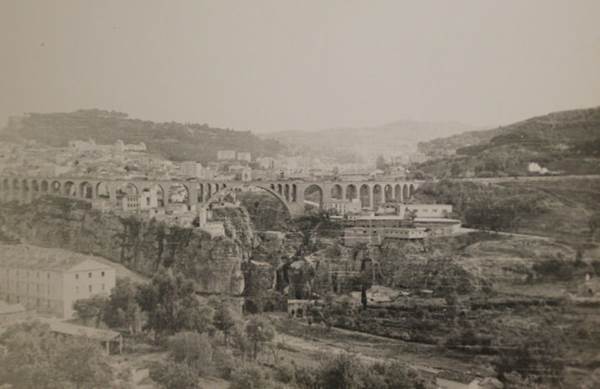
A strategic city of Constantine,
Algeria,
April 1943.
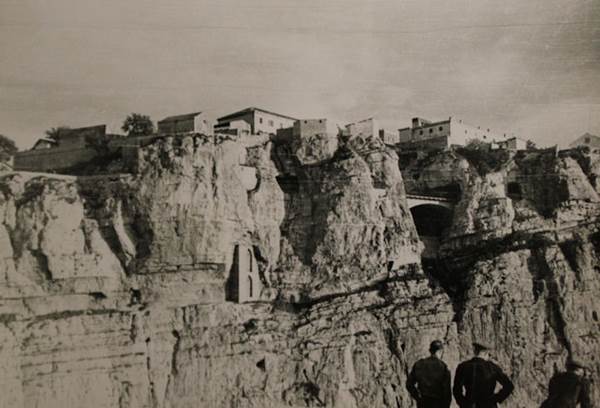
Viewing the
high positions of Constantine, Algeria.
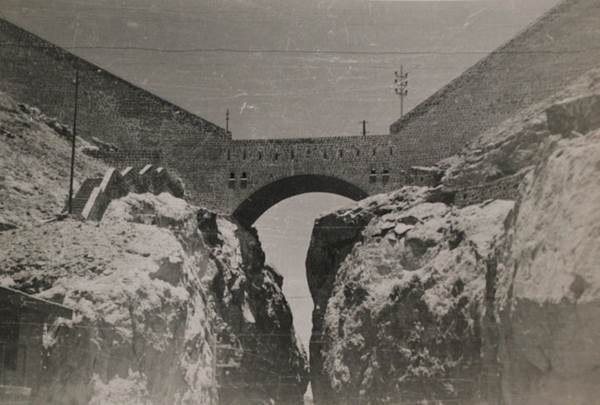
Another
strategic position in Constantine, Algeria.
Trying to land in Cairo, Egypt as a
sandstorm starts
to cover the
region, April 1943.
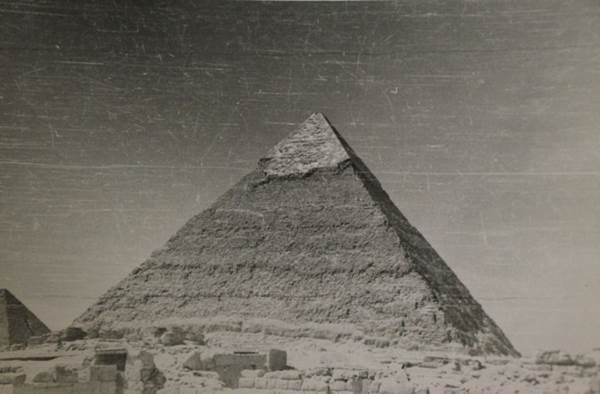
The Great
Pyramids of Cheops, Giza, Egypt.
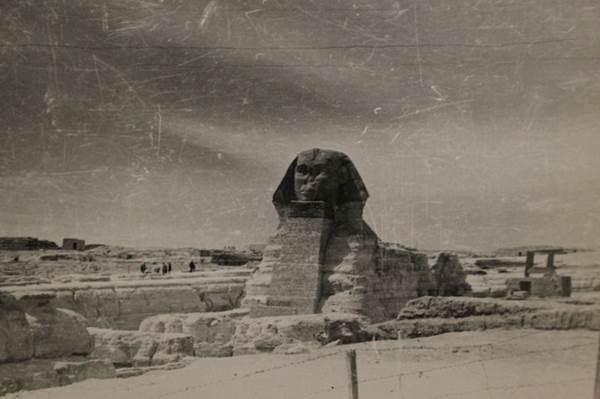
The Sphinx
of Giza, Egypt.
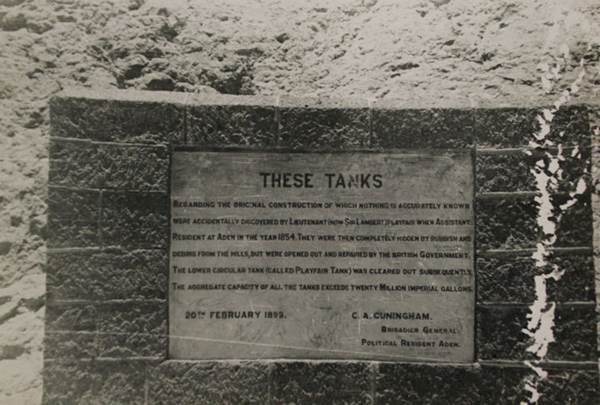
Aden, Arabia, April 1943.
The photo above is in reference to the
photo just below
this photo. The
monument reads, “THESE TANKS
Regarding the original construction of
which nothing is
accurately known were
discovered by Lieutenant (now
Sir Lambert) Playfair
when Assistant Resident at Aden
in the year
1854. They were then completely hidden by
rubbish and debris
from the hills, but were opened out
and repaired by
the British Government. The lower
circular tank
(called Playfair Tank) was cleared out
subsequently. The
aggregate capacity of all the tanks
exceed twenty
million imperial gallons. 20th February
1899. C.A. Cuningham.
Brigadier General. Political
Resident
Aden.”
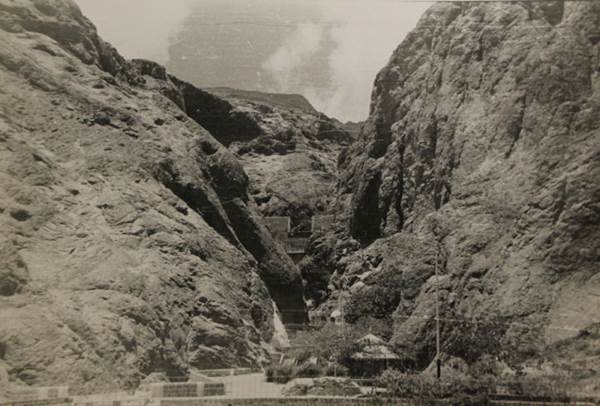
Aden, Arabia, April 1943.
The water
storage tanks described in the photo above.
The tanks were being inspected for a
primary water source
for allied
forces in the area and civilian use.
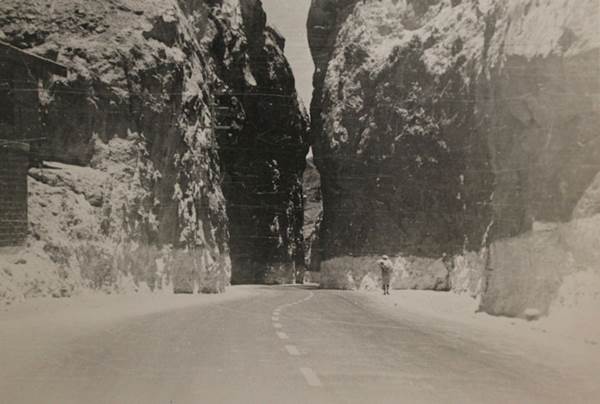
Aden, Arabia, April 1943.
The road going into the water storage
area in relation
to the two
photos above.
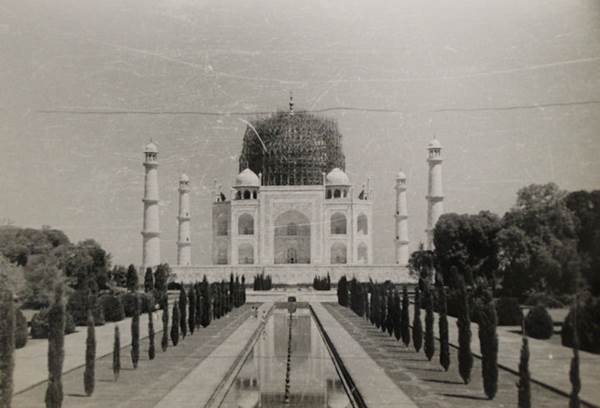
India, April 1943.
The Taj Mahal with the dome under
renovation.
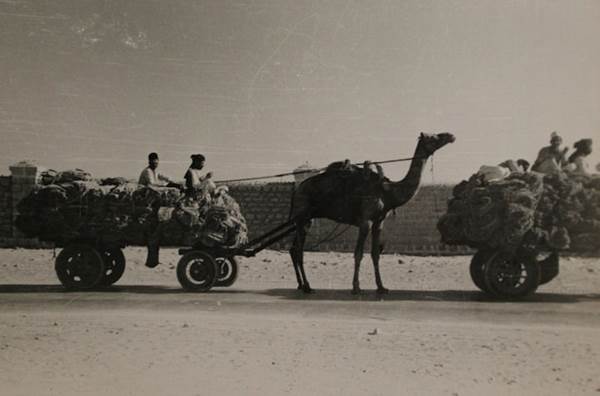
Karachi, India, April 1943.
Inscription on the rear of the photo
reads, “The only place
Where camels
draw 4-wheeled vehicles.”
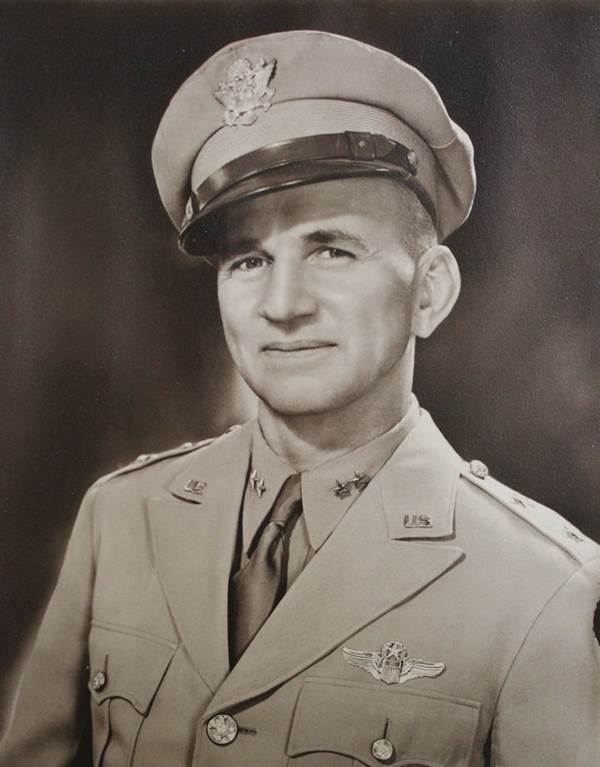
During General McMullen’s ETO inspection
tour,
he learned he
was promoted to major-general receiving
his second
star. This photo was taken on his return to
Duncan
Field, San Antonio, Texas.
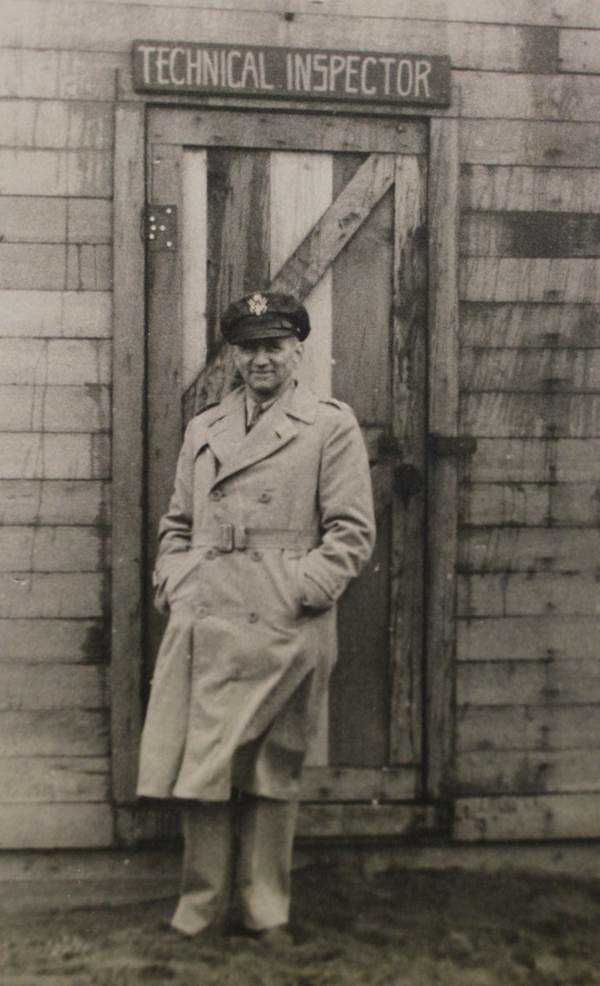
Major General Clements McMullen on his
Alaskan
inspection tour,
October 1943. This photo was taken
in front of
the Technical Inspector’s Office on Shemya
Island at the southernmost point of the
Aleutian
Island
chain.
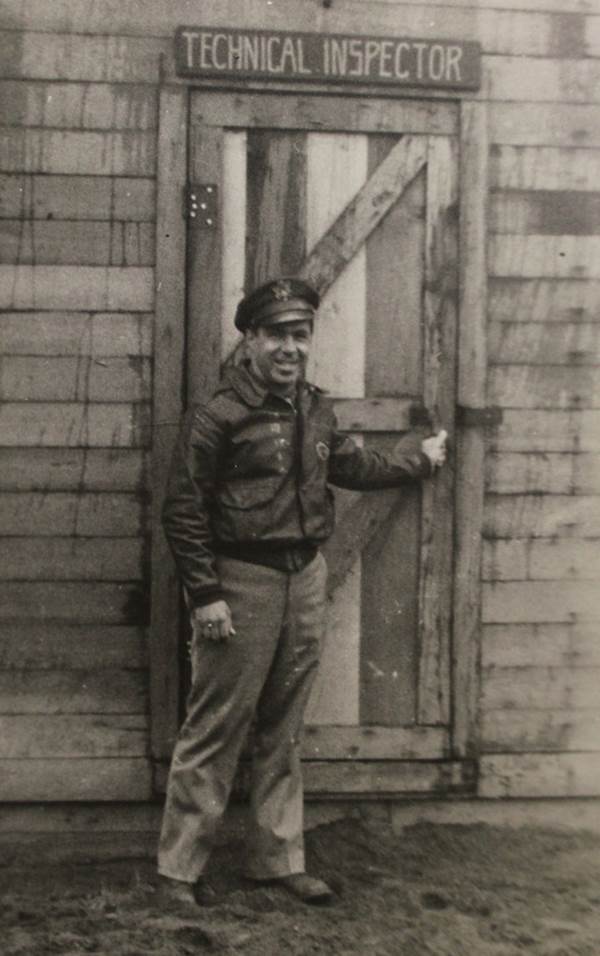
Lt. Colonel Peter J. Prossen,
the general’s pilot,
in front of
the Technical Inspector’s Office on Shemya
Island, October 1943.
General McMullen standing with his
co-pilot,
Lieutenant William J. Knezevich, Nome, Alaska
September 1943.
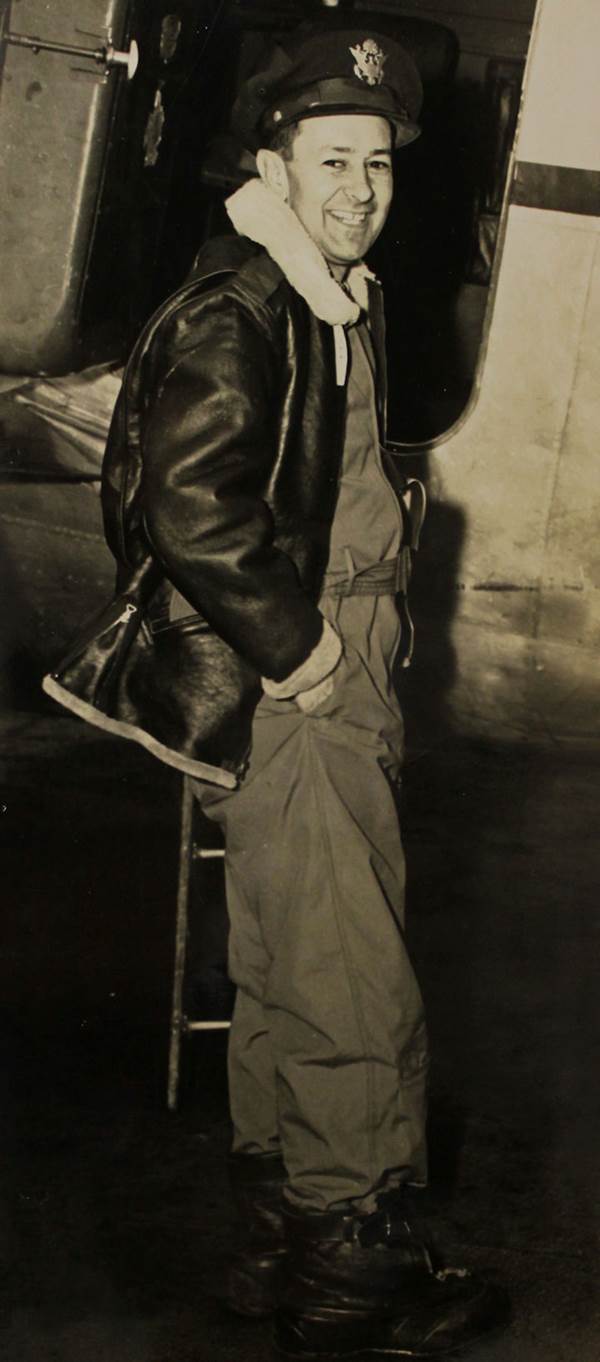
Ready for some heavy duty cold flying
in Alaska.
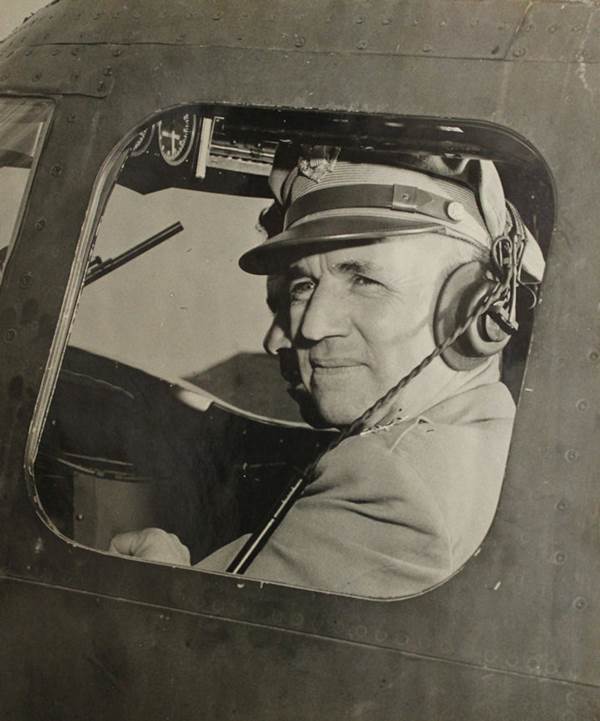
On numerous occasions General McMullen
enjoyed
piloting the
airplanes that were taking him places
whether on an inspection
tour or for regular duty.
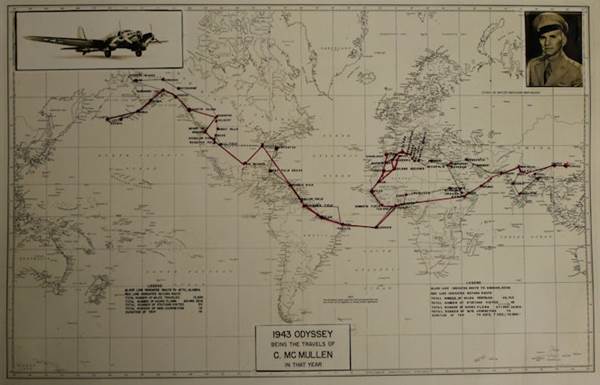
General Clements McMullen referred to
his two
Inspection tours in 1943 as his Odyssey
Travels.
The map above displays the entire route
of both
Inspection tours in 1943, the plane used
for the travel
And a phot0
of General McMullen. The title key of the
Map says “1943 Odyssey being the travels
of
C. McMullen
in that year.”
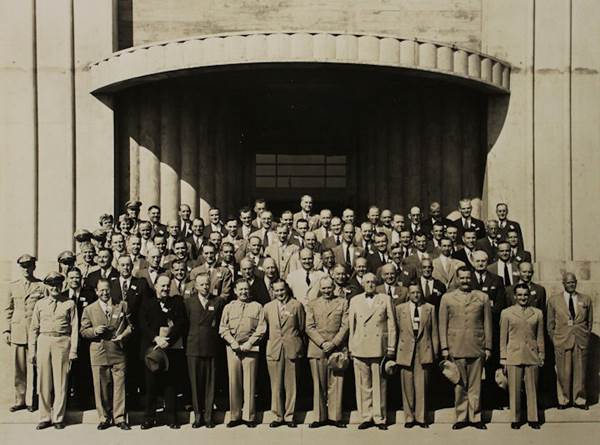
General McMullen as chief of the
Maintenance
Division,
Patterson Field, Dayton, Ohio, 1944.
located seventh
from left, front row.
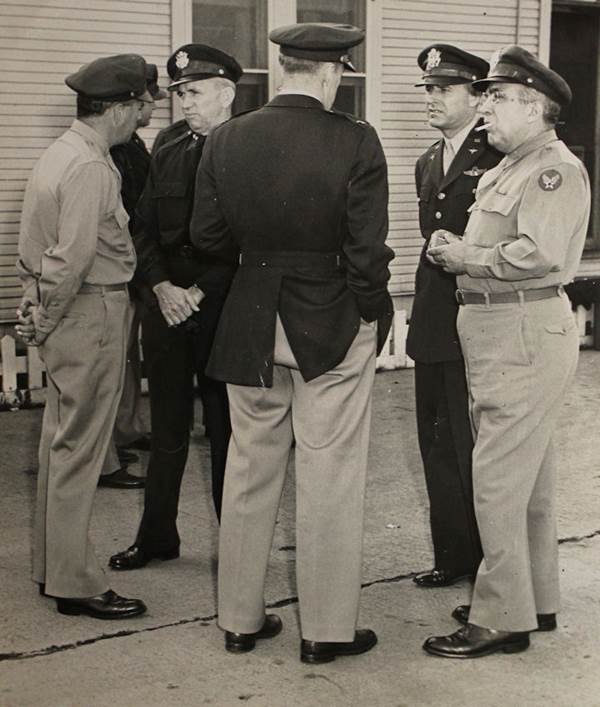
Photo dated 1944, General McMullen,
fourth from
right, talking to
other Army Air Corps officers
at Patterson
Field, Dayton, Ohio prior
to his
transfer to the Pacific Theater of
Operations.
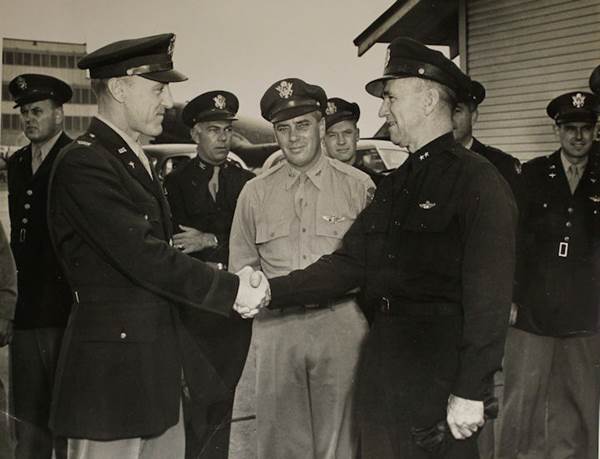
At Patterson Field, Dayton, Ohio as
General McMullen
leaves for the
Pacific Theater of Operations as
Commanding General, Far Eastern Air
Service
Command,
1944.
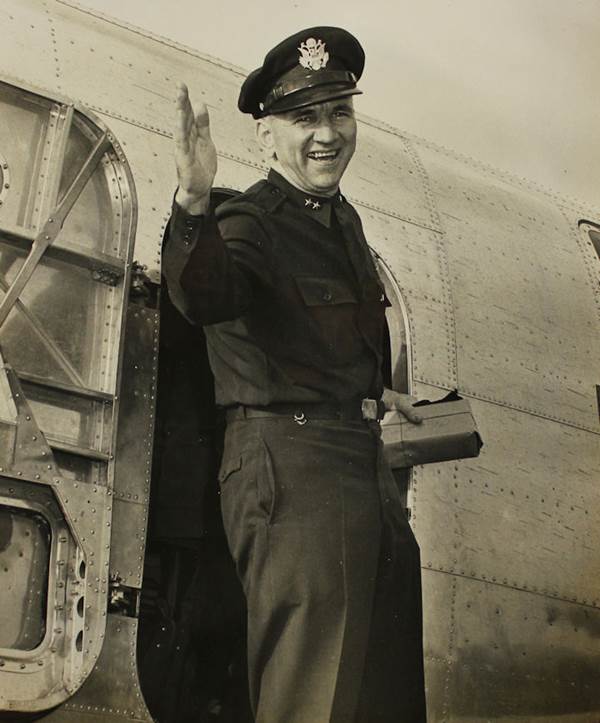
Major General Clements McMullen leaving
For his
overseas duty.
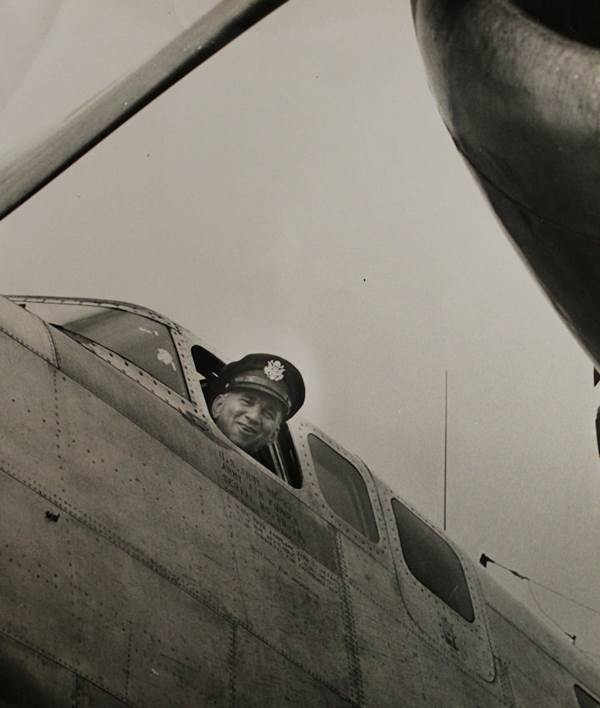
Leaving for the Pacific Theater of
Operation as,
Commanding General, Far Eastern Air
Service Command,
1944. Another chance to pilot an
airplane.
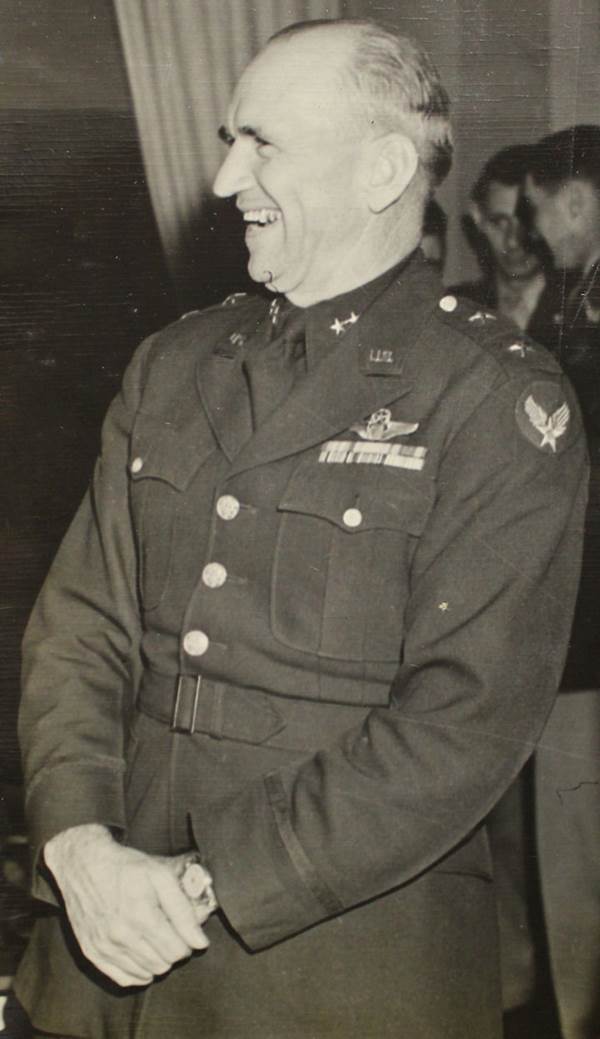
Major General Clements McMullen wearing
His service dress coat cut and restyled
As an Ike
jacket.
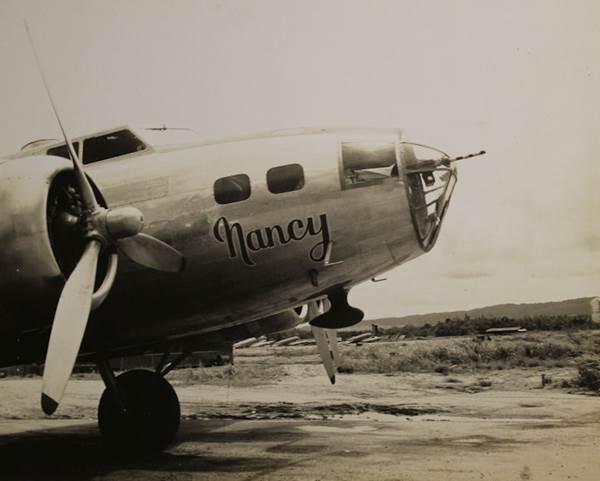
While assigned as Commanding General of
the Far
Eastern Air Services, General McMullen
had his own
B-17 assigned to him for his use. He
named the B-17
Nancy in
honor of his wife. The general writes on the
rear of the
photo, “No champagne was expended
at the
christening.”
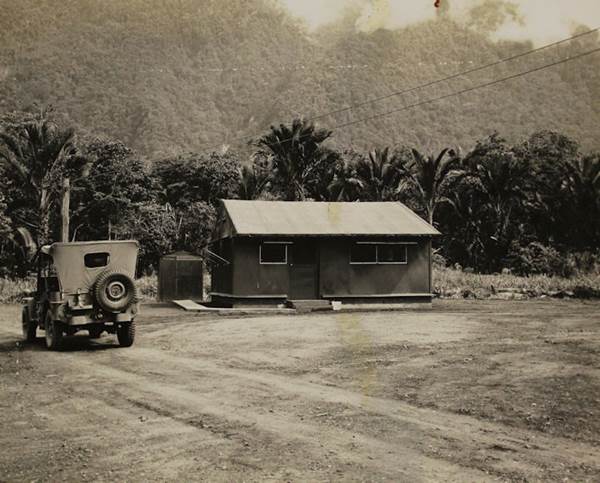
On the rear of the photo General
McMullen writes,
“My home in Hollandia
from November 15 to
December 1, 1944.
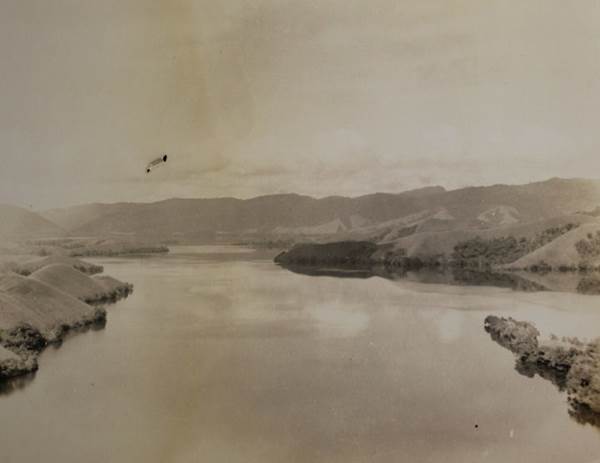
Lake Sentani, Hollandia, Dutch New
Guinea, 1944.
The area with the lake was of
significant strategic
value to the
Allies.
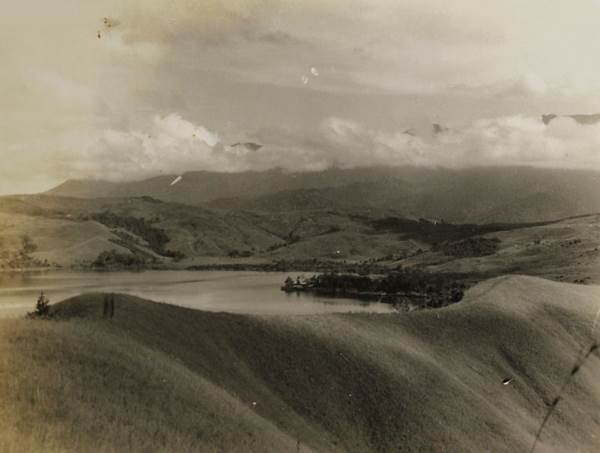
Lake Sentani, Hollandia, Dutch New
Guinea, 1944.
The Japanese constructed three airfields
on the flat
plain between the
Cyclops Mountains and Lake Sentani.
Once the Allies occupied this area the
town and the
airfields were of
high value.
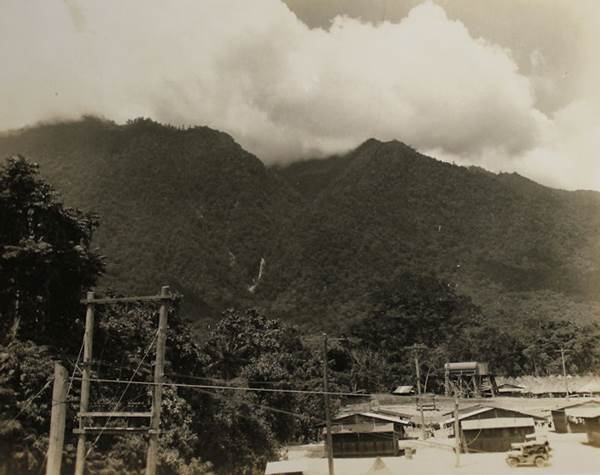
The Cyclops Mountains, waterfall and Hollandia,
Dutch New
Guinea, 1944.
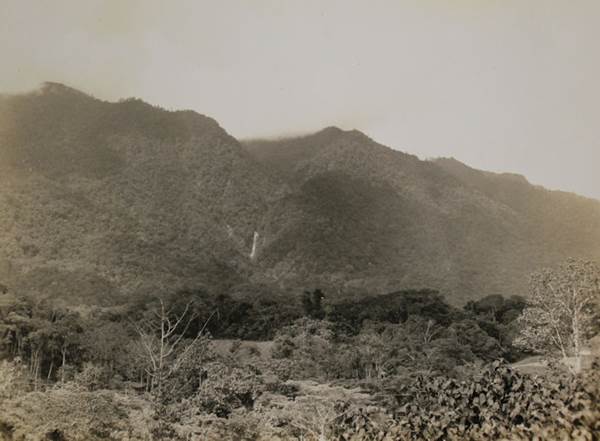
A close up of the Cyclops Mountains and
its waterfall,
Hollandia, Dutch New
Guinea, 1944.
The following five illustration
are an artist’s
rendition of Hollandia, Dutch New Guinea in
March 1945. The name of the artist is R.
(Mac)
D. Graham. General
Clements McMullen estate.
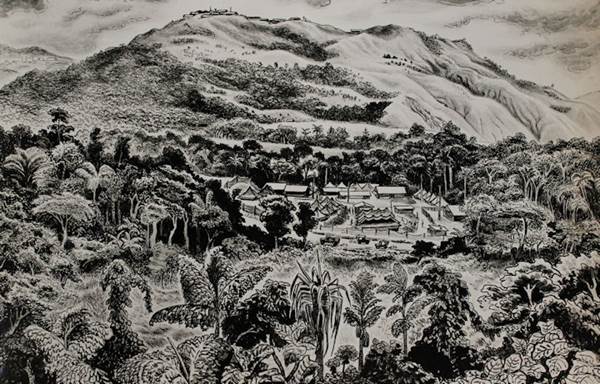
Identified as Hollandia,
General Headquarters,
March 1945.
Identified
as Cyclops Mountain with waterfall.
Identified as Cyclops Mountain with
waterfall, down the
road, on the
outskirts of the town.
Identified
as Hollandia.
Outskirts of
Hollandia.
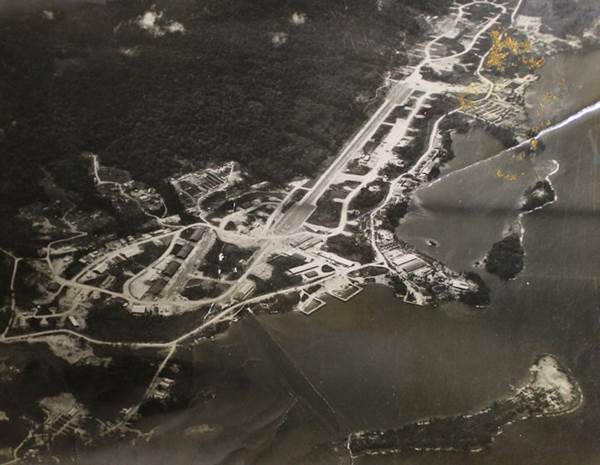
Finchhaven Air Depot,
New Guinea, 1945.
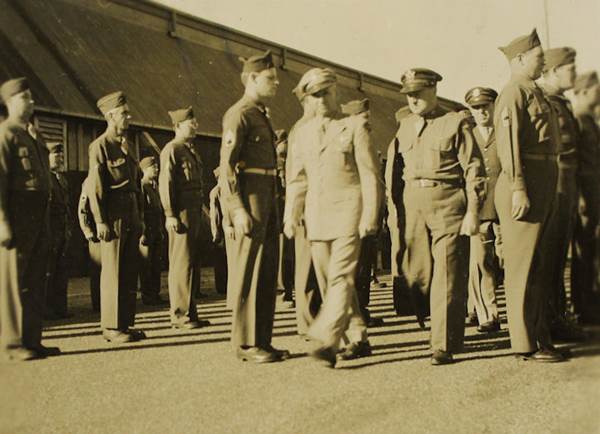
General McMullen on an inspection of an
air force base
in Brisbane, Australia,
13 July 1945.
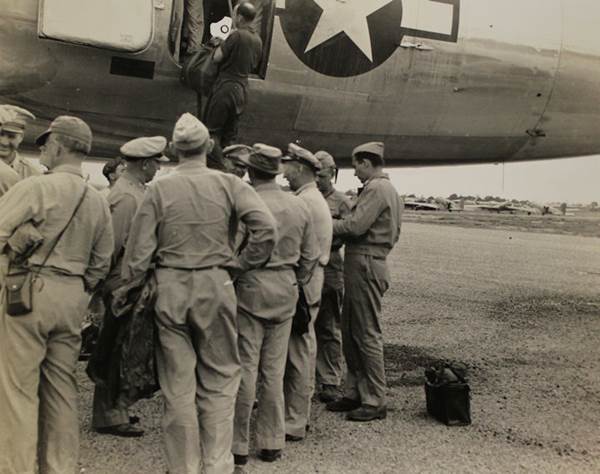
General McMullen, third from right,
talking to
the officers and
men prior to his departure
from Brisbane,
Australia.
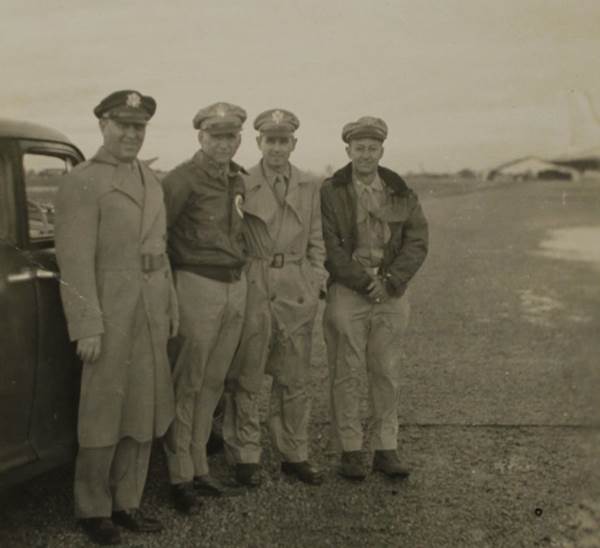
Inspection of Eagle Farm, Brisbane,
Australia,
July 1945. The aerodrome at this
location was used
as a
reassembly and test airfield for aircraft shipped
from the United
States.
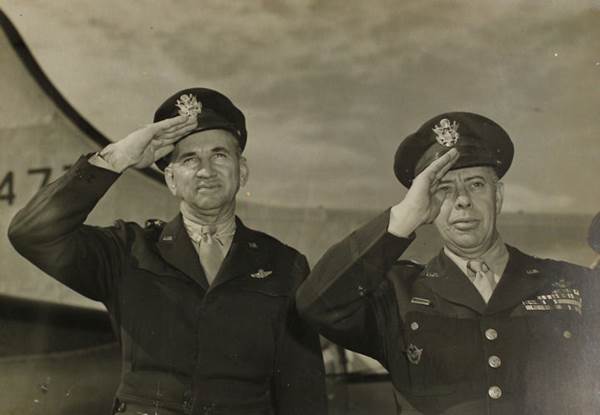
Generals McMullen and Kenney salute the
US Flag
as it is
raised for the reoccupation of the Philippines
from the Empire
of Japan, 1945.
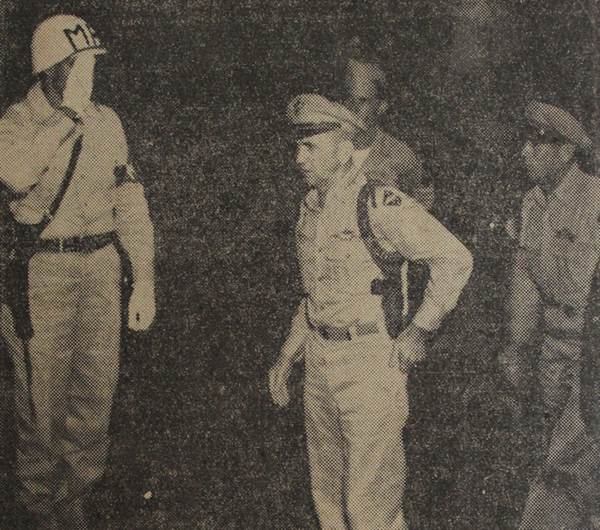
A photo from the San Antonio Evening
News September
1945. Major General Clements McMullen,
head of
the Far East
Air Service Command, as he arrives
for the
official surrender of all Japanese forces in
the Philippines
to the United States. Notice
the general is
wearing a side arm.
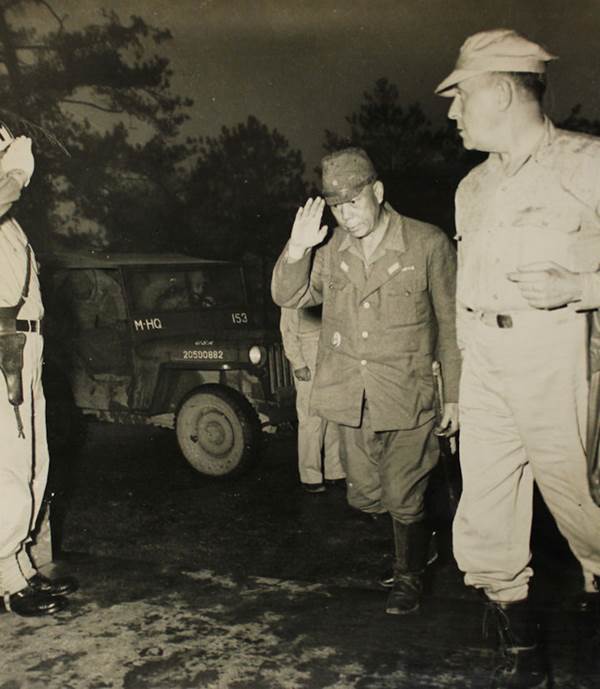
Japanese General Tomoyuki Yamashita, the
Tiger of
Malaya, as he arrives to surrender all
Japanese forces
in the
Philippines to the United States,
2 September 1945.
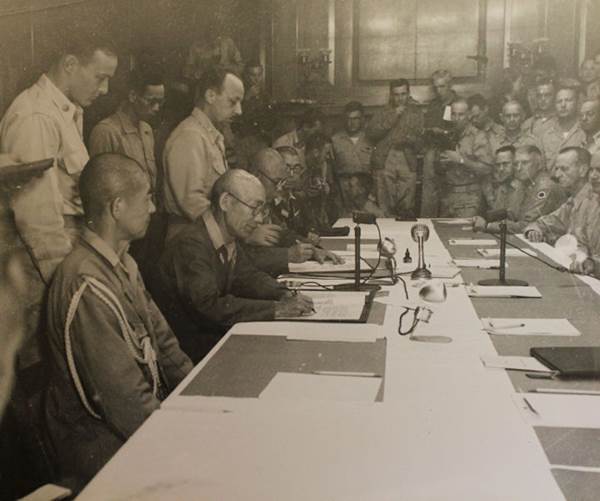
The official surrender
ceremony of all Japanese forces
in the
Philippines to the United States,
2 September 1945.
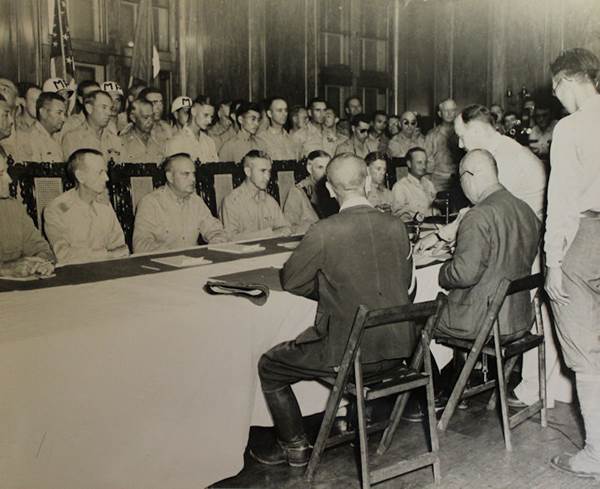
The official surrender
ceremony of all Japanese forces
in the
Philippines to the United States,
2 September 1945.
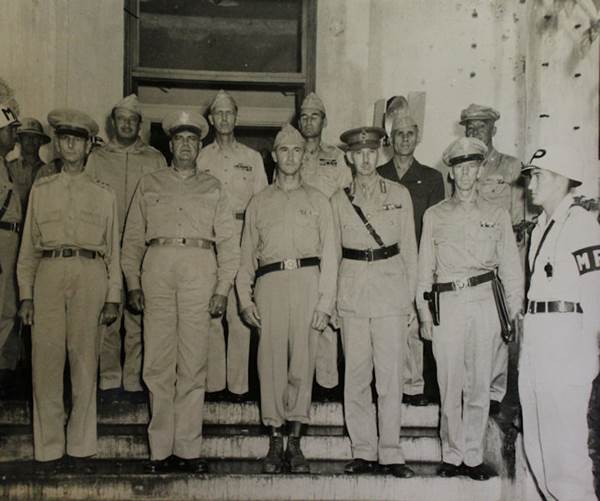
A part of the American contingent
accepting the
surrender of all
Japanese forces to the United States
in the
Philippines, 2 September 1945.
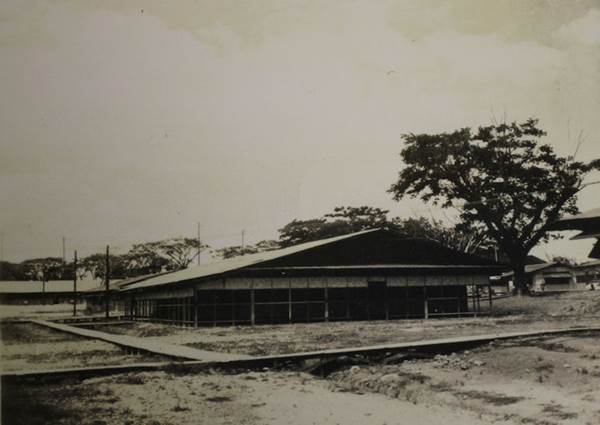
Major General Clements McMullen’s office
at
Fort
McKinley, US Army Base in the Philippines, 1945.
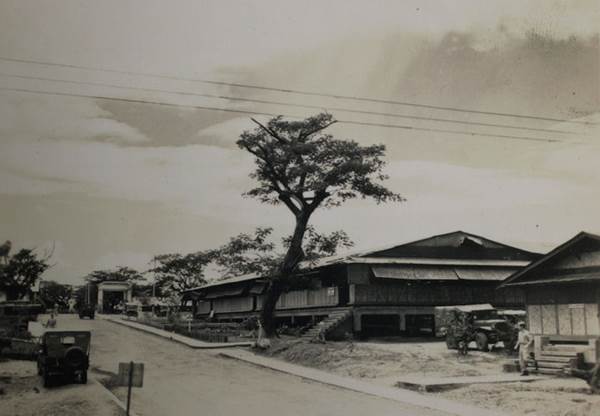
Headquarters Fort William McKinley, US
Army Base
in the
Philippines, 1945.
At the end of World War II aircraft were
already
being “moth
balled” and stored for future use and
or disposition.
General McMullen visited one of the
storage areas and
took photos of the “nose art” on the
stored airplanes.
The following 33 photos are the
“nose art”photos. The location of the storage facility
is unknown.
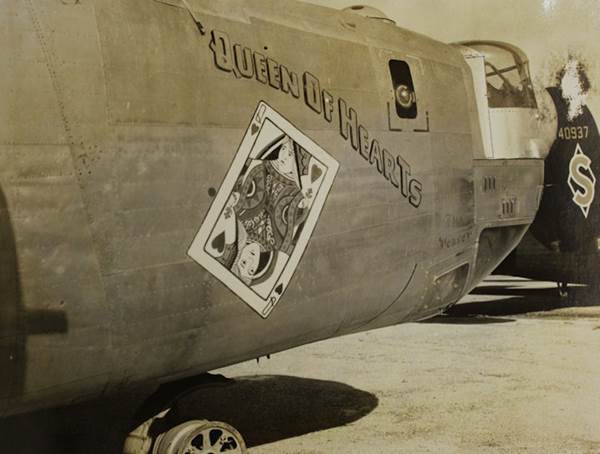
B-24 Queen of Hearts
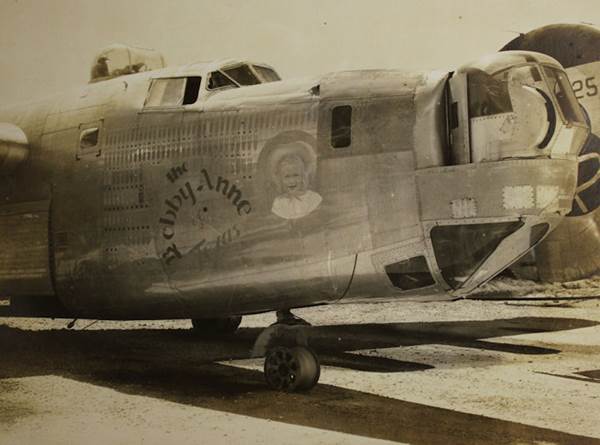
B-24 The Bobby
Anne of Texas
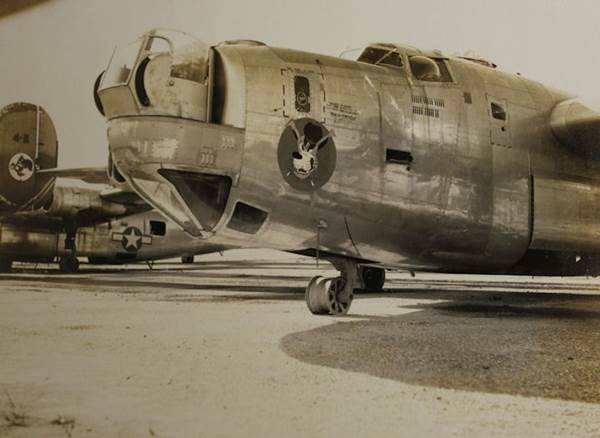
B-24J
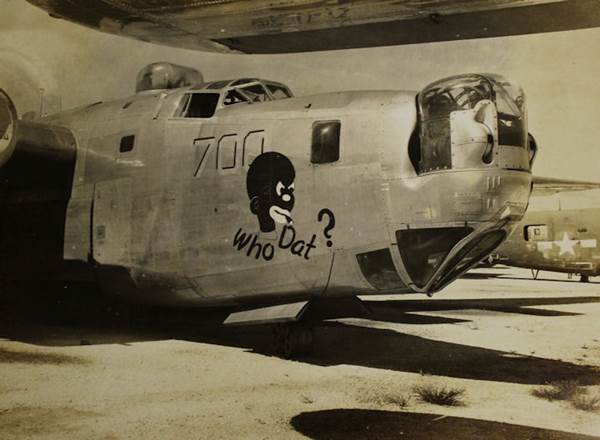
B-24 Number 700 Who Dat?
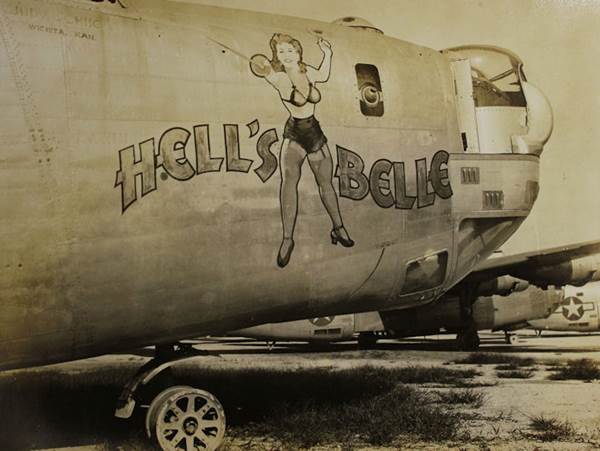
B-24 Hell’s Belle
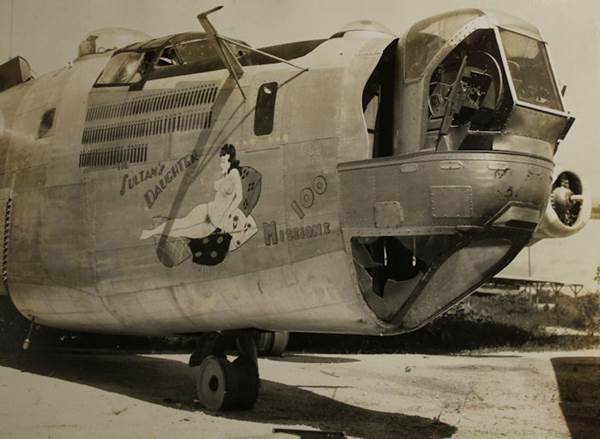
B-24 The
Sultan’s Daughter 100 Missions
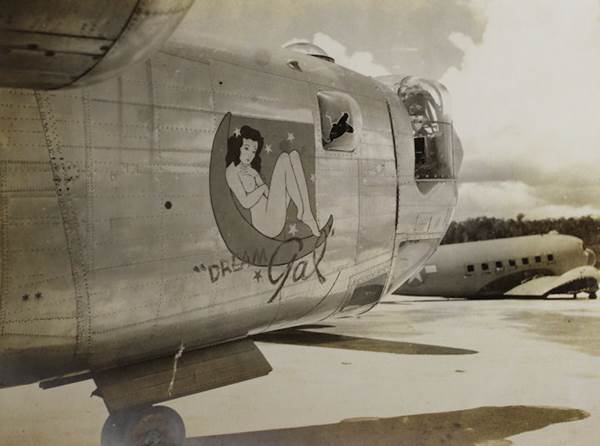
B-24 Dream Gal
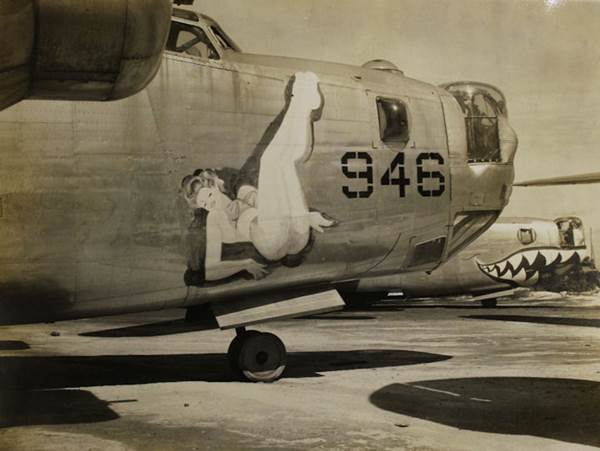
B-24 Number 946
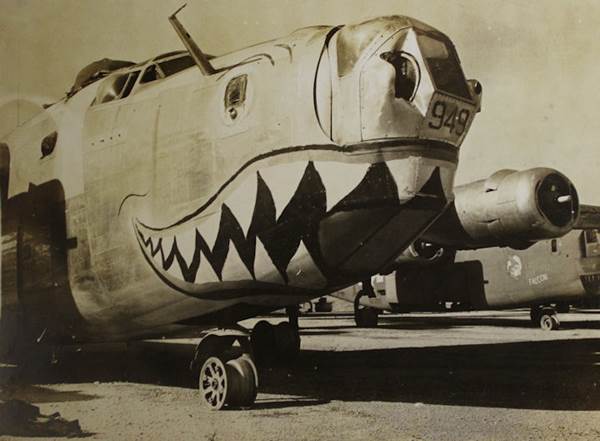
B-24 Number 949
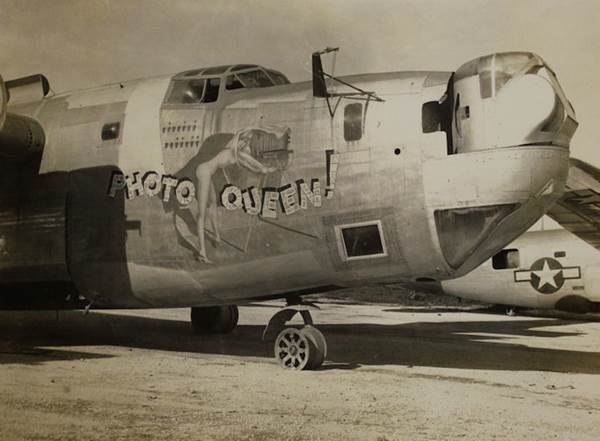
B-24 Photo Queen!
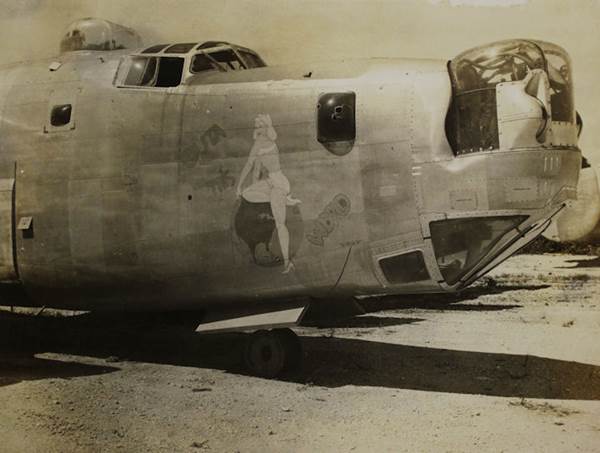
B-24 Outa This World
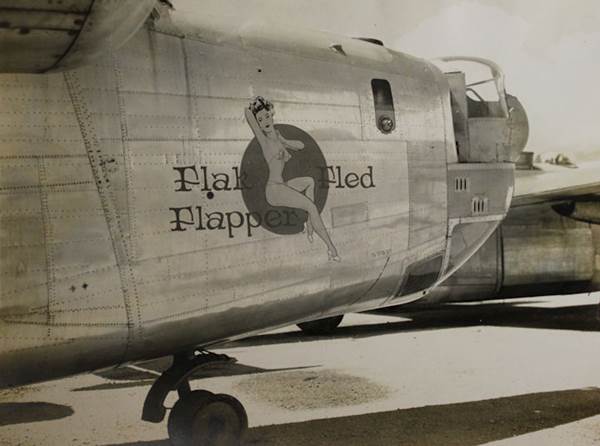
B-24 Flak Fled Flappers
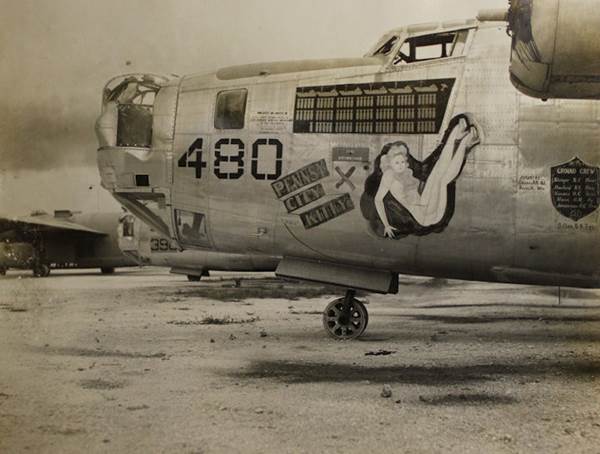
B-24 Pennsy
City Kitty Number 480
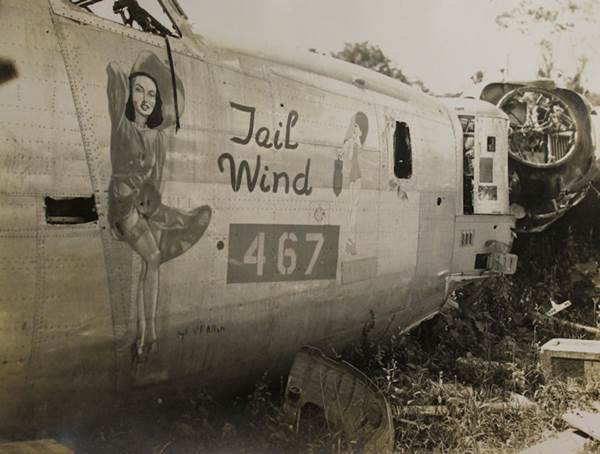
B-24 Tail Wind Number 467
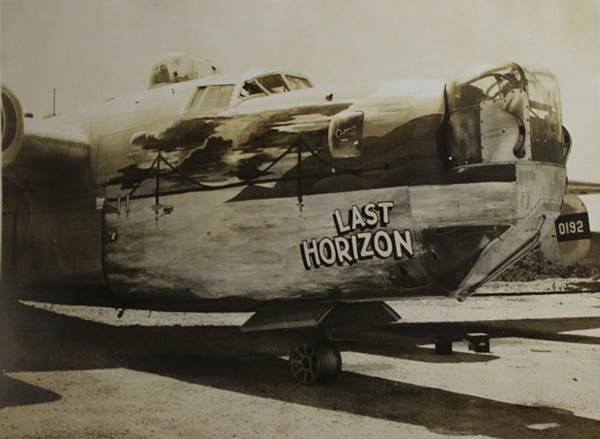
B-24 Last Horizon
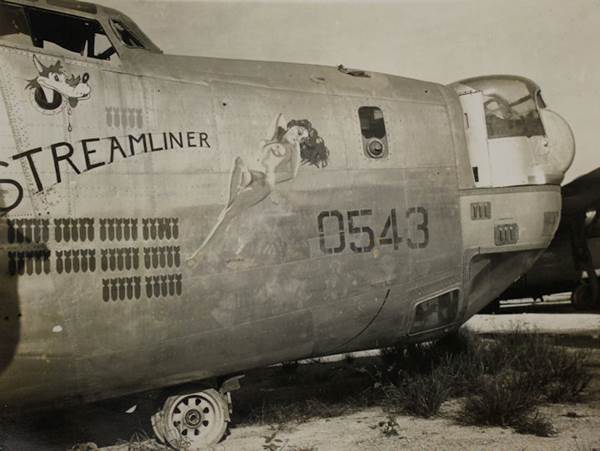
B-24 Streamliner Number 0543
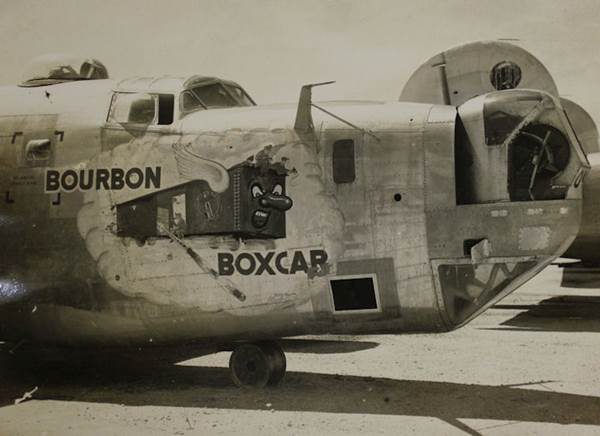
B-24 Bourbon Boxcar
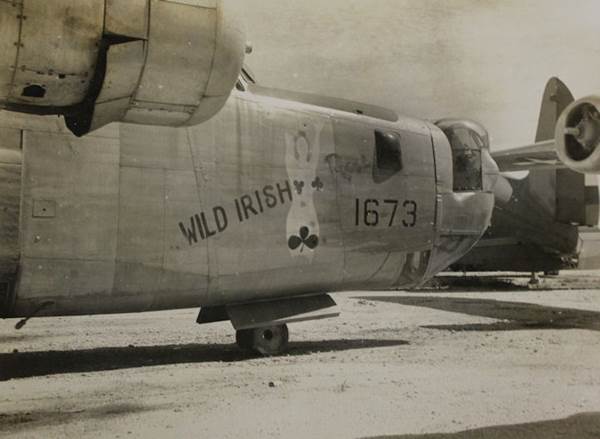
B-24 Wild Irish Rose Number 1673
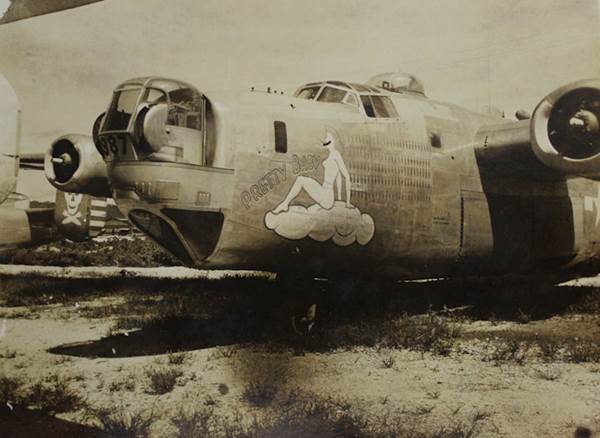
B-24 Pretty Baby
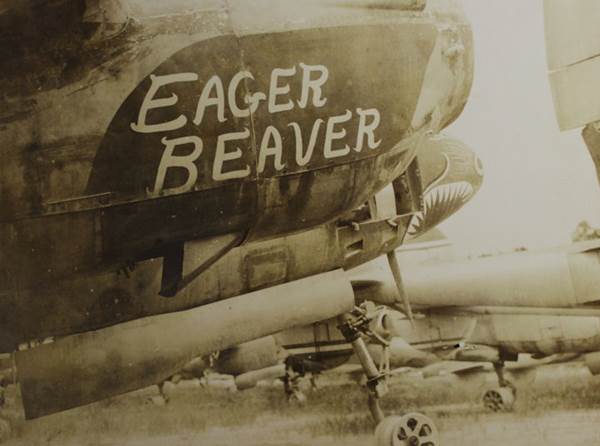
B-24 Eager Beaver
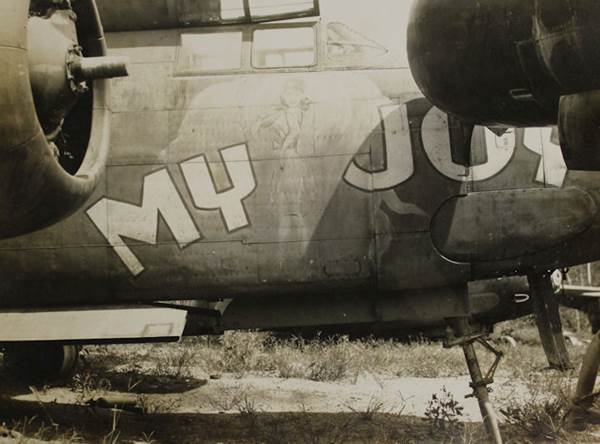
B-24 My Joy
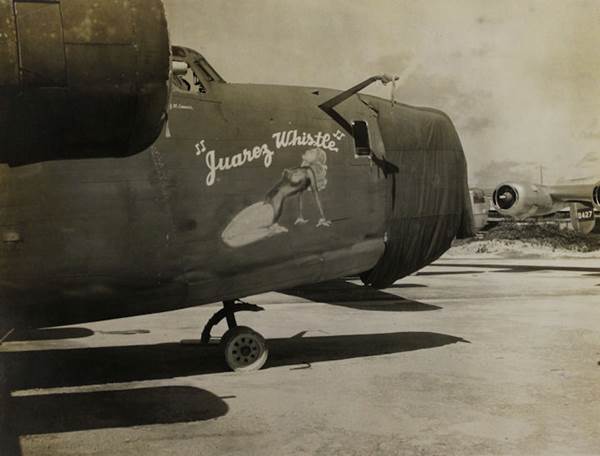
B-24 Juarez Whistle
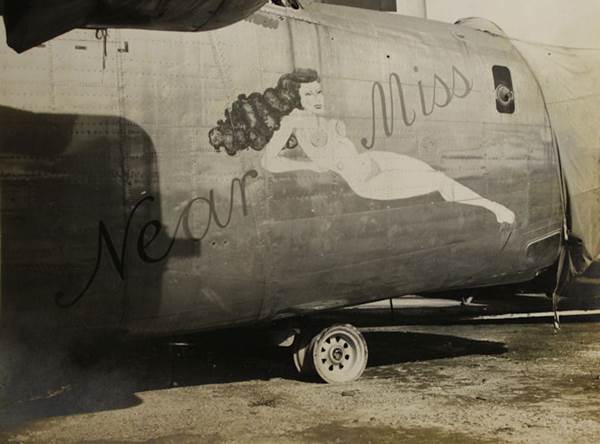
B-24 Near Miss
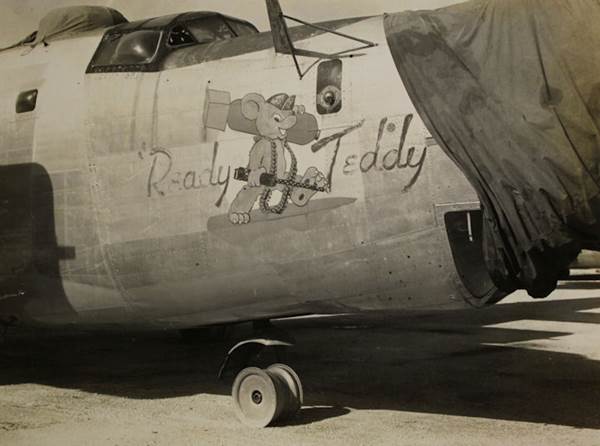
B-24 Ready Teddy
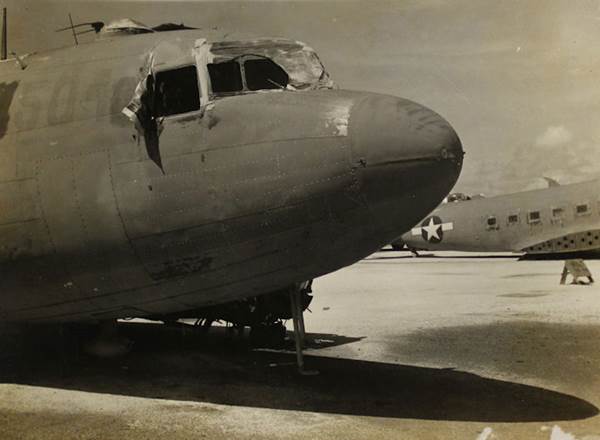
C-47 Number 504
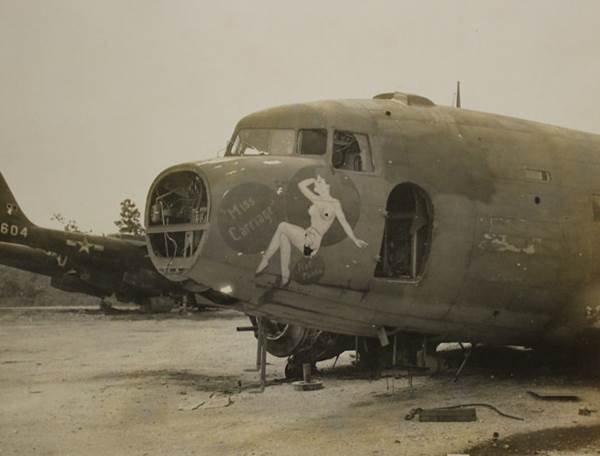
C-47 Miss Carriage
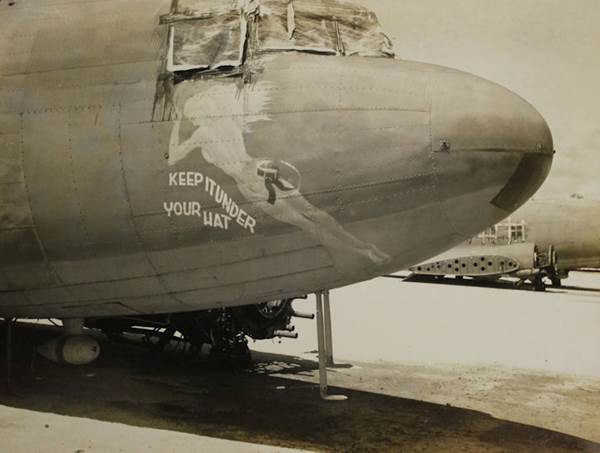
C-47 Keep It Under
Your Hat
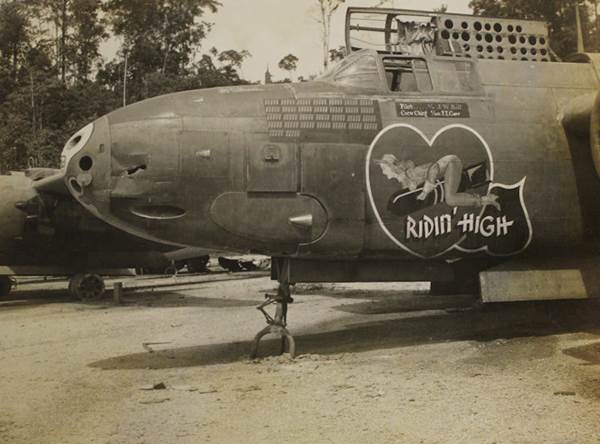
Ridin High
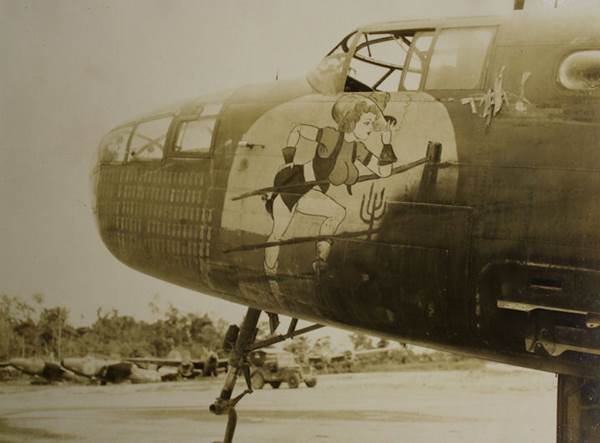
No Markings
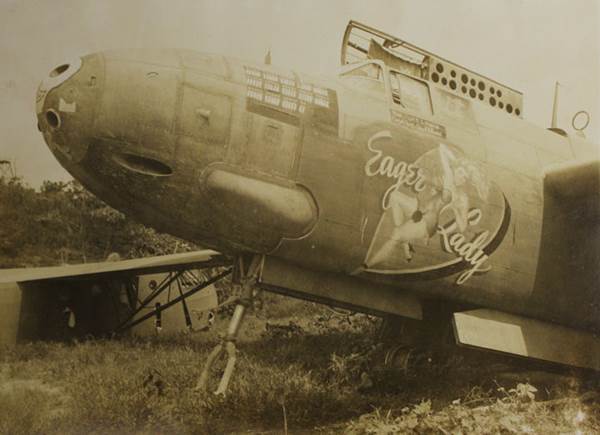
Eager Lady
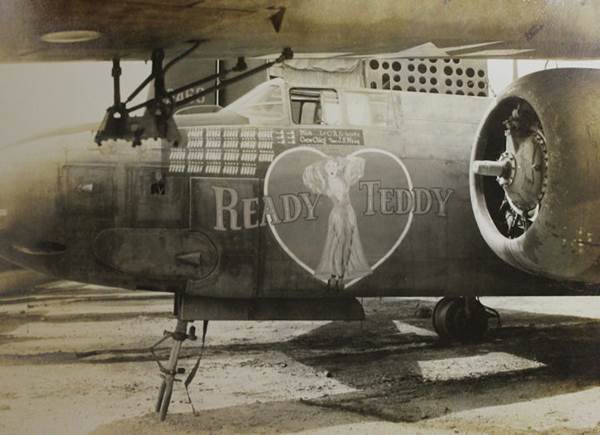
Ready Teddy
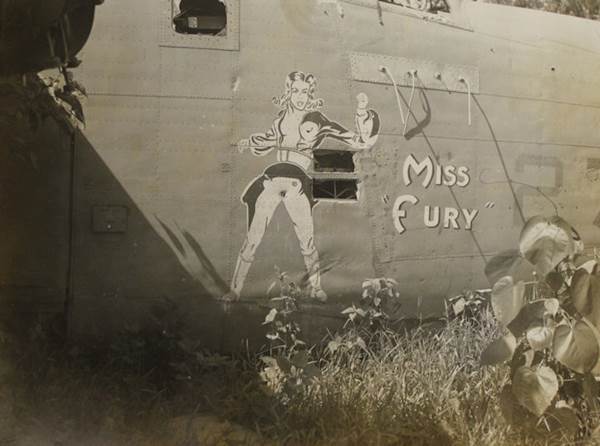
Miss Fury
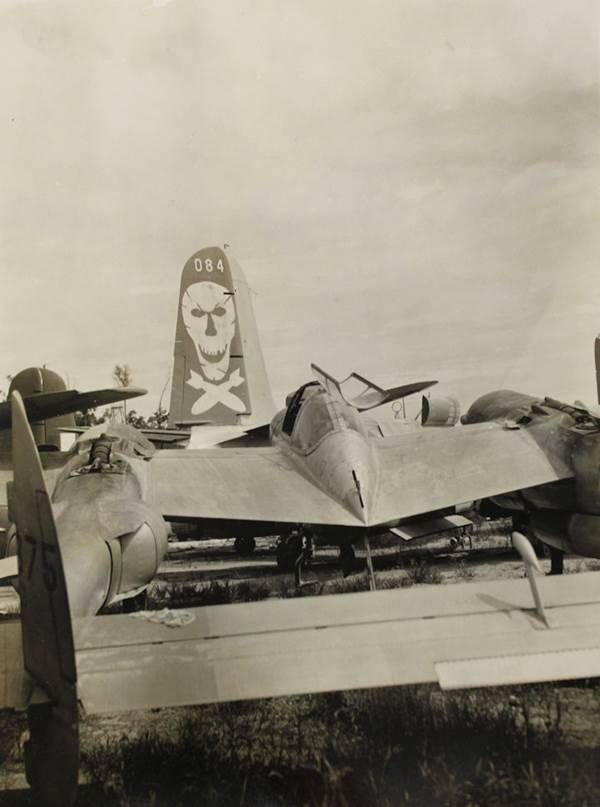
084
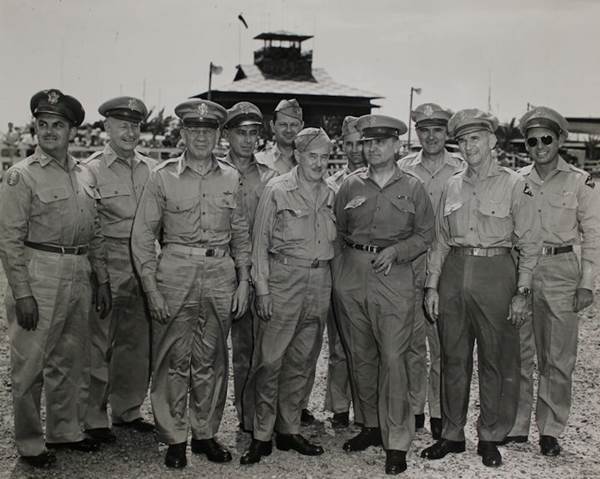
Following World War II as Chief of
Staff,
Pacific Air Command, 28 April 1946.
From left to right – Mr. Roy W. Howard,
correspondent, Colonel A.A. Fickel, Lieutenant General
Ira C. Eaker, Brigadier
General F.O. Carroll, Major
General Clements McMullen and Brigadier General
Emery S. Wetzel
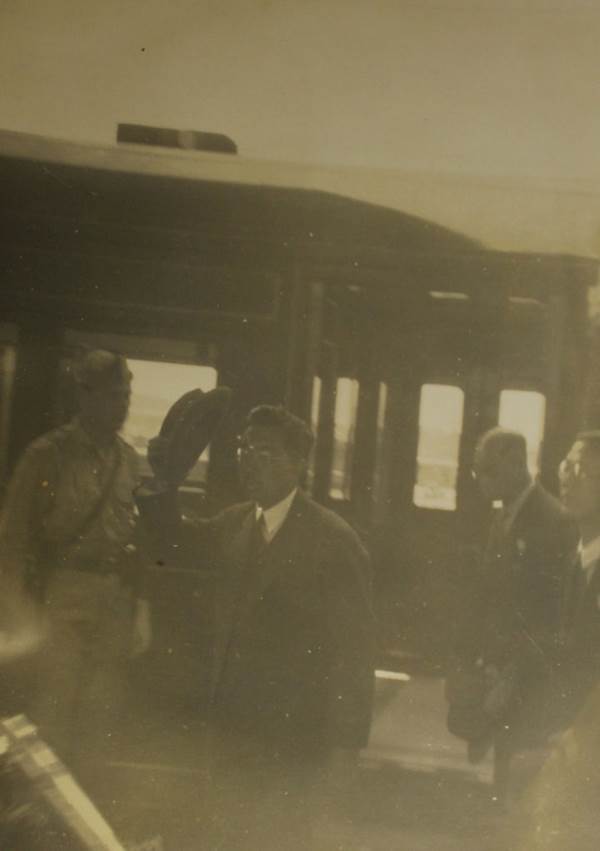
Emperor Hirohito of Japan, waving his hat
as
he disembarks from a train on his way
to
American Headquarters in Tokyo.
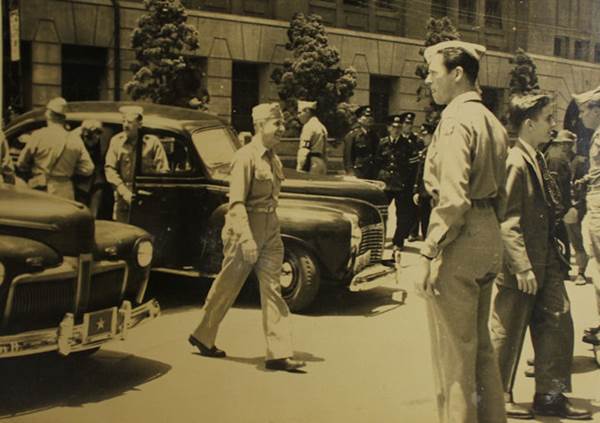
US military brass as they anticipate the arrival
of
Emperor Hirohito at American Headquarters in Tokyo.
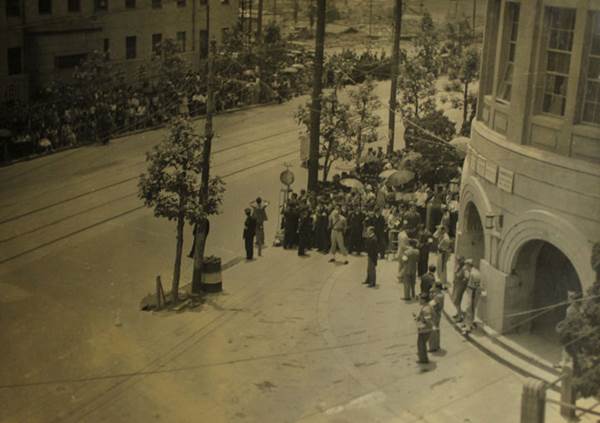
The crowds outside American Headquarters build in
anticipation of the arrival of Emperor Hirohito.
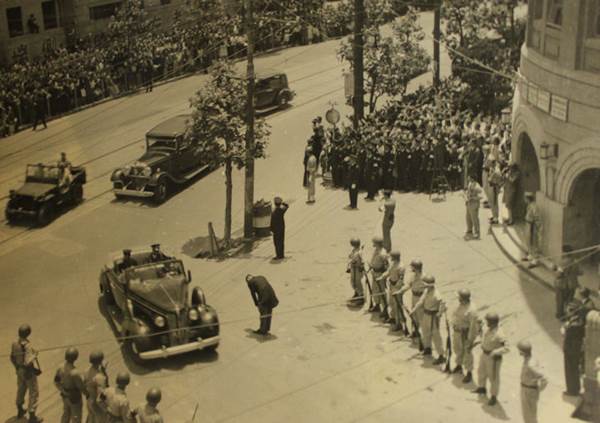
The motorcade of Emperor Hirohito arriving at
American Headquarters in Tokyo. A Japanese
delegate bows as the emperor arrives.
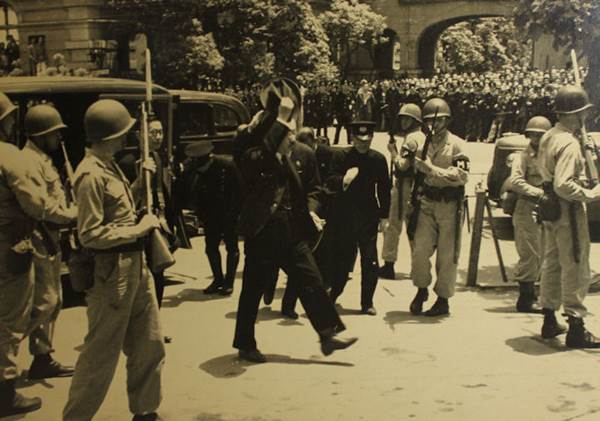
Emperor Hirohito, waving his hat, as he proceeds
to
American headquarters from the motorcade.
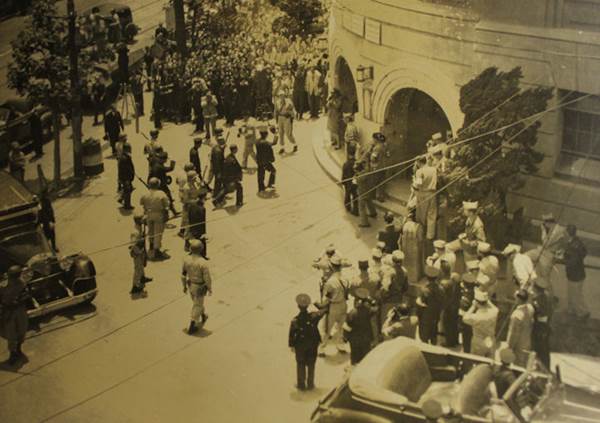
Another view of Emperor Hirohito, waving his hat,
As he enters American Headquarters.
A Japanese diplomat and his wife.
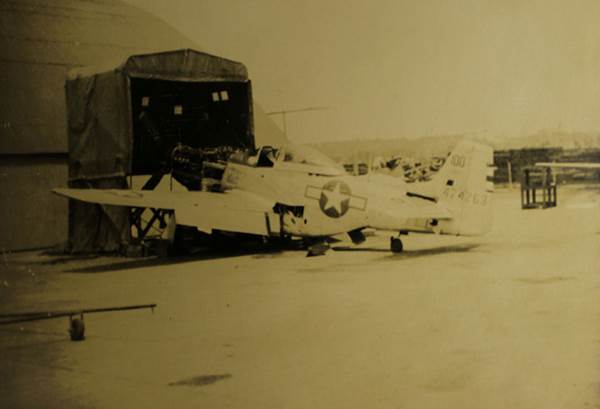
An US air depot in occupied Japan.
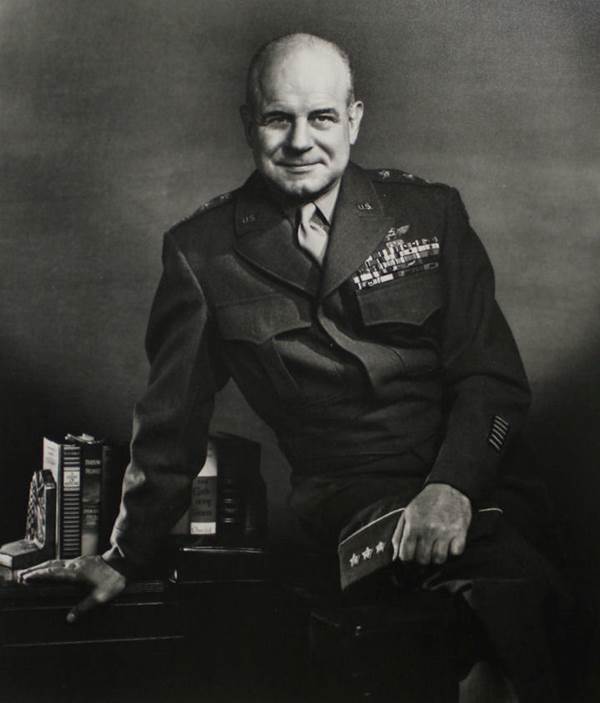
A photo from
a friend. The photo is inscribed,
“To Clem McMullen: In appreciation of
his fine
friendship. J.H.
Doolittle”
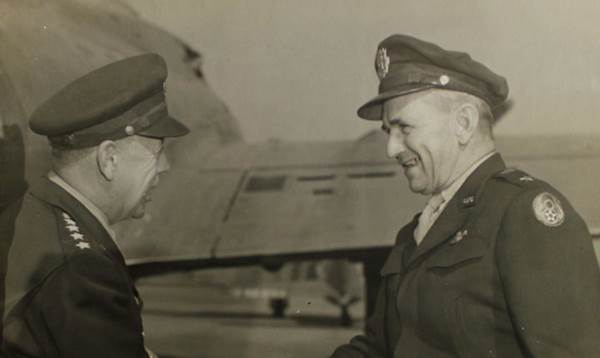
General George Kenney congratulates
General
Clements McMullen as he takes command of
the
8th Air Force at Fort Worth Army Airfield, Texas.
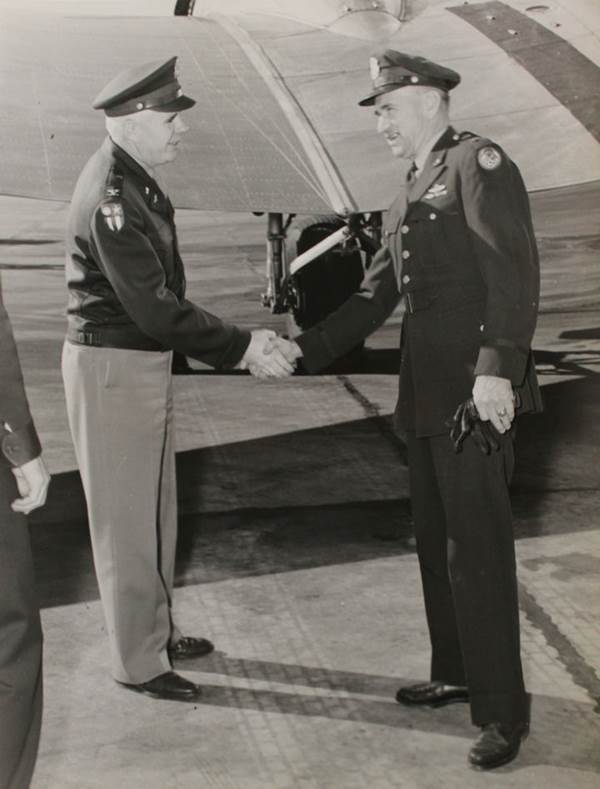
Major General Clements McMullen as
commander
Of the 8th Air Force at
Carswell Air Force Base
Greeting an
unidentified colonel.
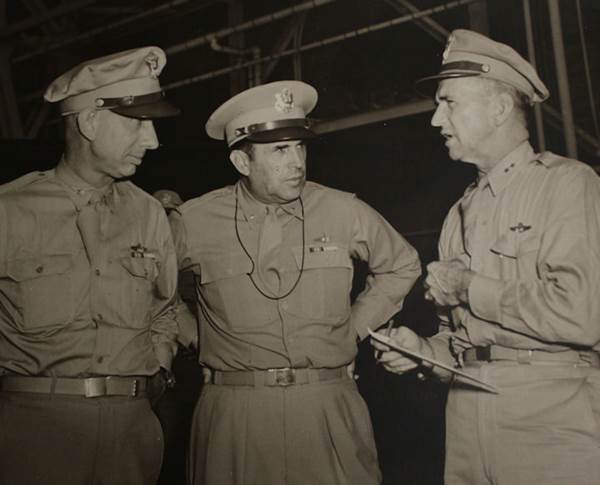
General McMullen, right, with two other
US
Army Air
Corps brigadier generals.
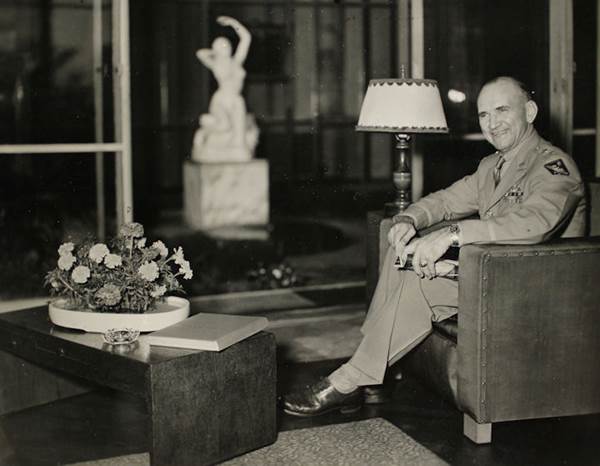
General McMullen wearing his US Army Air
Corps
summer uniform at
an unknown location.
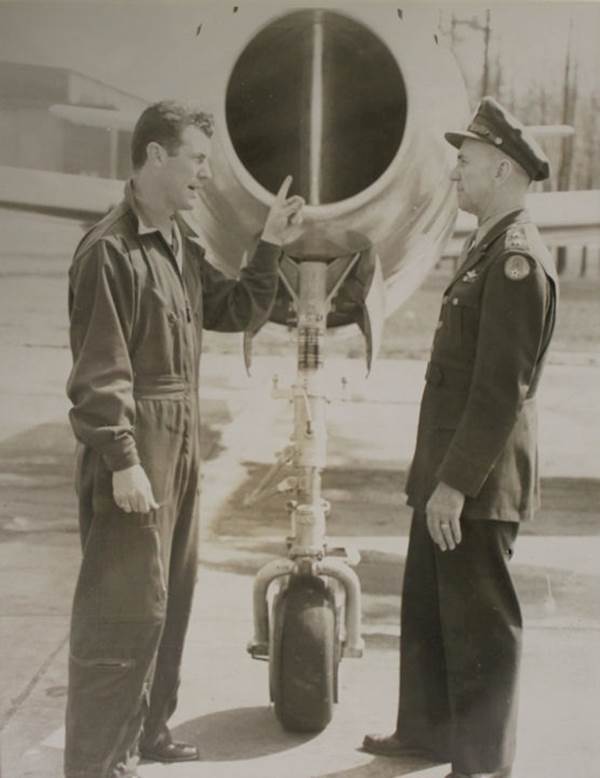
Captain Charles E. Yeager and Major
General
Clements McMullen at Wright Field,
Dayton,
Ohio, inspecting the first YP-84 to land
in
Washington, D.C. at Andrews Field, 8
April 1947.
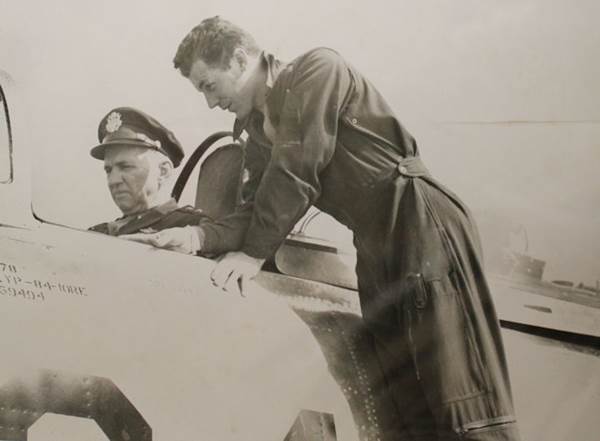
Captain Charles E. Yeager and Major
General
Clements McMullen at Wright Field,
Dayton,
Ohio, inspecting the first YP-84 to land
in
Washington, D.C. at Andrews Field, 8
April 1947.
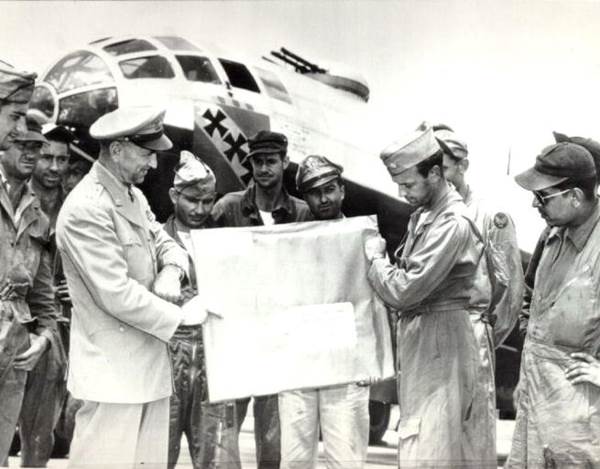
INP
Soundphoto 1 August 1947
Major General McMullem
greets the pilots of seven
B-29’s arriving at Andrews Field, Maryland.
A SAC training mission in which a 1 stop flight was
Made from Tokyo, Japan to Washington, DC
In 33 hours and 28 minutes. The pilots delivered
A package from Lieutenant General Whitehead
Of the Far East Air Forces to General Carl Spaatz,
US Air Force Chief of Staff.
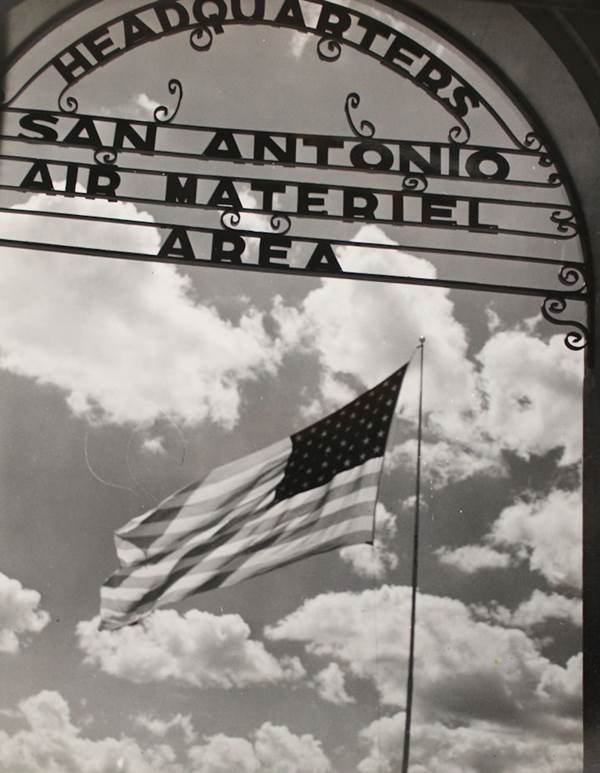
Headquarters, San Antonio Air Materiel
Area, Kelly Air Force Base, San Antonio, Texas.
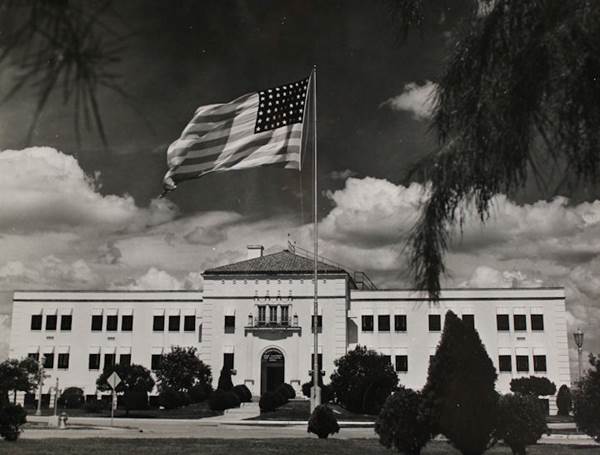
Headquarters, San Antonio Air Materiel
Area, Kelly Air Force Base, San Antonio, Texas.
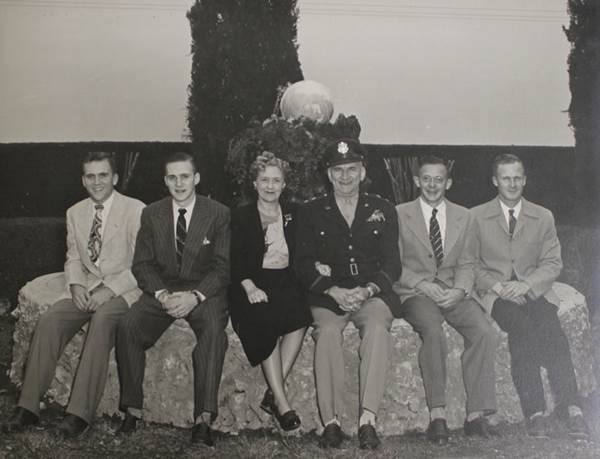
Major General Clements McMullen returned
to
Kelly Air Force Base, San Antonio, Texas
in October
1948 as the Commanding Officer of the
San
Antonio Air Materiel Area, SAAMA. One of
the first
things he did was
have a family photo taken. He had
four sons. From
left to right is Thomas Henry, William C.,
his wife Nancy,
the general, Frank McCoy, and Edward Lewis.
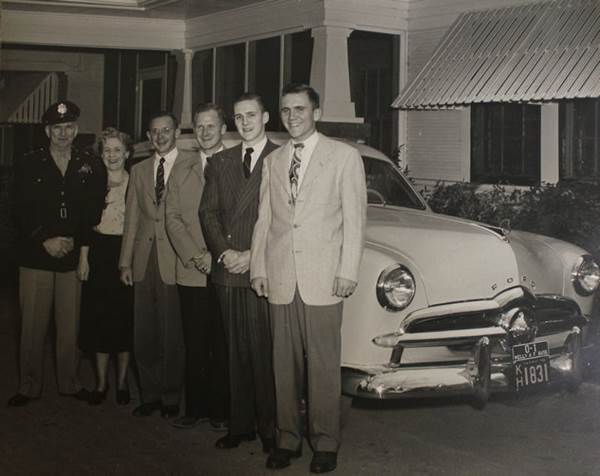
On Kelly Air Force Base at the home of the
commanding
general standing in
front of their 1949 Ford.
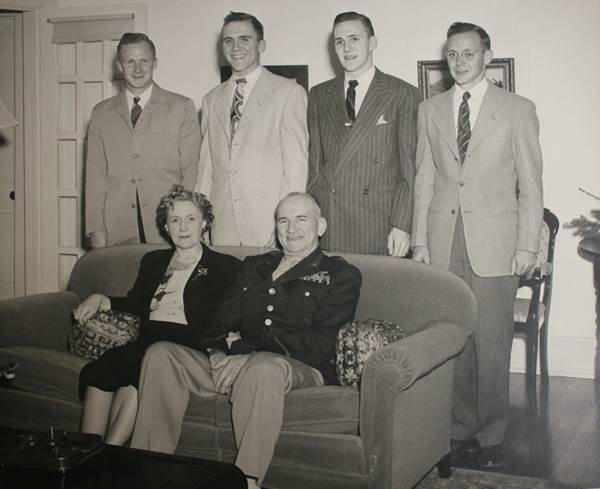
Inside
General McMullen’s home. Close up analysis
of this photos
reveals that the uniform the general
is wearing is
transitional with the gold USAF
buttons on the Army
Air Corps uniform.
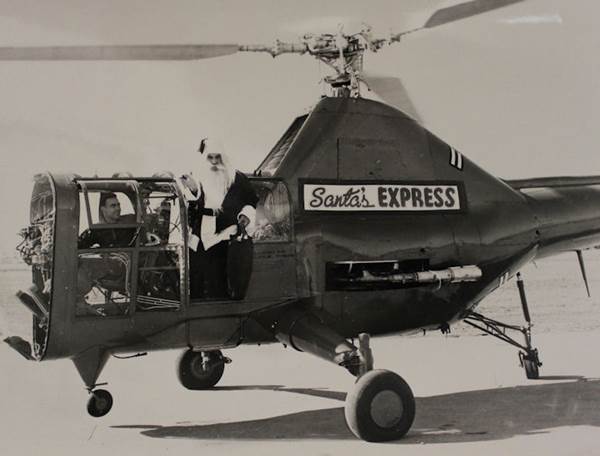
For Christmas 1948, General McMullen
landed
in a Sikorsky
R-5 Helicopter, named the Santa’s
Express dressed as Santa Claus.
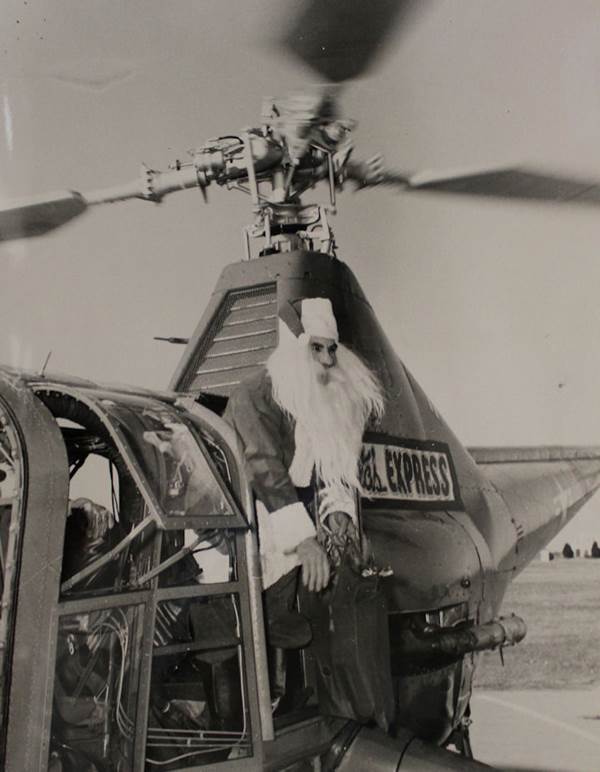
Santa McMullen arriving at Kelly Air
Force
Base just in
time for Christmas.
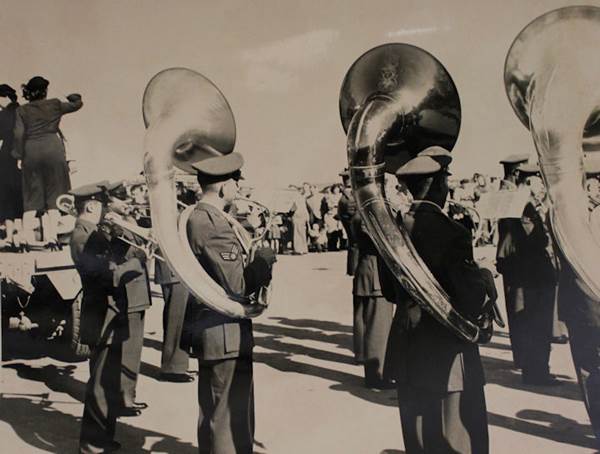
The band plays on as Santa McMullen
meets
the children at
Kelly Air Force Base.
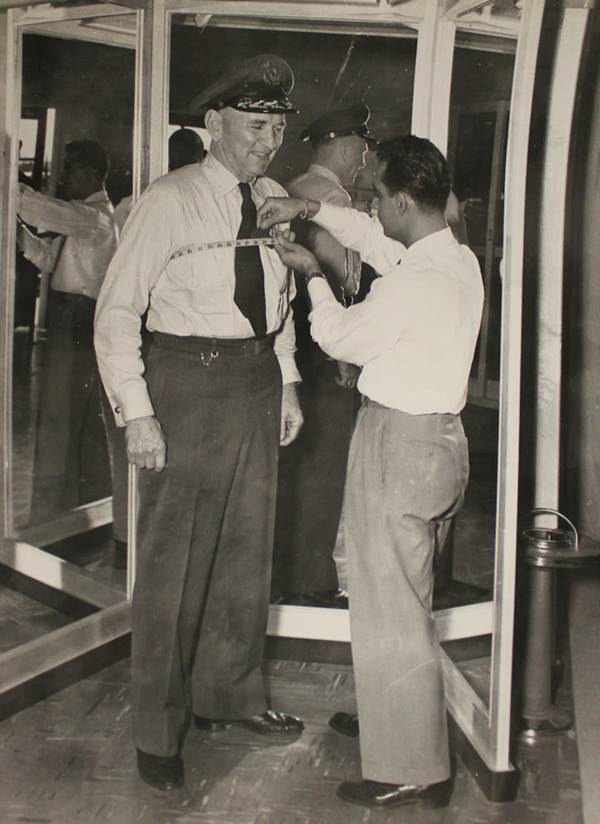
Major General Clements McMullen, San
Antonio Air
Materiel Area Commanding General is
measured for
a new blue
uniform by an employee in the Supply
Clothing
Sales Store.
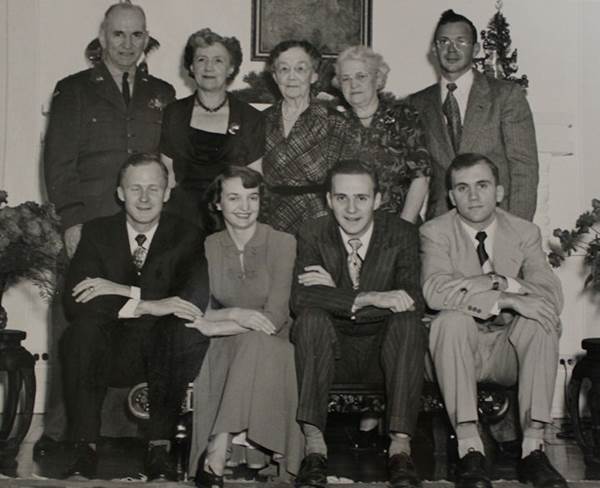
A Christmas family photo with the
McMullen
family. Included are the mother of both Clements
and Nancy
McMullen.
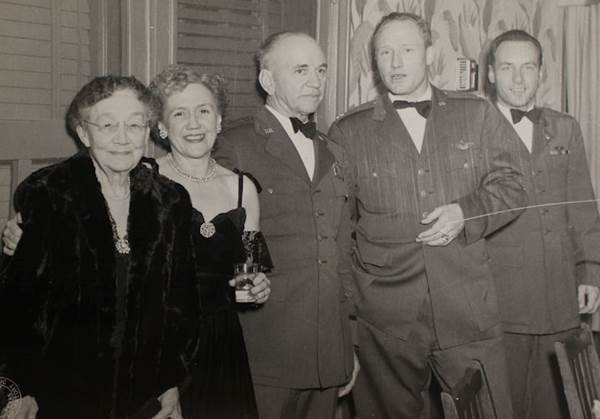
General Clements McMullen and his wife
Nancy,
And her
mother, at a formal engagement. Service dress
Uniforms are being used as semi-formal
evening dress
With bow tie and white shirt.
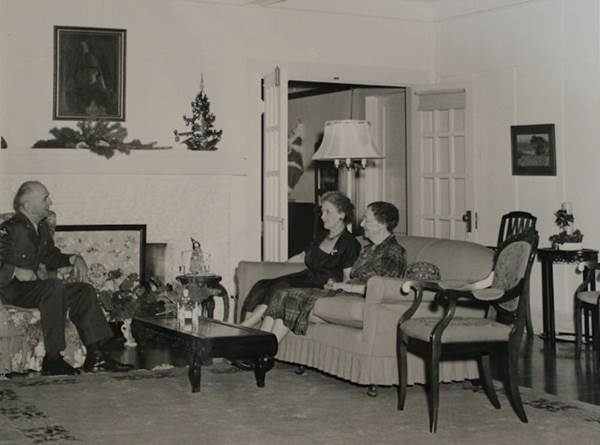
Inside the general’s living room at
Christmas with
his wife Nancy
and her mother.
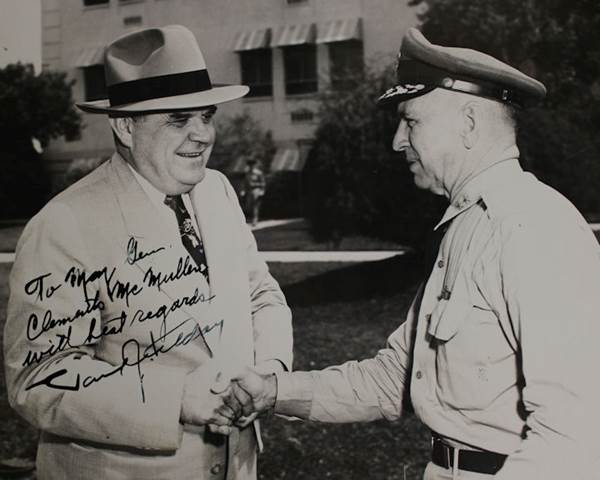
Major General Clements McMullen shaking
Hands with a
unidentified politician at
Kelly Air
Force Base. The inscription read
“To Maj Gen. Clements McMullen with
Best regards” signature is not legible.
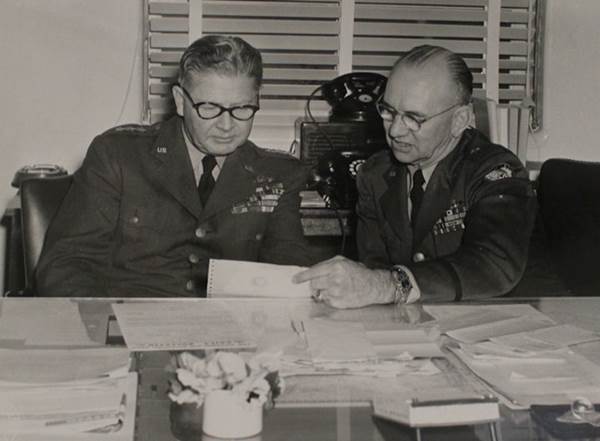
General McMullen meets with General
Benjamin
Chidlaw, Commander
Air Materiel Command.
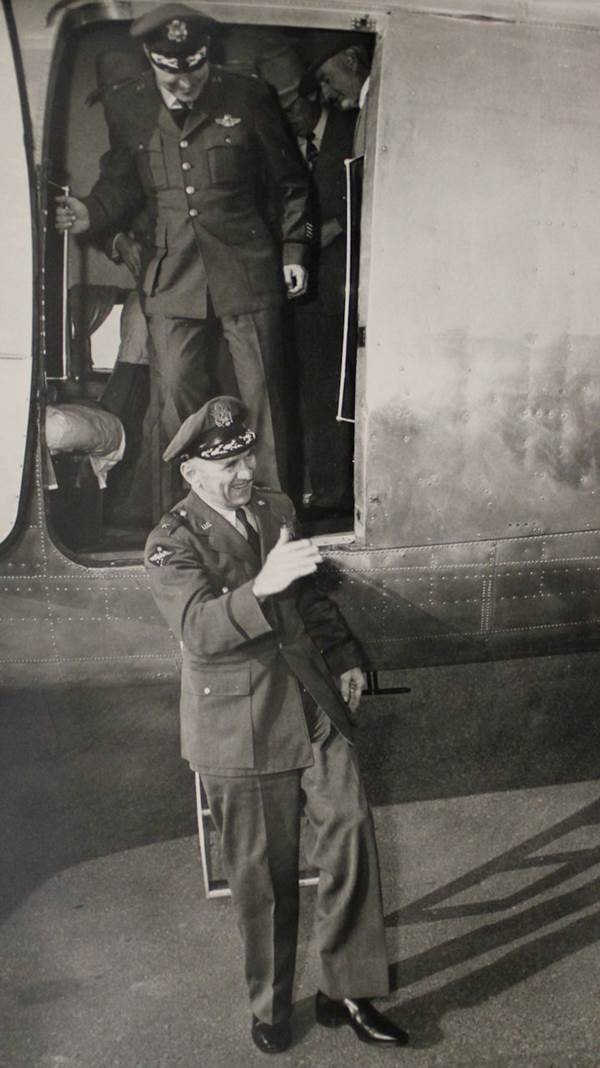
General McMullen returning to Kelly Air
Force
Base from
one of his many trips.
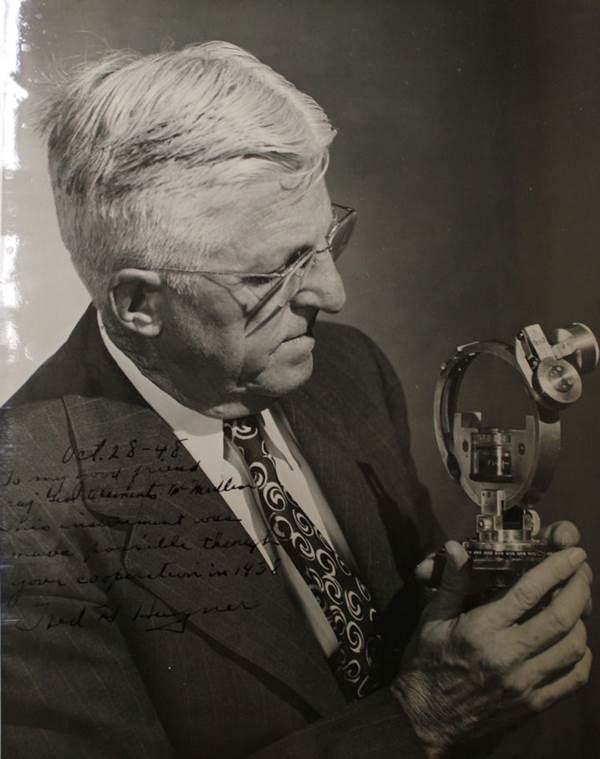
The photo is inscribed, “October 28,
1948 To my
good friend
Major General Clements McMullen. This
instrument was made
possible through your
cooperation in 1938.
Fred H. Hugner”
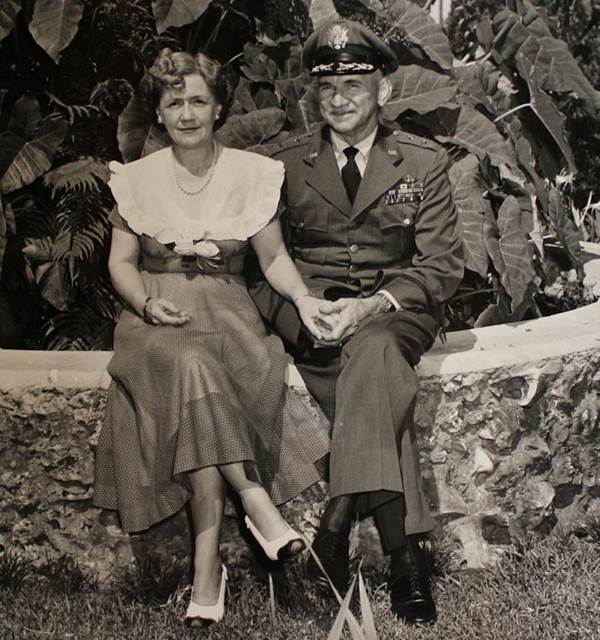
General McMullen and his wife Nancy, Spring
1950.
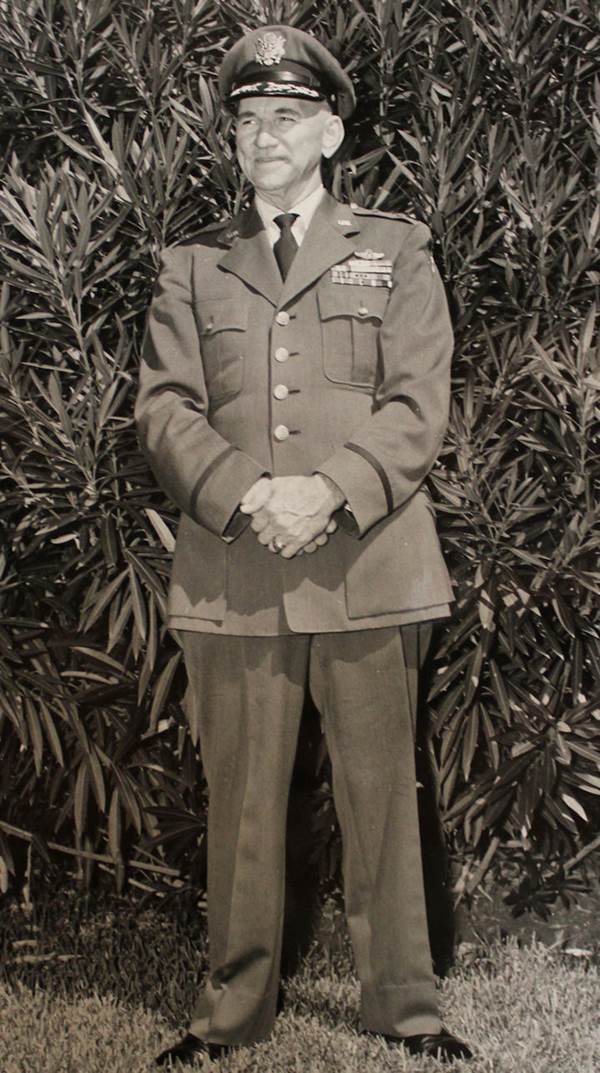
Major General Clements McMullen, 1950.
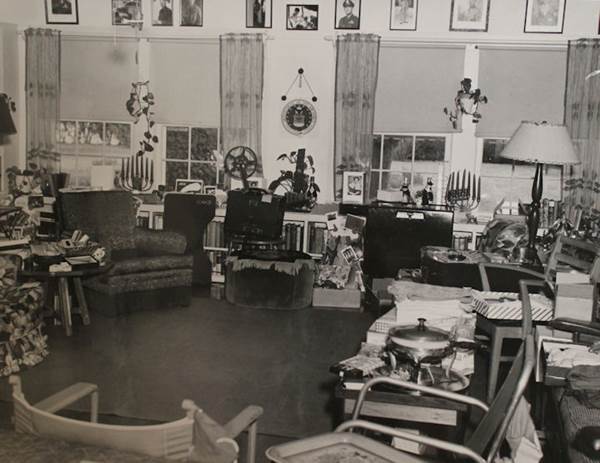
The library/study/den/office in the home
of General
McMullen, Christmas 1950.
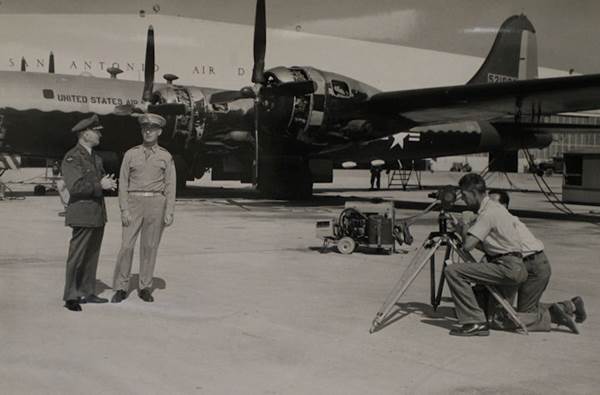
General McMullen and another officer
standing
in from of the
San Antonio Air Depot on one of many
of his photo
shoot opportunities.
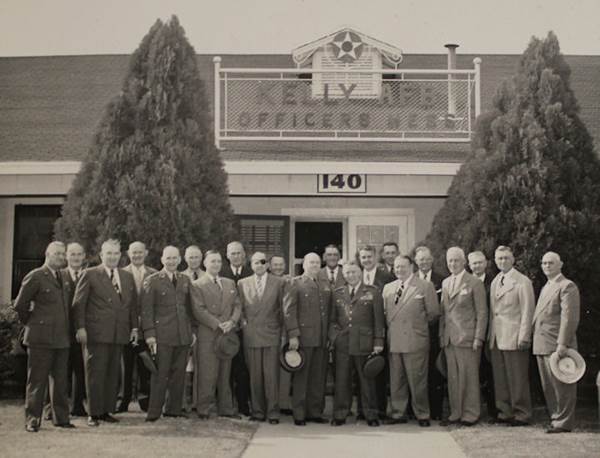
General McMullen hosted a meeting for
the Order
of Daedalians
in 1950 at Kelly Air Force Base. The
members of the Daedalians
from left to right are:
Charles E. Thomas, Jr;
Westside T. Larson; Orlo H.
Quinn; Ray H. Clark;
Clements McMullen; Martin C.
Giesecke; Bernard T. Caster; Delmar
H. Dunton;
Paul C. Wilkins; William R.
Bradford; Austin
W. Martenstein;
John L. Fogarty; George
C. Kenney; Max F. Schneider;
John N. Reynolds, Jr;
Vincent J. Meloy; Arthur G. Hamilton; Jacob E.
Fickel; Guy H. Gale; Eugene L.
Eubanks; and
Elbert W. Franklin.
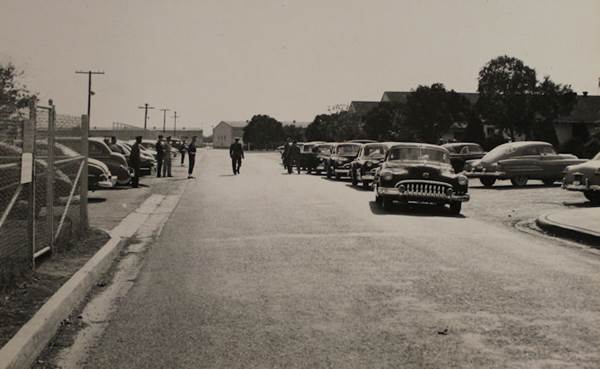
Daedalian members line up for
inspection of Kelly AFB, 1950.
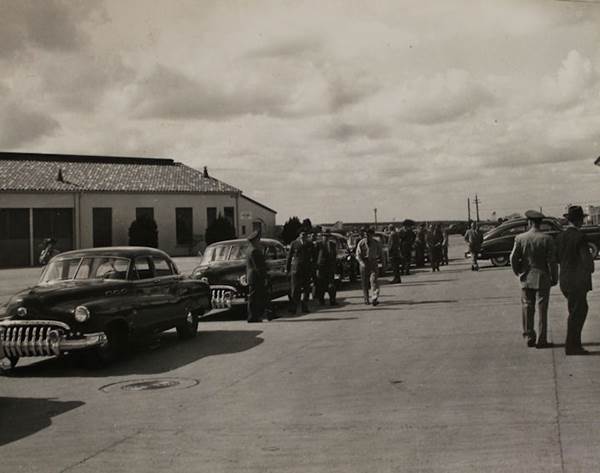
Daedalian members continue their
inspection
Of Kelly Air Force Base,
1950.
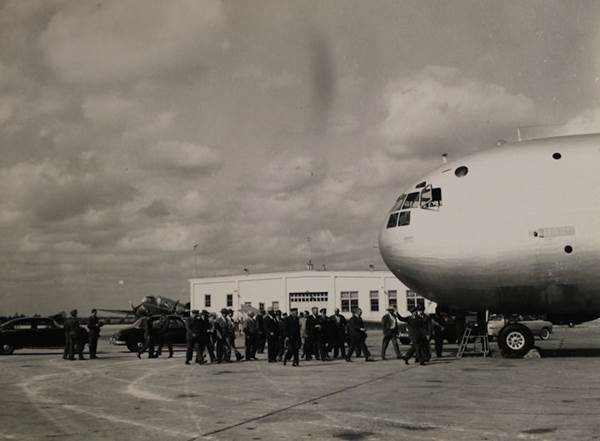
Daedalian members continue with an
inspection
of the XC-99, 1950.
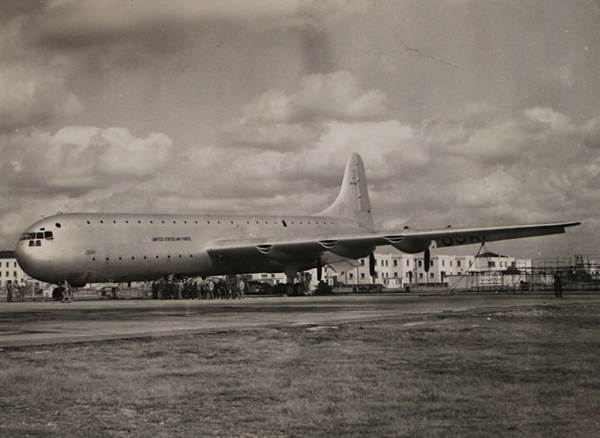
Another view
of the XC-99. General McMullen
comments, “Something
for DH-4 pilots to look at.”
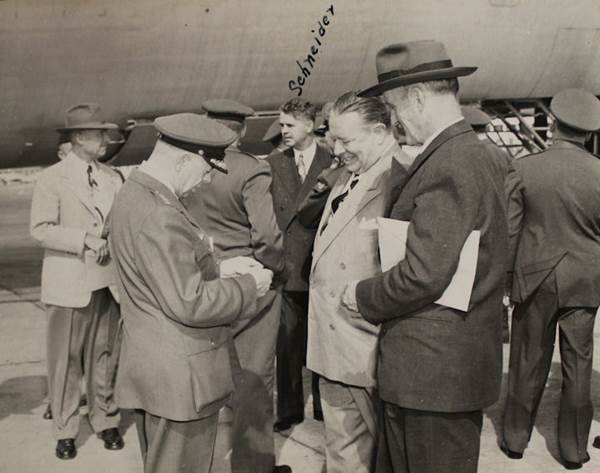
Close up of some of the Daedalian members.
To the far left is Eugene L.
Eubank, General Georce C.
Kenney, Max F. Schneider
(name above head), Vincent
J. Meloy
to the right of General Kenney and
Westside T. Larson, front
far right.
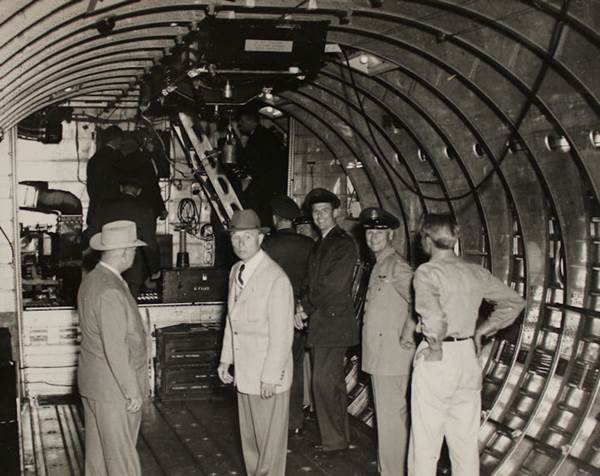
Daedalian members inside one
of the airplanes,
probably the XC-99.
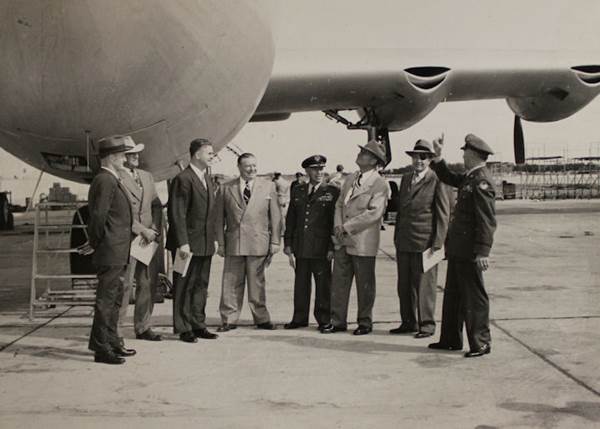
General McMullen refers to this photo as
the “Border
Rats.” Those aviator
that flew the Mexican border
during World War
I. They are identified, left to right,
as Larson,
Fogarty, Schneider, Meloy, Kenney, Eubank,
Wilkins and
McMullen.
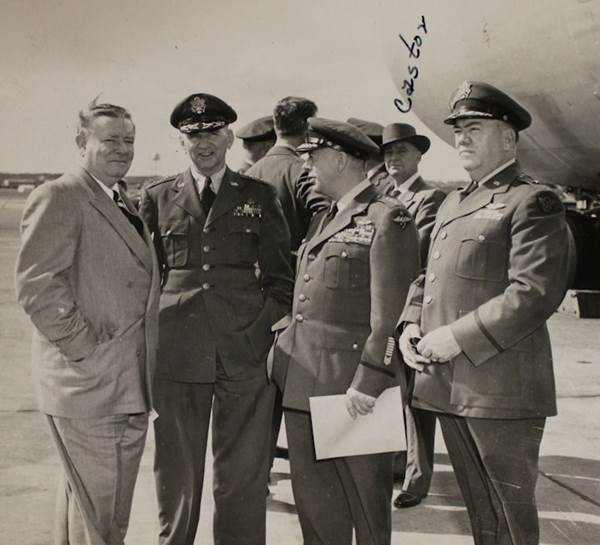
Daedalian members, left to right: Meloy; McMullen;
Kenney; and Martenstein. Castor is identified on
the photo.
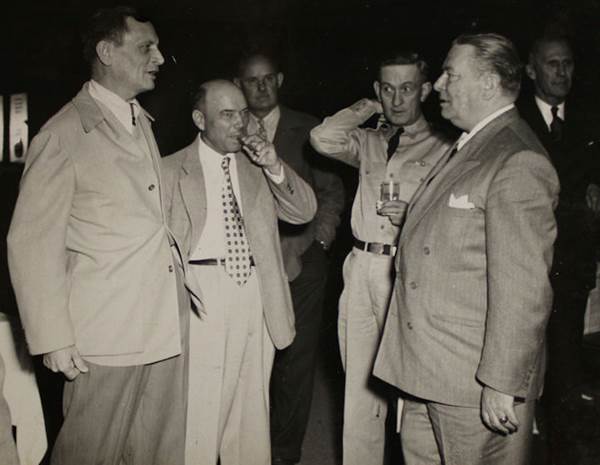
Daedalian members left to right
identified
as Dowman,
Beverley, Clark, Stewart, Meloy, and
Dunton.
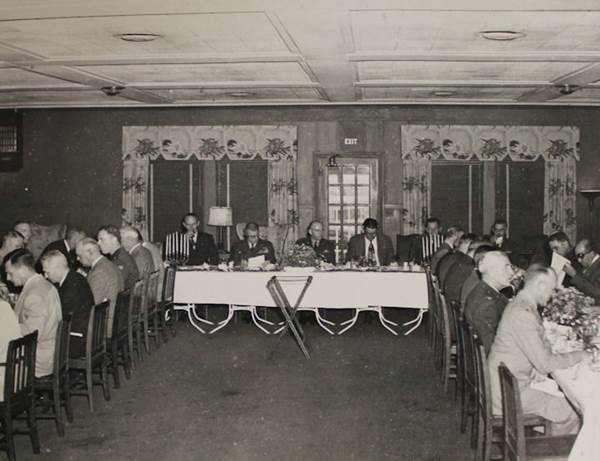
A luncheon
for the Daedalian members.
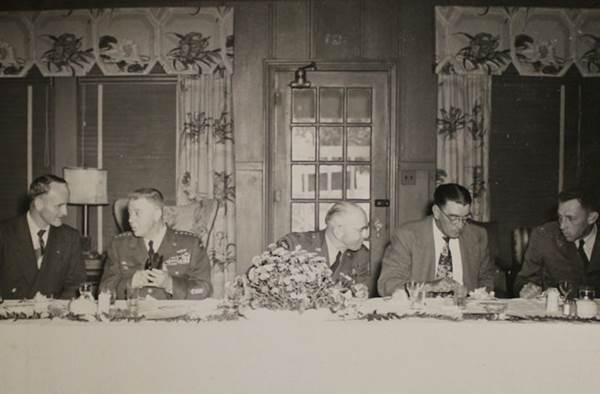
The head table with Daedalian members, left
to right, Larson, Kenney, McMullen,
Fogarty,
and Reynolds also known as
“Young John.”
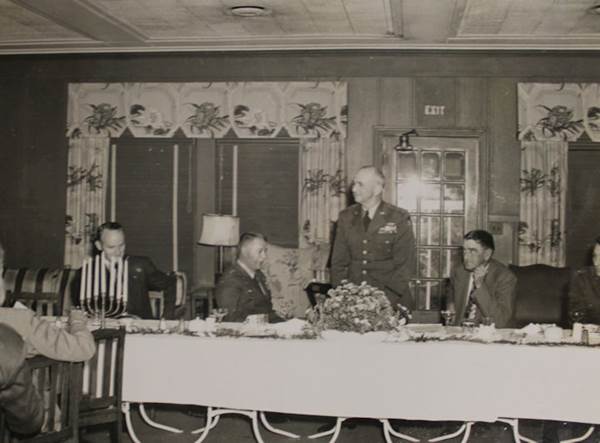
General McMullen introduces the keynote
speaker
for the Daedalian luncheon, General George C.
Kenney.
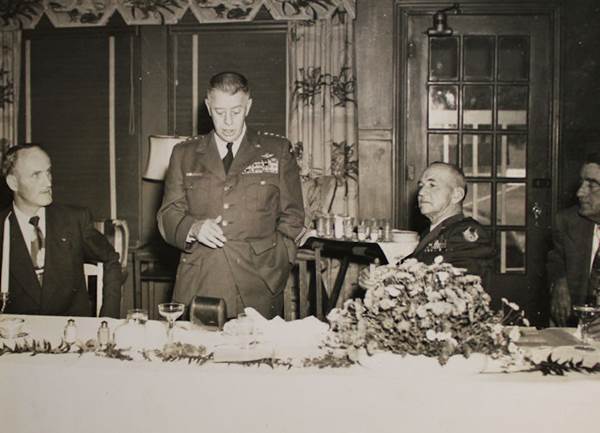
Daedalian
keynote speaker, General George C.
Kenney, giving his speech.
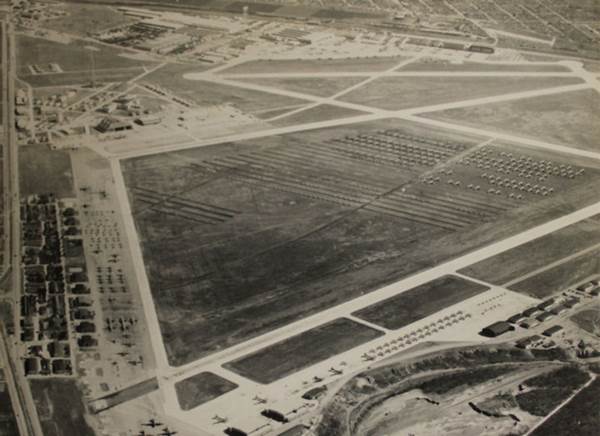
The photo is labeled Kelly Air Force
Base 1950.
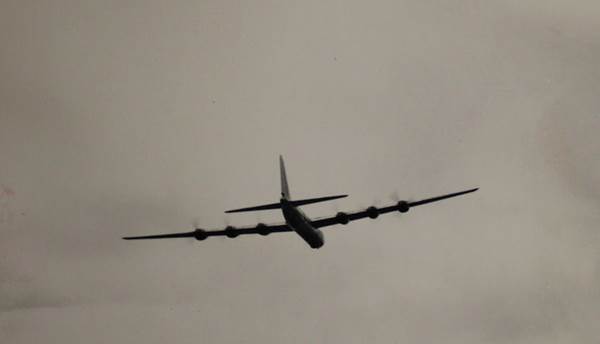
A B-36 coming in for a landing at an air
force base
open house,
1950.
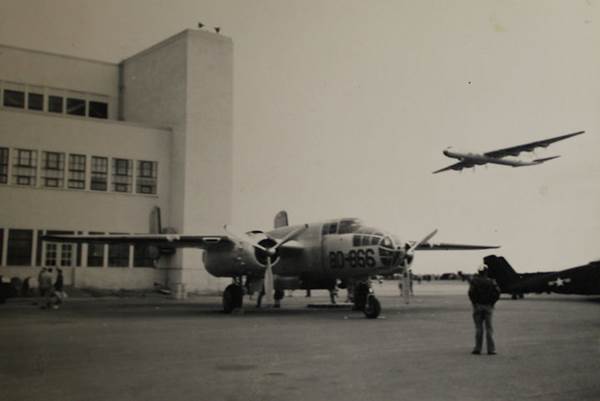
A B-36 coming in for a landing at an air
force base
open house,
1950. Notice the North American Mitchell
B-25 on the
ground.
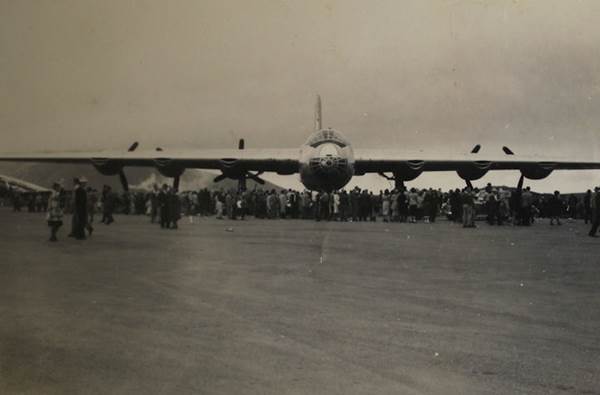
B-36 on public display at an air force
base
open house.
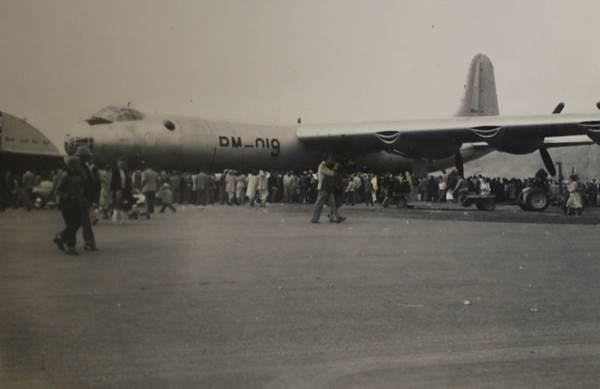
B-36 on public display at an air force
base
open house.
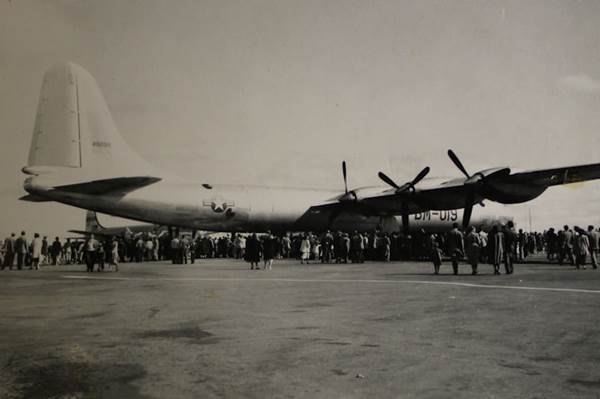
B-36 on public display at an air force
base
open house.
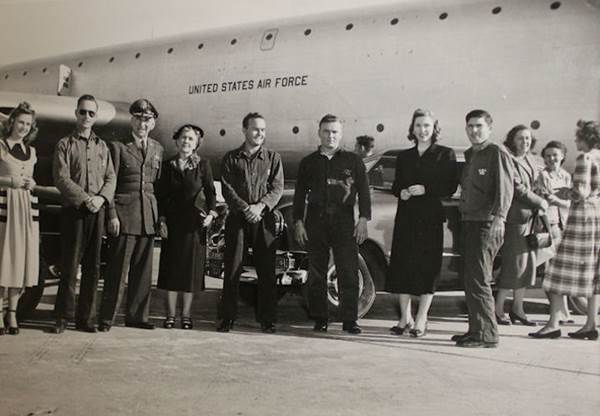
Major General Clements McMullen and his
wife Nancy,
with a number of
other people standing in front of the
XC-99 at
Kelly Air Force Base, San Antonio, Texas 1950.
The only comment written on the rear of
the photo is
a name,
“Shirley Hughes.”
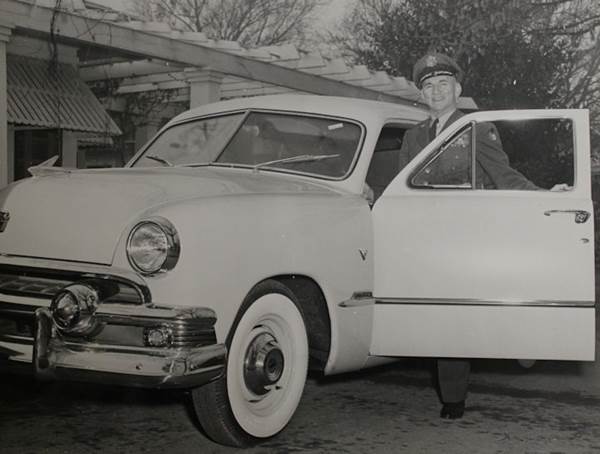
Going to
work wearing his blue service dress uniform, 1951.
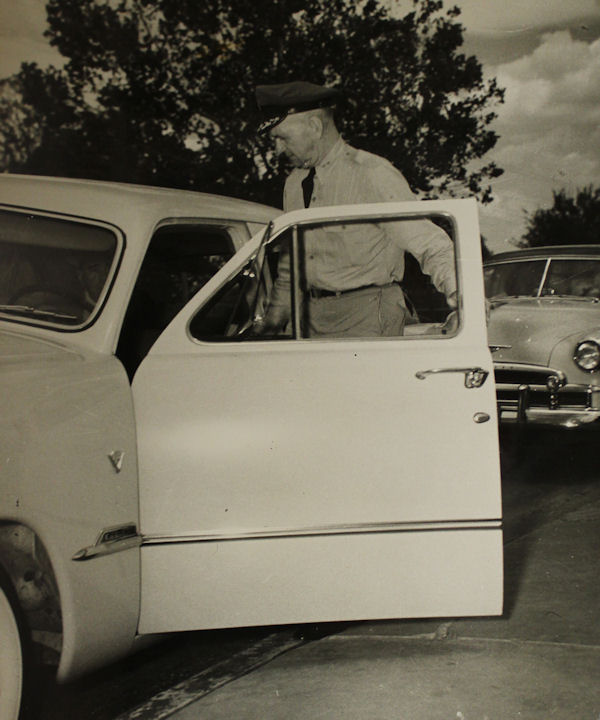
Going to work wearing his 505s, with
summer
Service
dress trousers, khaki 193s, 1951.
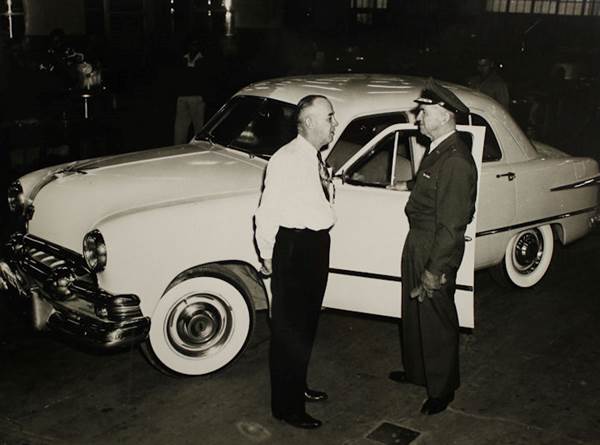
General Clements McMullen with his new
car
Talking to a
section chief.
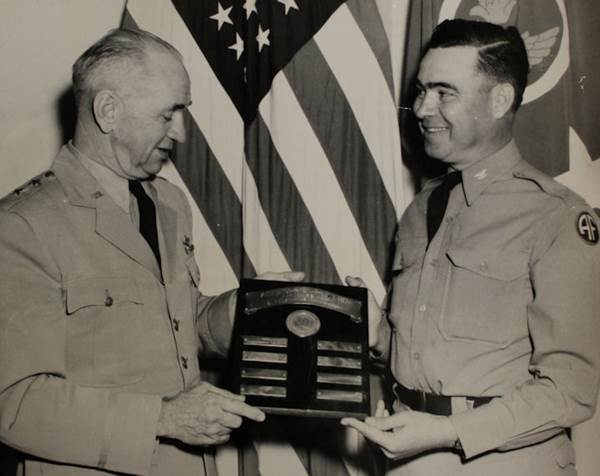
A national award being present to
General
McMullen for the best suggestion
submitted to the
US Air
Force. Air Materiel Command and SAAMA
San Antonio Air Materiel Area takes
first place.
March 1951.
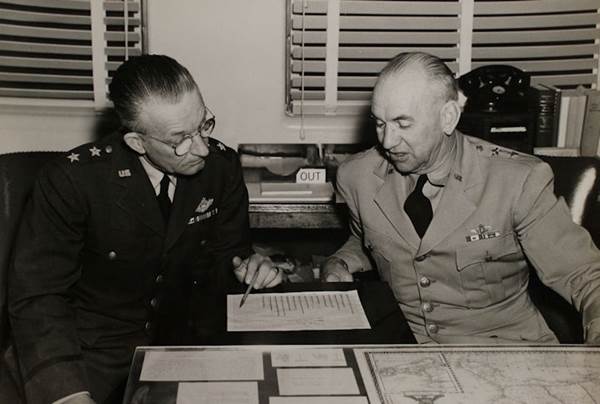
General
McMullen with Major General St. Clair Streett.
General Streett
was a special assistant to the commanding
general, Air
Materiel Command.
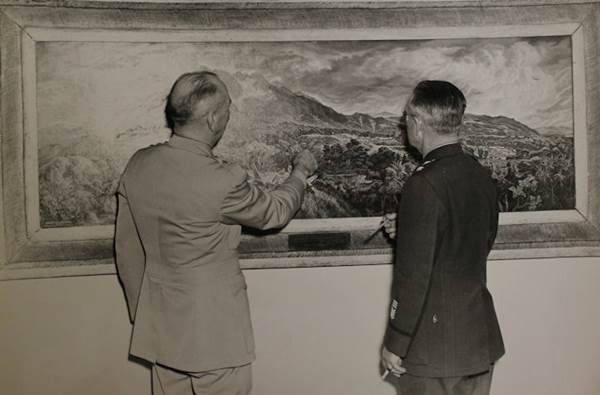
General McMullen showing General Streett what
appears to be a
painting of the Army Air Force Hollandia
Headquarters
during World War II.
25 April 1951
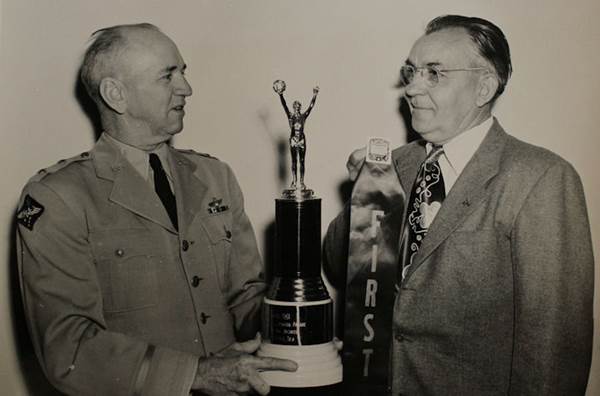
General McMullen receiving an award
given to Kelly
Air Force
Base. Kelly’s float won first prize in the
“Fiesta Flambeau” Night Parade in San
Antonio,
Texas, 21 April 1951.
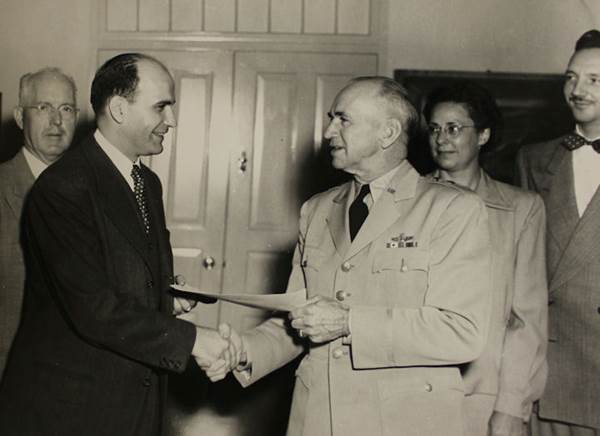
General Clements McMullen awarding Mr.
Sherman
with a citation
for superior achievement in training,
April 1951.
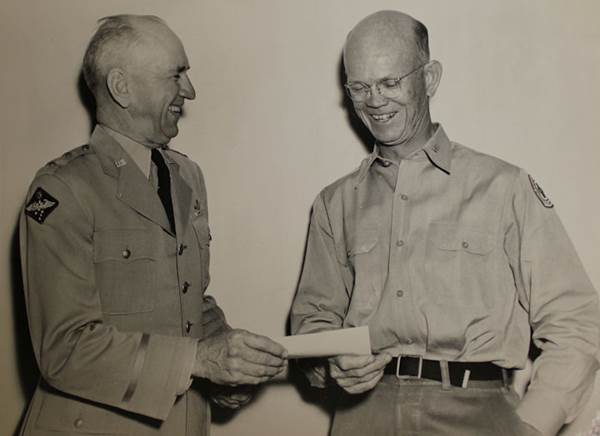
Major General Clements McMullen gives a
check
for $1,900.00
to Mr. Richmond, the Red Cross
Manager at
Kelly Air Force Base. A successful
1951 Red Cross Drive!
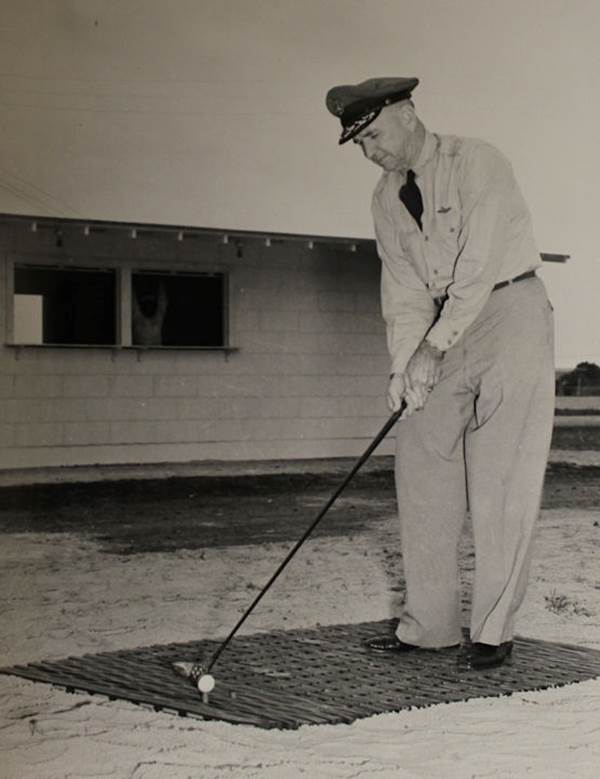
General
Clements McMullen as an avid golfer. In 1951 he
had a driving
range added to Kelly Air Force Base.
The driving range opened in May and the
general
takes the first
swing.
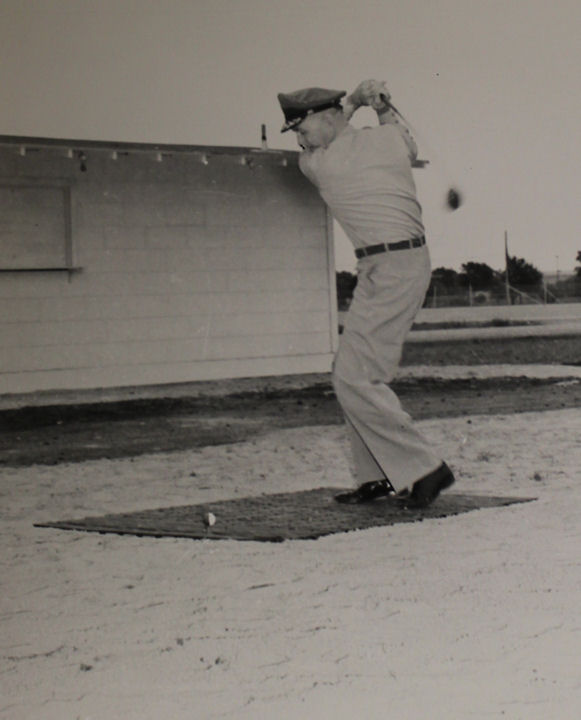
The first swing on the new driving
range!
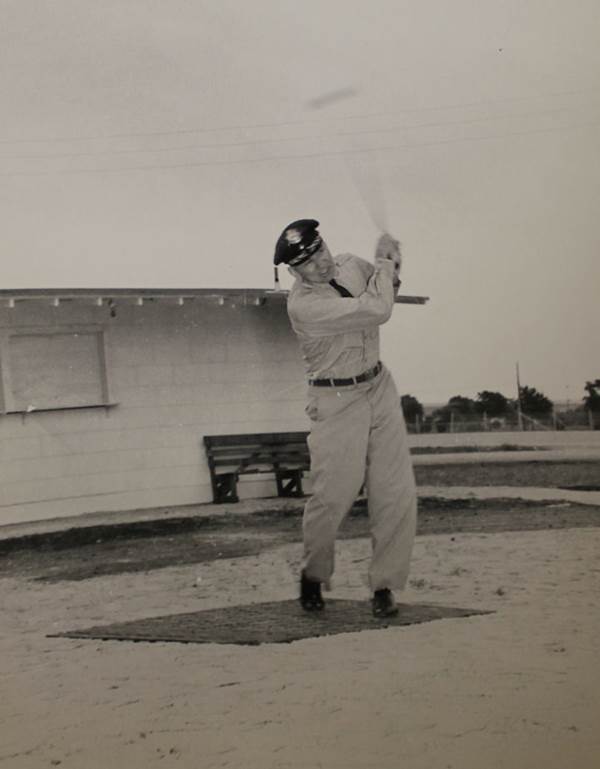
Following through on his swing!
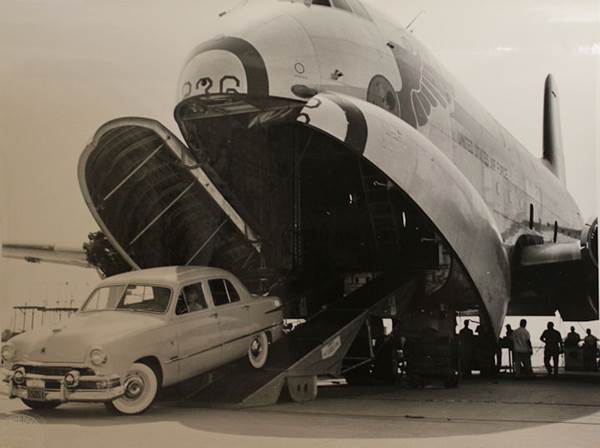
Demonstrating some of the capabilities
of Military
Air Transport Service, General McMullen
drives his
personal car out of
a C-124.
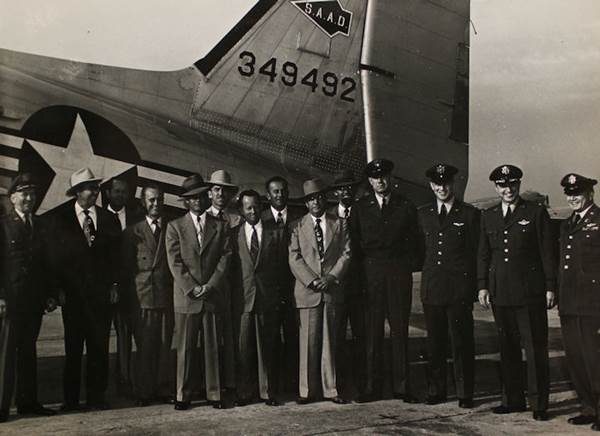
Selfridge Field, Michigan, 3 May 1951.
Kelly goes to the Materiel Show and Ford
Parts Depot
From Left to right: General Clements
McMullen,
Mr. Rogers, Mr. Eiserloh,
Mr. Collins, Mr. Webb,
Mr. Perfect, Mr. Adams, Mr. Armacost, Mr. Johnson,
Mr. Hill, Lt. Col. Stogner, Lt.
McAllister, Col. Wilson
and Maj. Cronkhite.
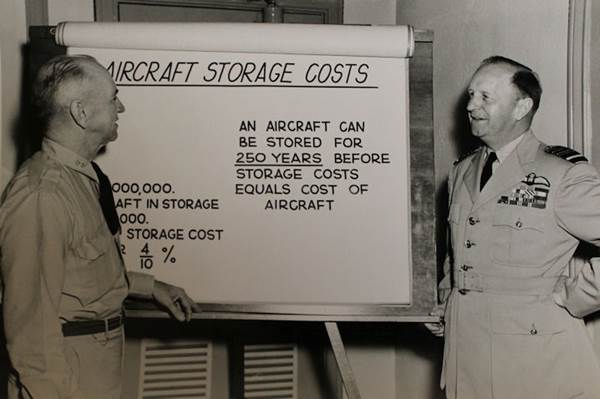
General McMullen talks about the
logistics of air
materiel with Air
Chief Marshal Sir George Clark Pirie,
a senior
commander of the Royal Air Force (RAF) on
17 May 1951.
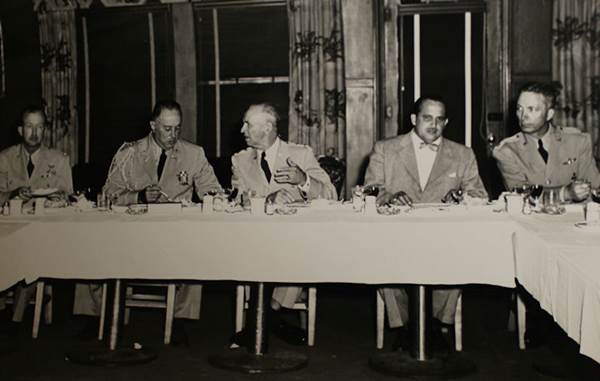
Major General Clements McMullen (center)
and
Brigadier General James L. Jackson (far
right)
entertain a foreign
dignitary and military personal.
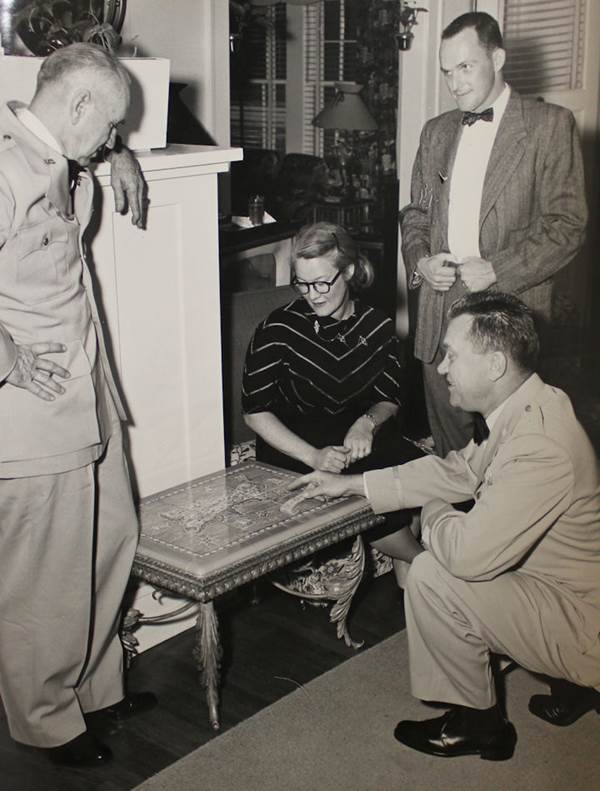
General Clements McMullen, Peg Booth Manhard,
Philip Manhard
and Colonel Charles Jung examine an
inlaid map table
presented to the general.
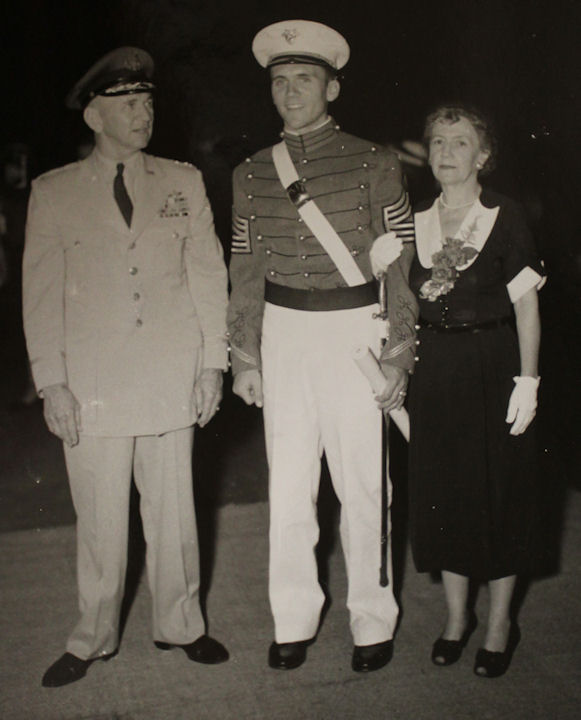
A proud General Clements McMullen with
his wife
Nancy as their son Thomas graduates from
West Point in
1951. Thomas attended St. Mary
University in San Antonio,
Texas, received his appointment, and
graduated from the
U.S. Military Academy with a bachelor of science degree
in military
engineering and a commission as a second
lieutenant in the U.S.
Air Force.
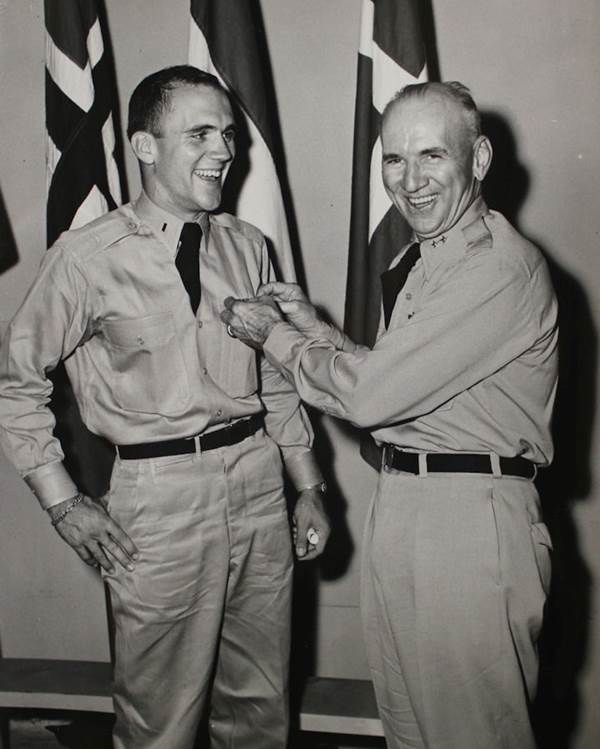
Major General Clements McMullen pin
pilot wings
On his son, Thomas H. McMullen
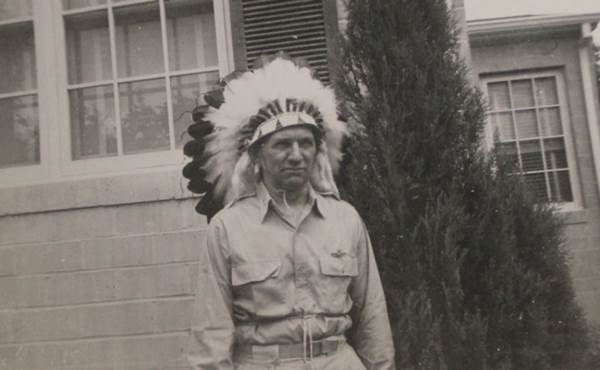
Made for family viewing, General
Clements McMullen
poses as the
chief.
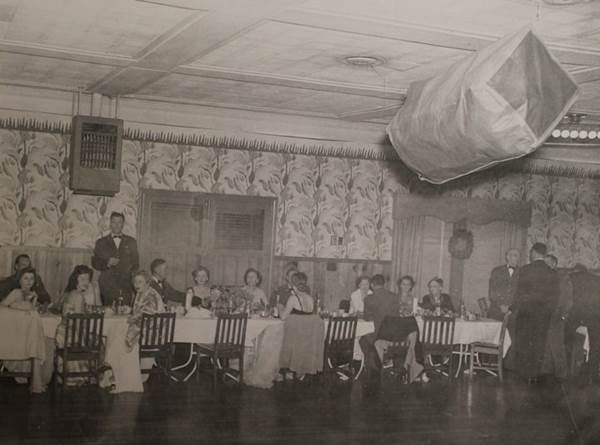
At a formal gathering! General McMullen
is located to
the right
talking to other officers. Notice the dress attire.
Mess dress uniforms did not exist at
this point and they
are using their
service dress uniforms as the semi-
formal evening
dress uniform with white shirt and bow tie.
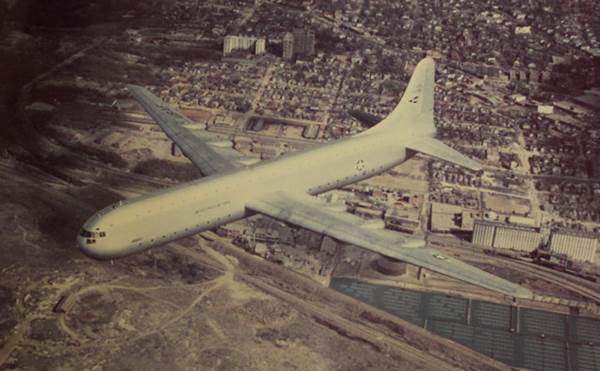
A colored
photo of the XC-99 flying over Dallas, Texas.
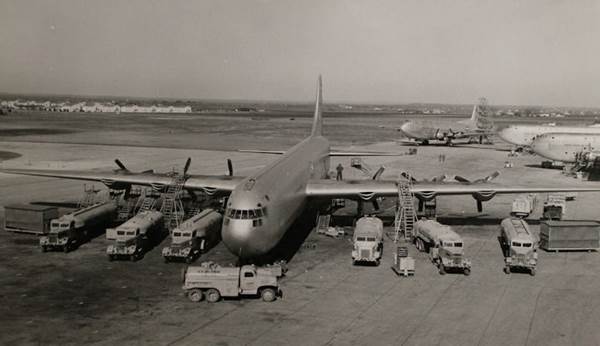
The XC-99
being service at Kelly Air Force Base.
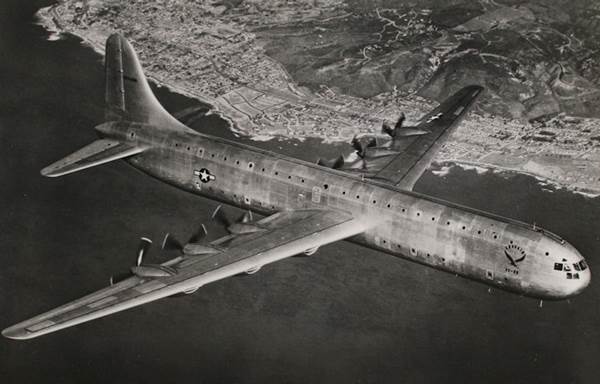
The XC-99 flying over Lindbergh Field,
San Diego,
California, 14 May 1951.
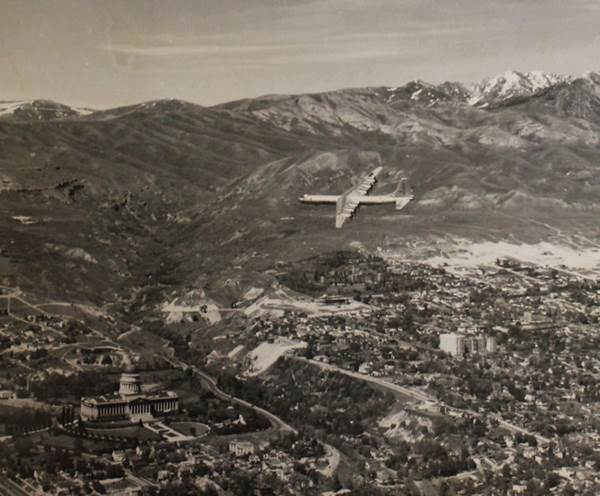
A B-36 flying of the Capital of California
at
Sacramento.
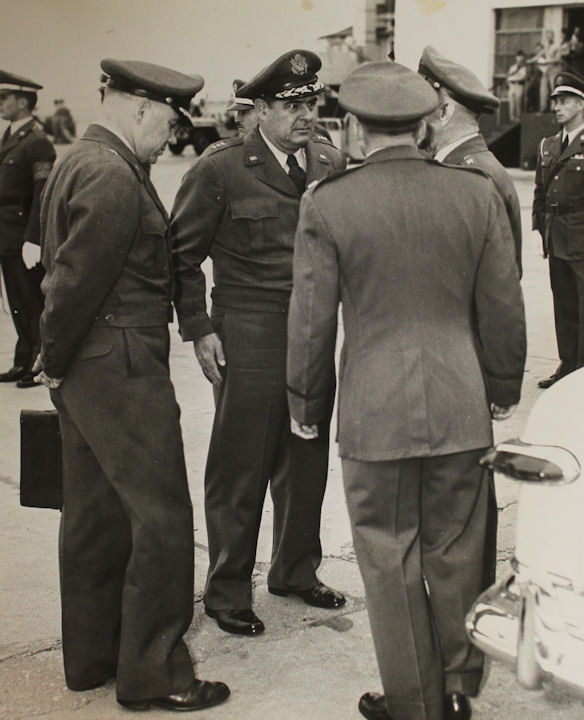
General Edwin William Rawlings,
Commander of the
Air Materiel Command visits the San
Antonio Air
Materiel Area (SAAMA) 1 February 1952.
General
McMullen is facing General Rawlings but
his face is
obscured by the
officer standing in front of him.
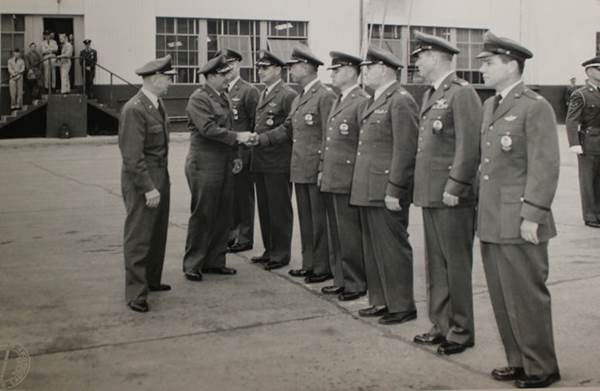
General Edwin Rawlings greeting the
staff of
General Clements McMullen.
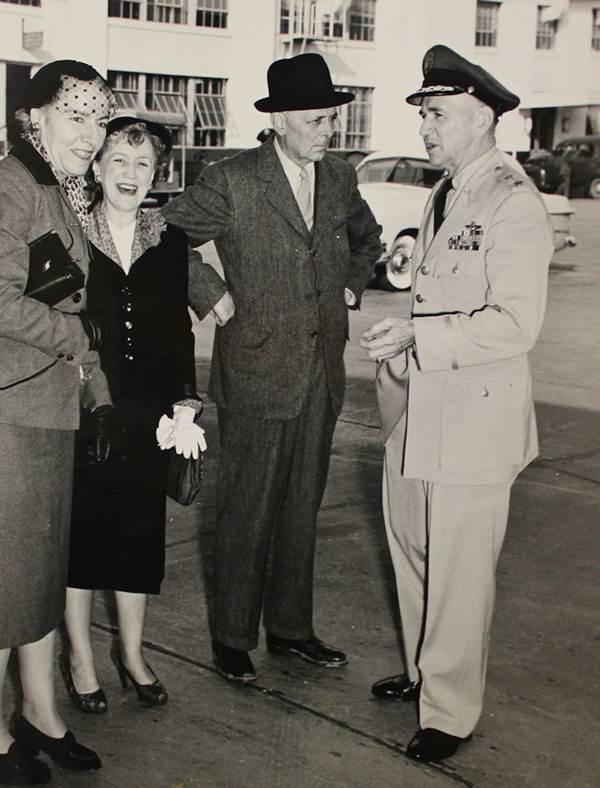
Major General Clements McMullen and his
wife
Nancy meet with
the Secretary of the Air Force,
Mr. Finletter and his wife at Kelly Air Force Base.
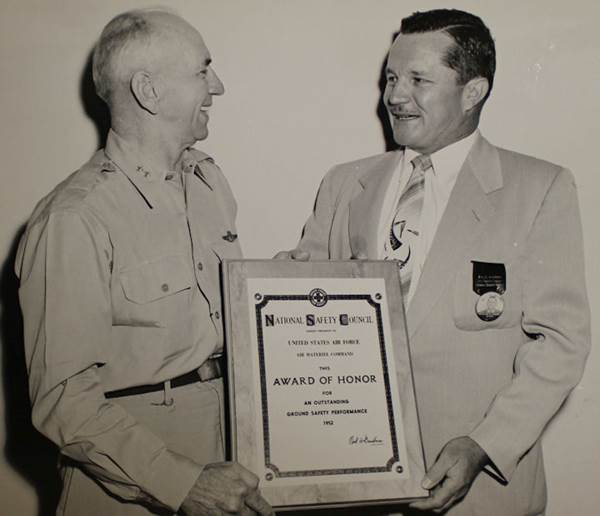
General Clements McMullen presents the
1952
National Safety Council – Air Materiel
Command
Award of Honor to Fred Keienburg, Chief Safety
Engineer,
Ground Safety Section.
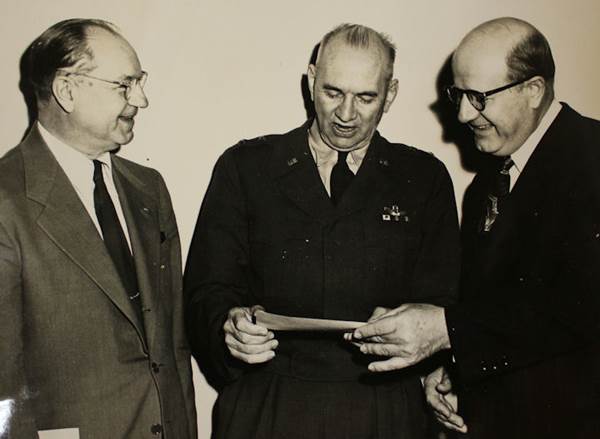
On February 2, 1952, General Clements
McMullen
presents a check for
$12,500.00 to the Heart Fund.
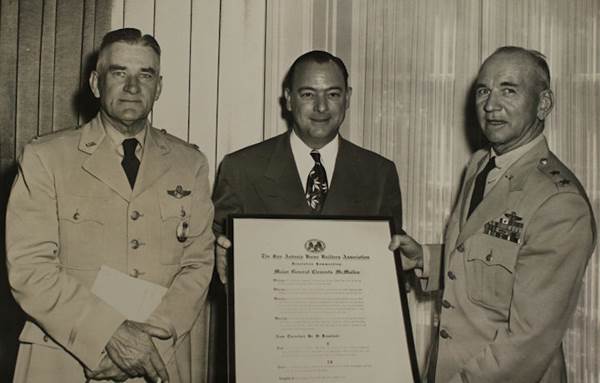
For Accomplishment in housing the
personnel in his
command, Major
General Clements McMullen,
commanding the San
Antonio Air Materiel Area, is
presented a
resolution of commendation from the San
Antonio Home
Builders Association, by Alan E.
Brockbank, Salt Lake
City, president of the National
Association
of Home Builders. Presentation made
at the Menger Hotel on April 13, 1952.
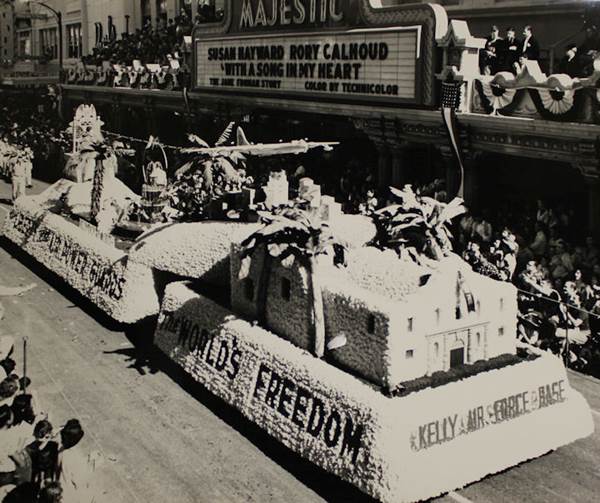
The Kelly Air Force Base float in the
1952 day parade
Of Fiesta
San Antonio. General Clements McMullen
Strongly
supported the annual weeklong celebration.
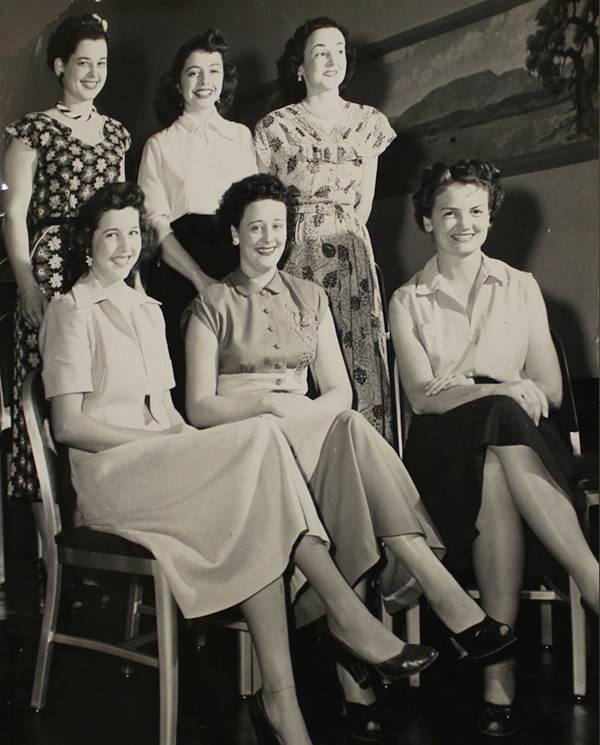
The Kelly girls who were is the race for
“Queen of the
Kelly Float” in the Fiesta of April
1952. The
Winner upper
left.
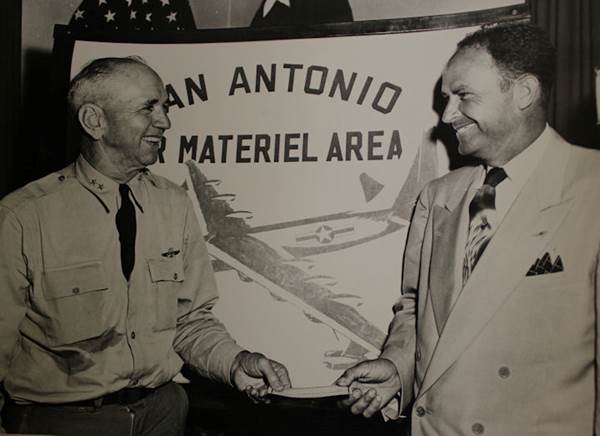
Major General Clements McMullen, SAAMA
commander,
Gives a check for three, three-quarter
days’ pay to
Cliff Heskew,
Secretary-Treasurer of the Kelly AFB
Charity
fund.
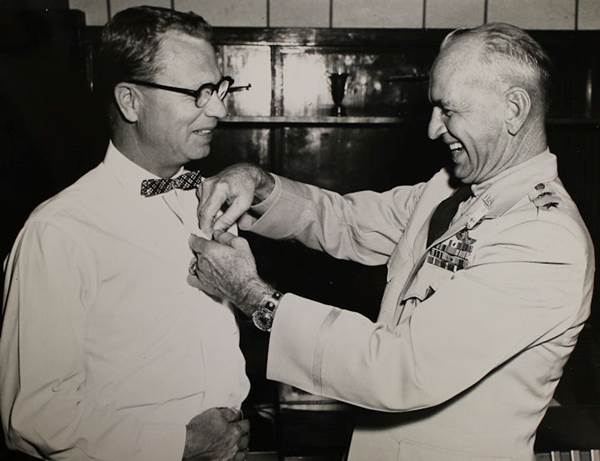
Photo is inscribed on the rear, “I
decorated Barney
Van Horn, 6 November 1952.
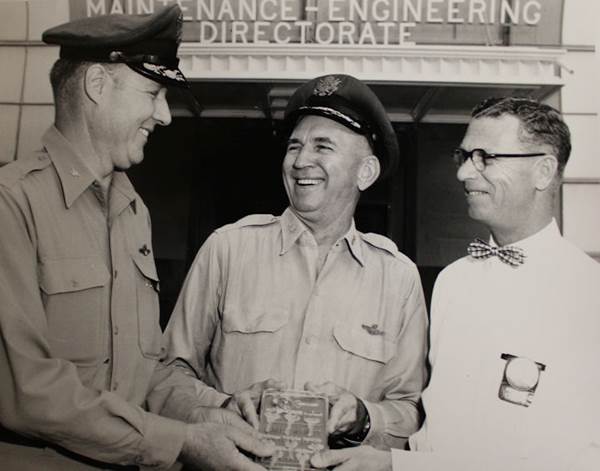
General Clements McMullen in front of
the
Maintenance-Engineering Directorate with
Barney
Van Horn and
Colonel Freddy Bell.
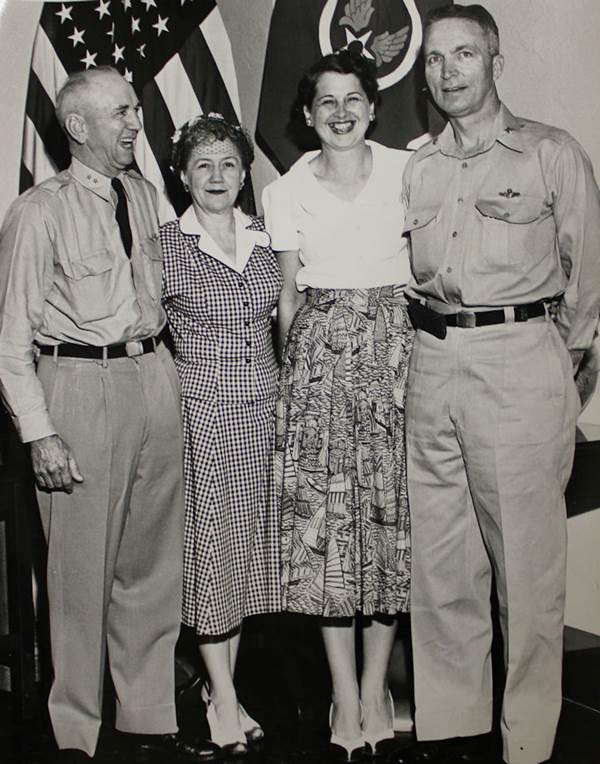
General Clements McMullen and his wife
Nancy
Stand with Brigadier General James L.
Jackson
And his wife
just after being promoted. General
Jackson also became the deputy commander
of the
San Antonio
Air Materiel Area.
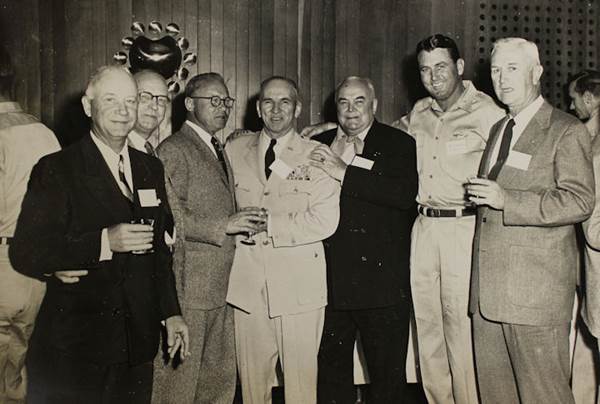
Photo was taken at a party for retired Air
Force personnel
located at Randolph
Air Force Base, November 1952.
Those pictured, left to right, are
identified as, “Hodges,
Don’t Know, Jamison, McMullen, Brunt,
Davies and
Barnett.”
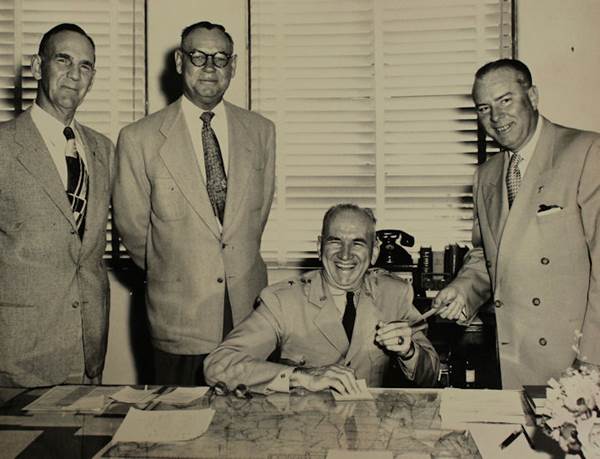
A smiling General McMullen comments, “We
gave the
Red Cross $12,500.00 at Kelly on 1 April
1952.
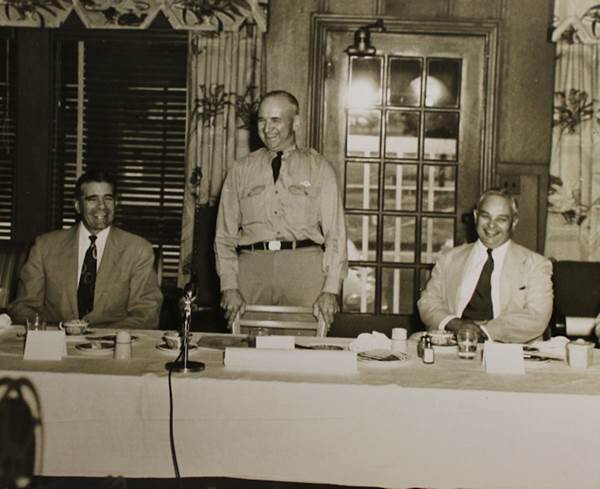
General McMullen at a San Antonio, Texas
Chamber
of Commerce
luncheon, at Kelly AFB, as keynote speaker,
Spring 1952.
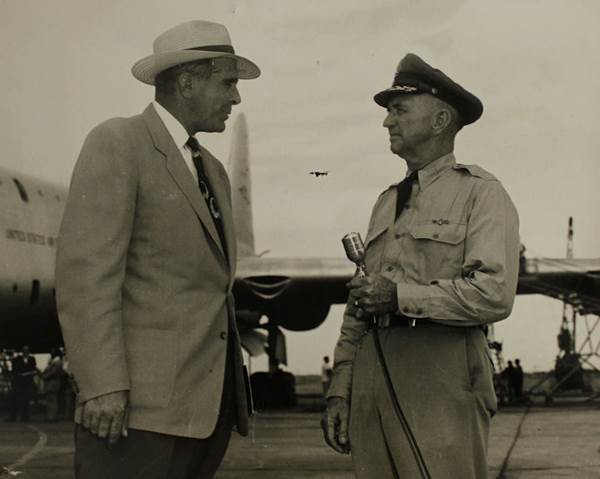
San Antonio, Texas Chamber of Commerce
visits
Kelly Air Force Base, Spring
1952. General
McMullen interviews a member of the
Chamber of
Commerce, Brigadier General Jack Gordon,
retired.
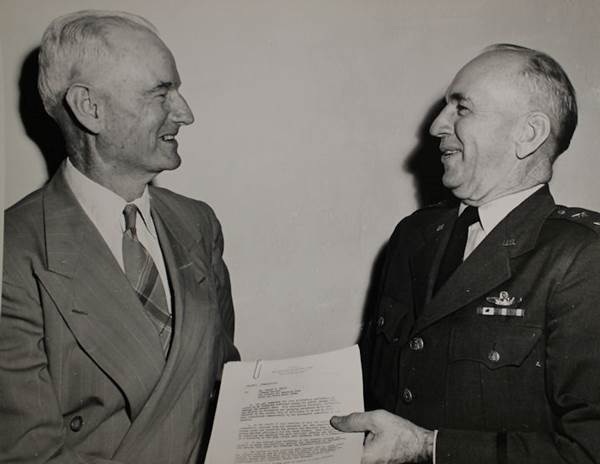
General Clements McMullen presents a
commendation
To Mr. Hubert L. Smith for his
outstanding performance
of duties as
the general’s personal Technical Assistant.
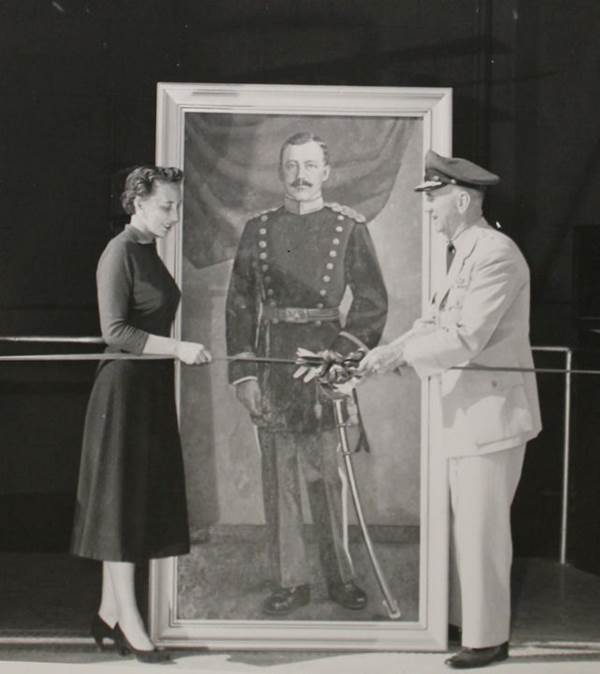
7 May 1952. General McMullen cutting the
ribbon
on a
historical display and painting dedicated to
Lieutenant George E.M. Kelly, American
Army
Aviator namesake of Kelly Field/Air
Force Base
who died in an
airplane crash in 1911.
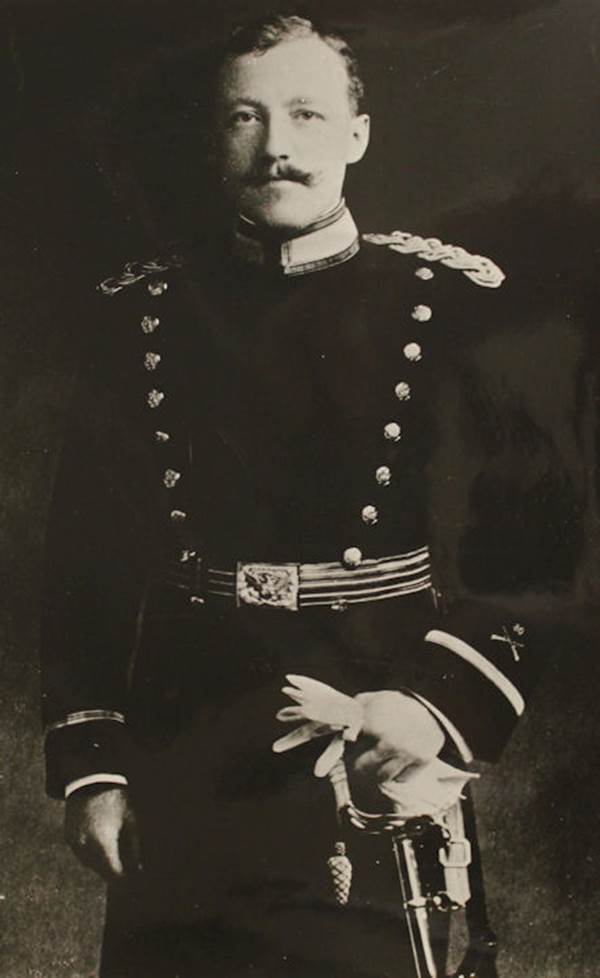
Lieutenant
George E.M. Kelly US Army aviator.
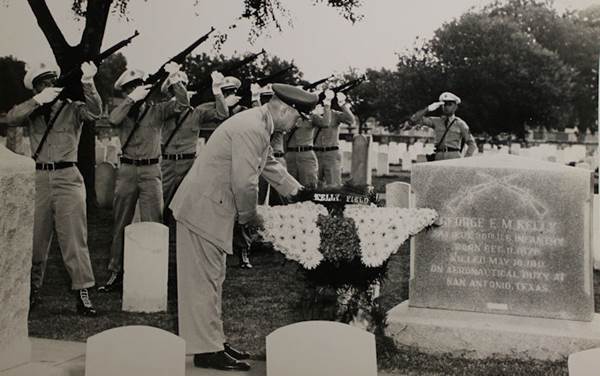
Colonel Luker,
USAF lays a wreath
on the grave
of Lieutenant George E.M. Kelly.
7 May 1952 was referred to as “Kelly
Day”
and celebrated
with a 21 gun salute.
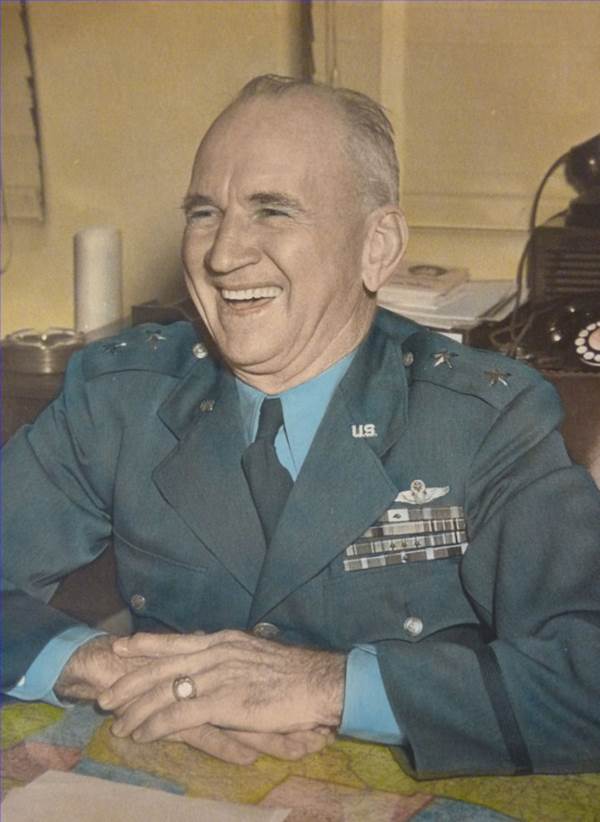
Personal colored portrait of Major
General Clements
McMullen,
spring 1952.
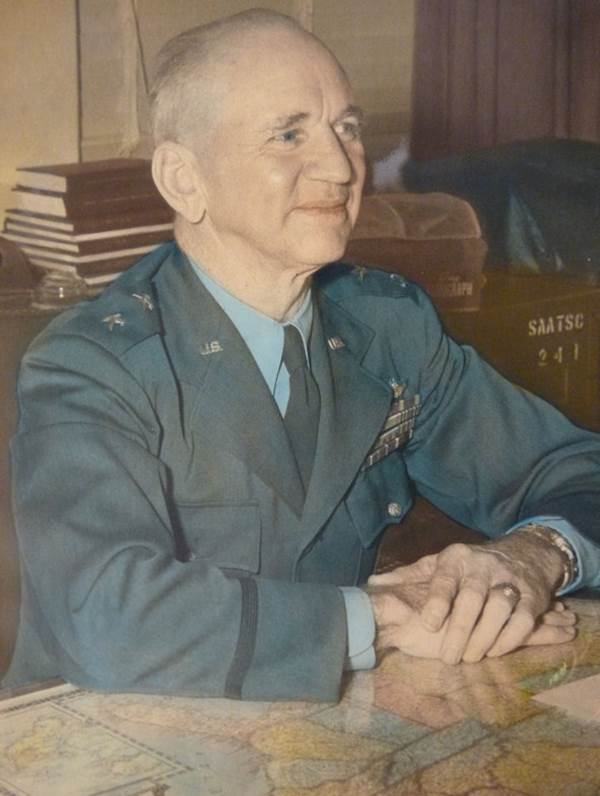
A bit more serious! Personal colored
portrait of
Major General Clements McMullen, spring
1952.
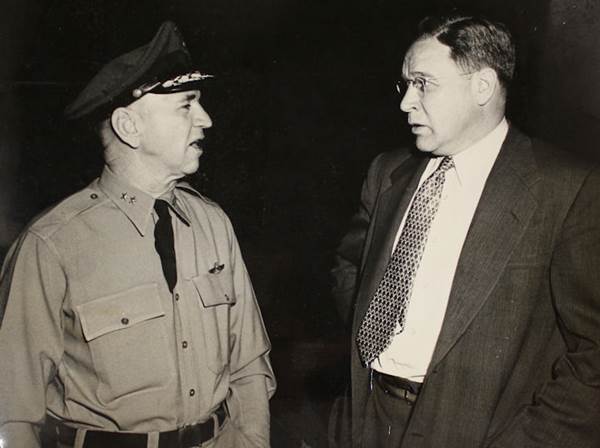
General Clements McMullen with Mr. E.V.
Higgins,
Assistant Secretary of the United States
Air Force at
Kelly Air Force Base on May 17, 1952.
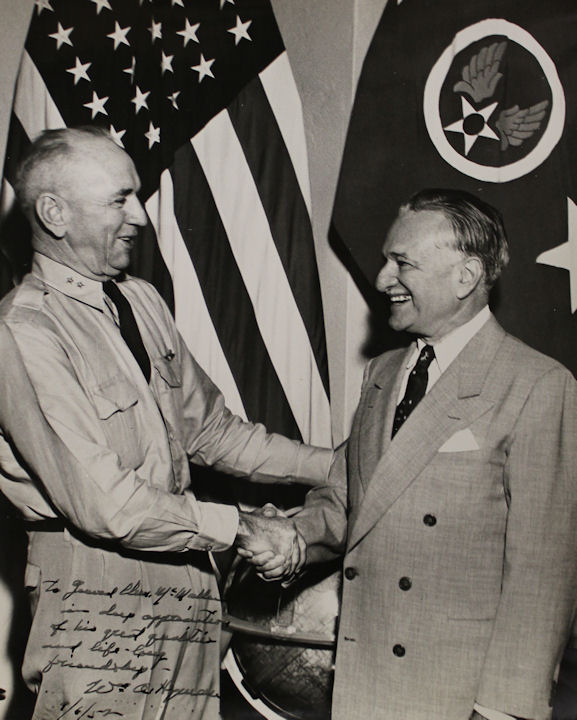
Photo taken in SAAMA Headquarters in
front of
General McMullen’s command flag or colors.The
inscription on the
photo says, “To General Clements
McMullen in deep appreciation of his
great qualities
and lifelong
friendship. Wm. O. Higmen 9/6/52”
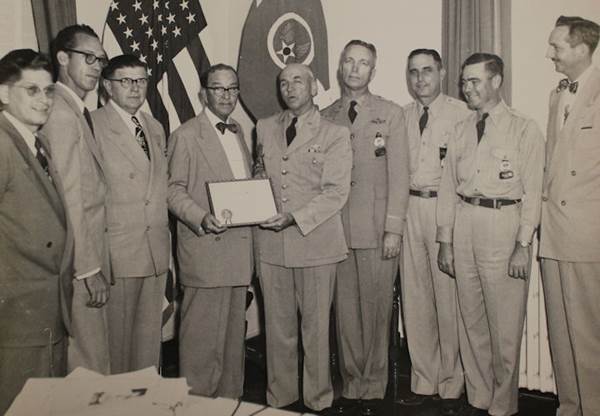
General McMullen receiving a
Presidential Citation
for Employment
on 10 October 1952.
It was awarded for the efforts made for
equal opportunity
employment for the
handicapped at SAAMA and Kelly
Air Force
Base.
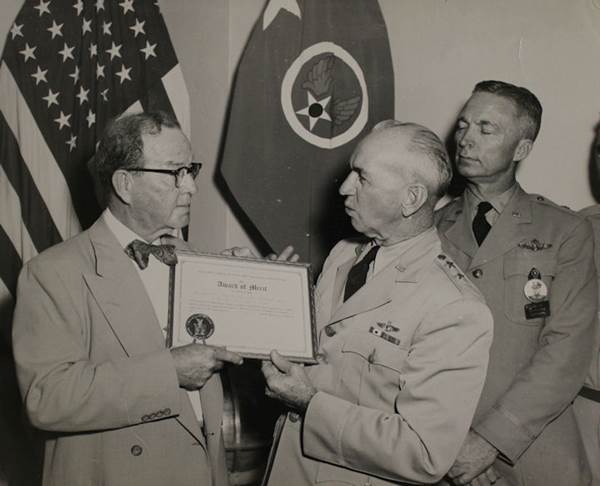
Receiving
Presidential Citation for Employment.
Brigadier General James Leroy Jackson,
to
the right of
McMullen.
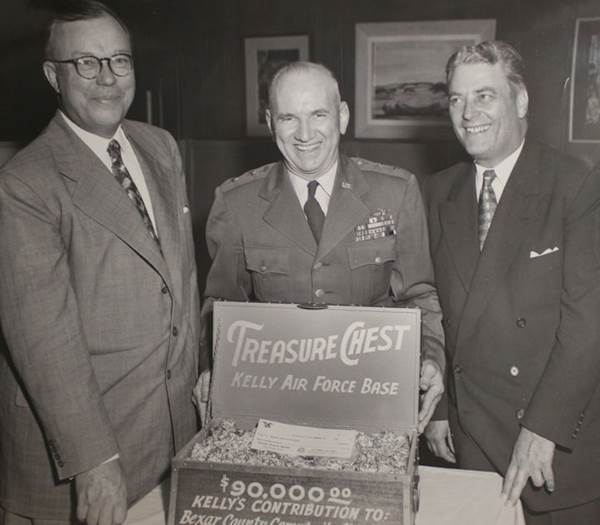
Through the efforts of General Clements
McMullen,
employees and
military personnel donated $90,000.00
to the Bexar Country Community Chest Fund in 1952.
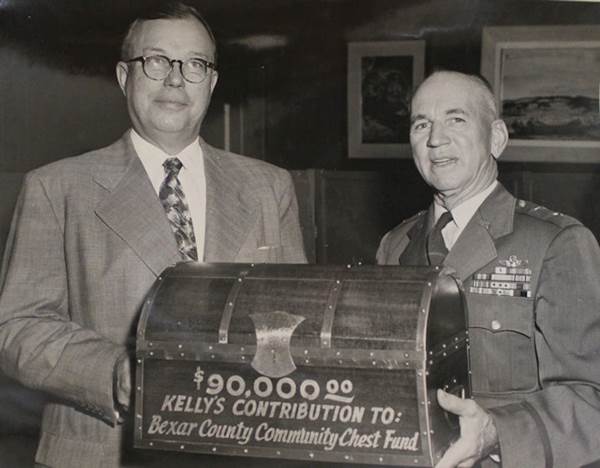
Another photo of a proud General
Clements McMullen
Donating $90,000.00 to the Bexar County
Community
Chest Fund.
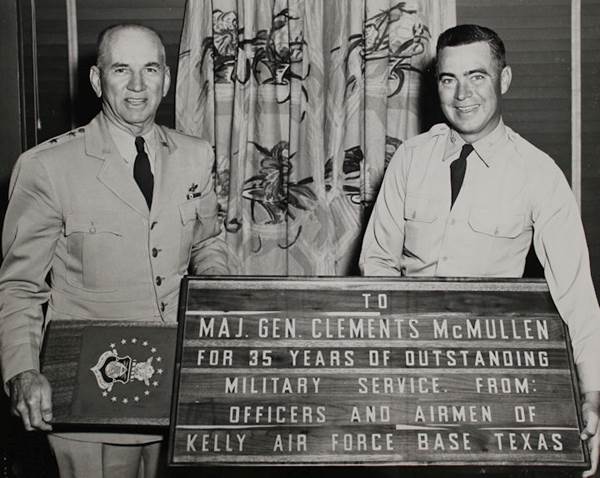
Major
General Clements McMullen on the
occasion of his 35th anniversary of service to his country,
20 October 1952, is presented with a hand-made tea
table
from the 2899th Depot Training Group by Colonel
Burton H. Rowden, Chief of Personnel
and
Administration.
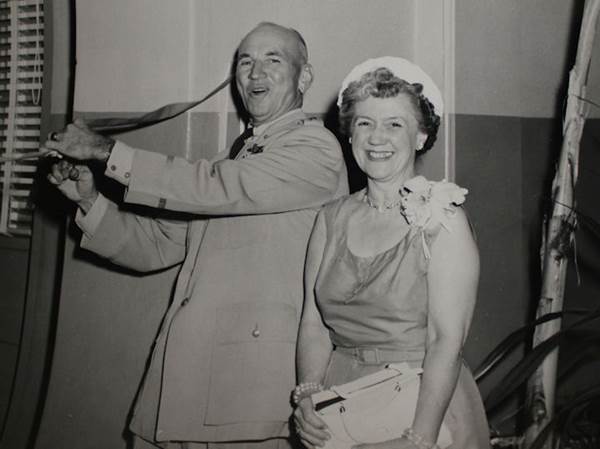
General Clements McMullen and his wife Nancy
having a good time while helping to set up for
one
of the general’s anniversary parties for 35 years
of
service to his country.
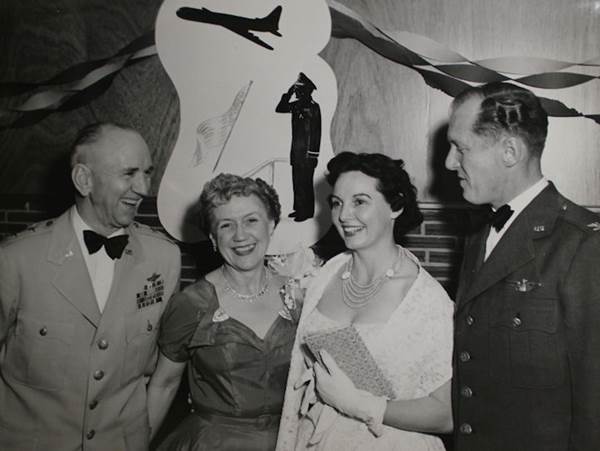
General Clements McMullen and his wife
Nancy
Greet other guests at a 35th
Anniversary Perty.
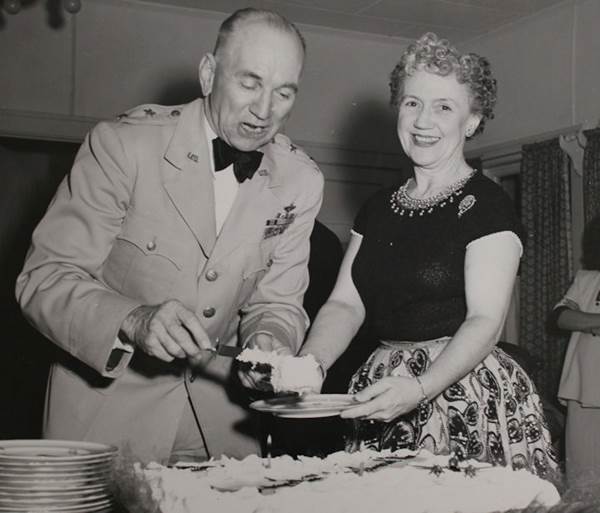
At a party for 35 years of active duty,
General McMullen
and his wife
Nancy cut and serve the cake. Notice the
general is wearing
his summer service dress uniform as
the semi formal
evening dress uniform prior to the
USAF
adopting mess dress in 1958.
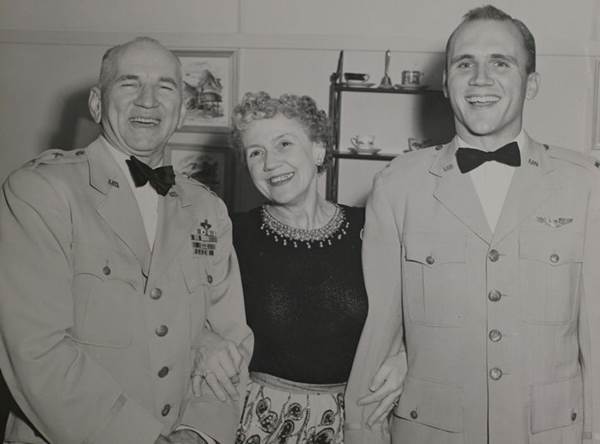
General McMullen’s son Thomas joins in
the celebration
For his father’s 35 years of active
duty. Both are wearing
their summer
service dress as semi formal evening
dress uniforms.
Ribbons on such an occasion were
considered optional.
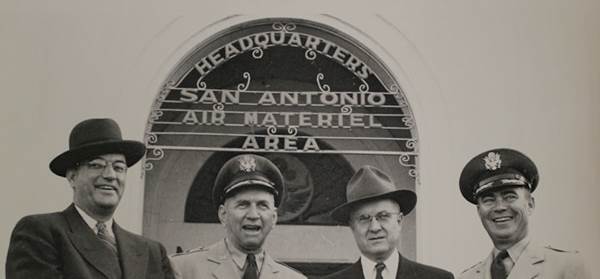
Mr. Ramspeck,
Chairman of the Civil Service
Commission, visits Kelly Air Force Base
on October 28,
1952.
Standing in front of SAAMA headquarters, from
left to right is
Mr. Ramspeck, General McMullen,
Unknown Person,
and Colonel Rowden.
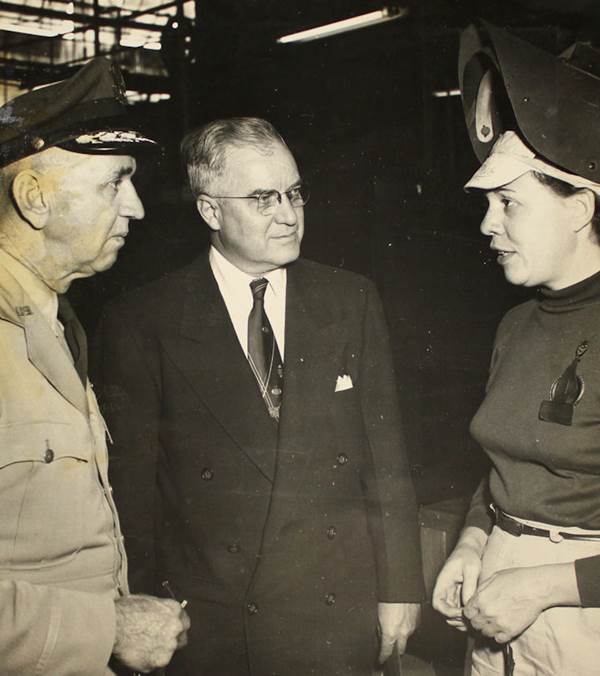
The head of the Civil Service Commission
visits Kelly
AFB on October 29, 1952. Both the head
of the
Commission and General Clements McMullen
talked with a
number of employees.
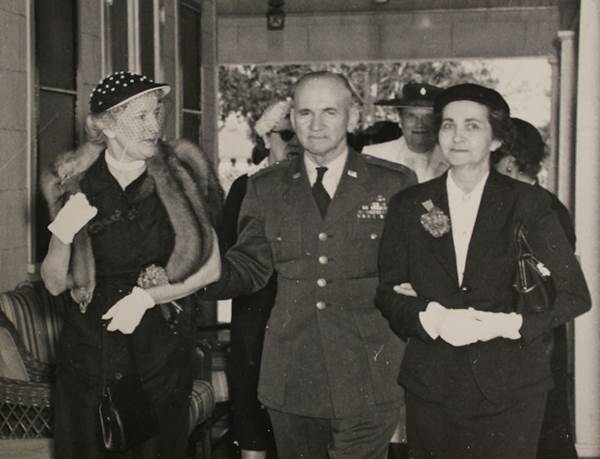
Socializing with the Lady’s Club at
Kelly Air Force
Base. General
McMullen is flanked to the left by
Amy Brown and left by Dorothy Robins. He
always
made a special
effort for his wife Nancy and the
Lady’s Club.
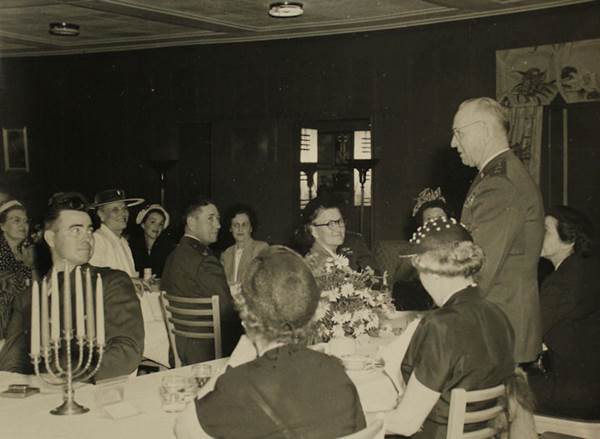
General Clements McMullen as the keynote
speaker at
the Lady’s Club
luncheon.
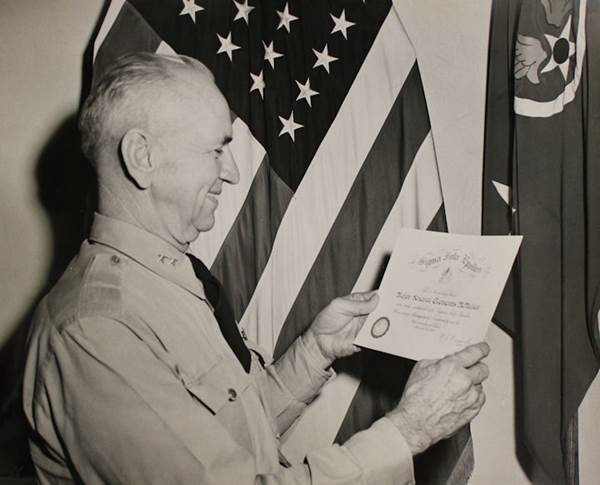
General Clements McMullen looks at his
certificate
from the Texas
Chapter of Sigma Iota Epsilon,
the National
Honorary and Professional Management
Fraternity. He was
inducted into the fraternity on his
merits as being a
professional manager of SAAMA
and Kelly Air
Force Base.
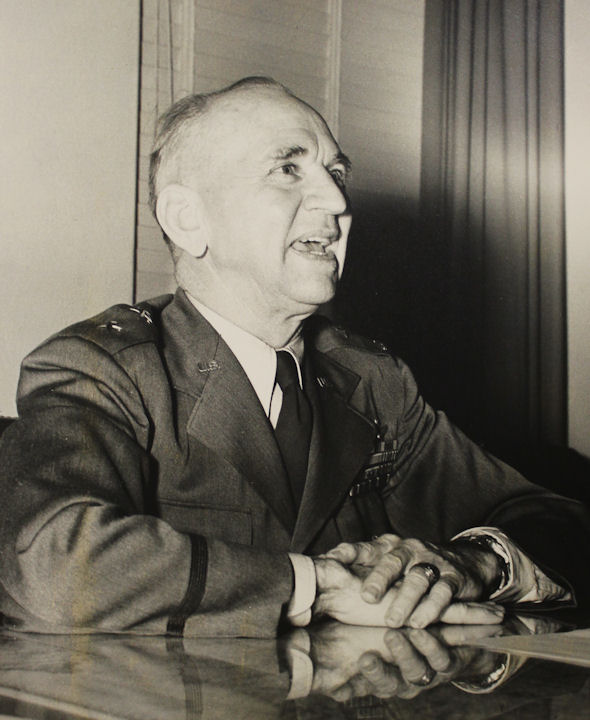
Major General Clements McMullen, USAF,
1952.
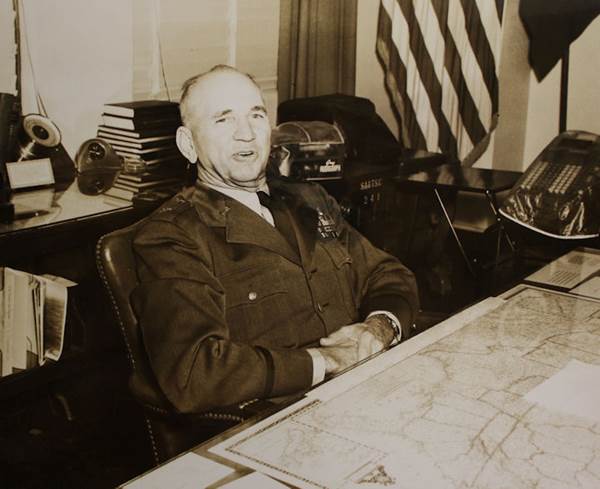
Another day
at work as he relaxes behind his desk, 1952.
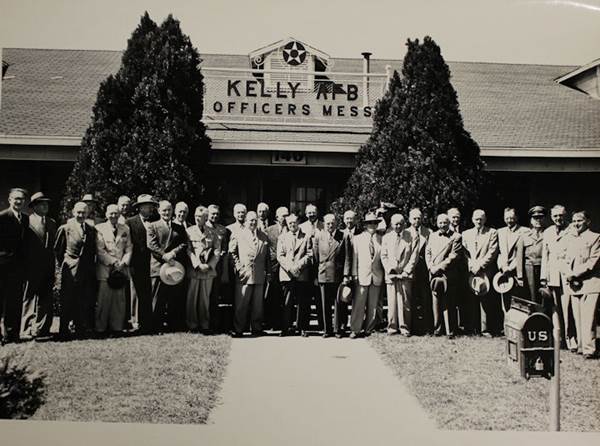
General McMullen hosting another civic
group in front
of the Kelly
Air Force Base Officers Mess.
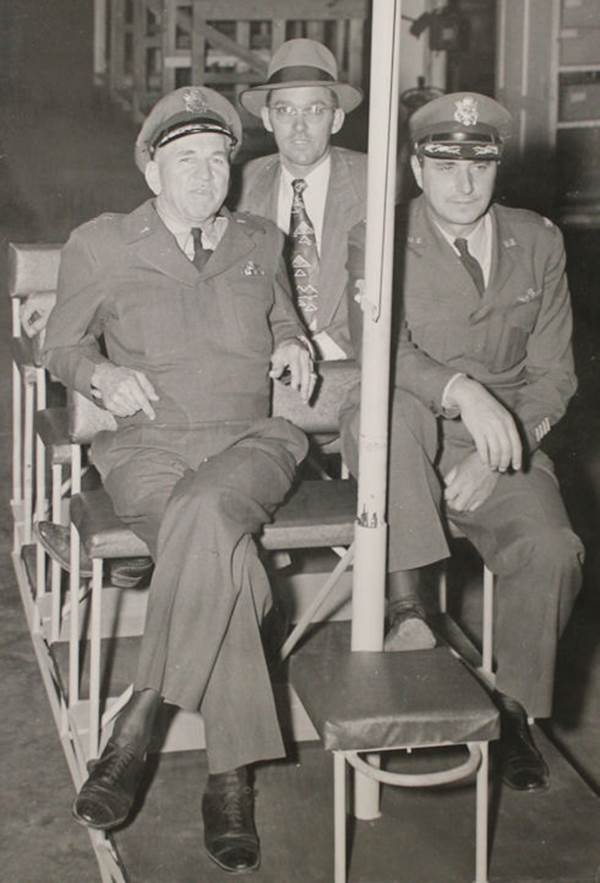
General McMullen, Ed Hill and Colonel
Monty Wilson
inspecting and
relaxing inside one of the many buildings
located on Kelly
Air Force Base.
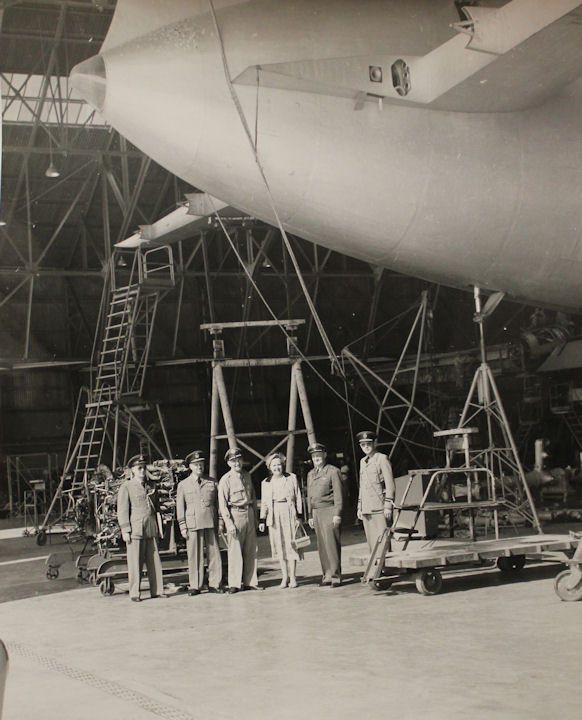
Air Marshal W.A. Curtis, RCAF, and party
stand
dwarfed under the
tail of the giant XC-99, world’s
largest operating
aircraft, at Kelly Air Force Base.
The Canadian team visited all the US Air
Force Bases
within the San
Antonio area. Left to right are:
Squadron Leader McKinnon, RCAF; Air
Marshal
Curtis; Major General Clements McMullen;
Mrs. Curtis;
Major General Robert L Walsh, USAF and
Air
Commodore Max Henricks,
RCAF.
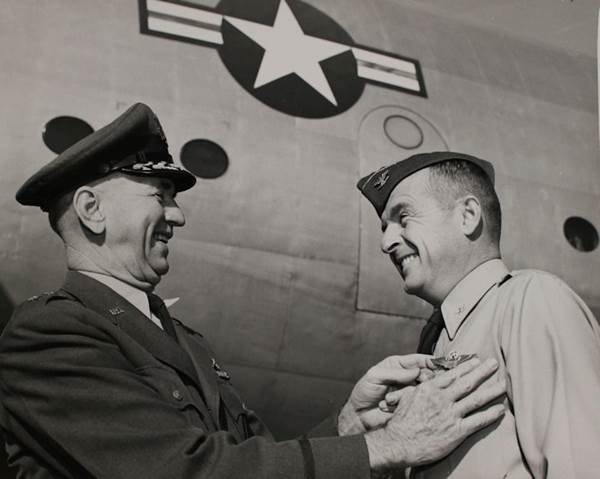
Major General Clements McMullen awards
Command
Pilot wings to Colonel Charlie Stark.
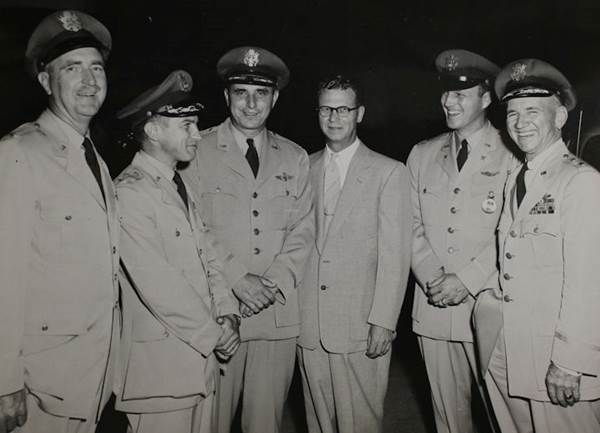
The people are indentified, from left to
right, as:
Lieutenant Colonel Alexander McCain;
Colonel Ted
Tucker; Colonel Monty Wilson; Barney Van
Horn; Captain M.G.
Hassenmiller (Aide to General
McMullen);
and General McMullen.
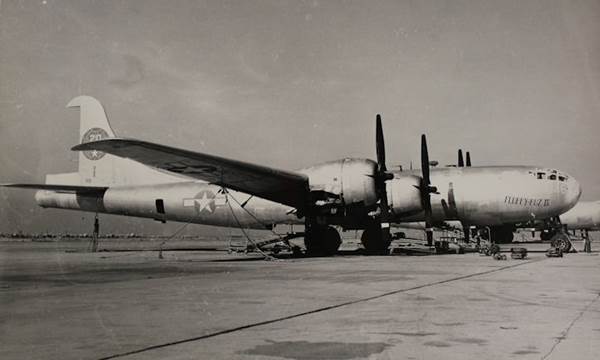
On the rear of this photo, General
Clements McMullen
Writes, “ Fluffy
Fuzz II the B-29 I flew home from
Tokyo in October 1946 being salvaged at Pyote
Air Force Base, Texas in November 1952.”
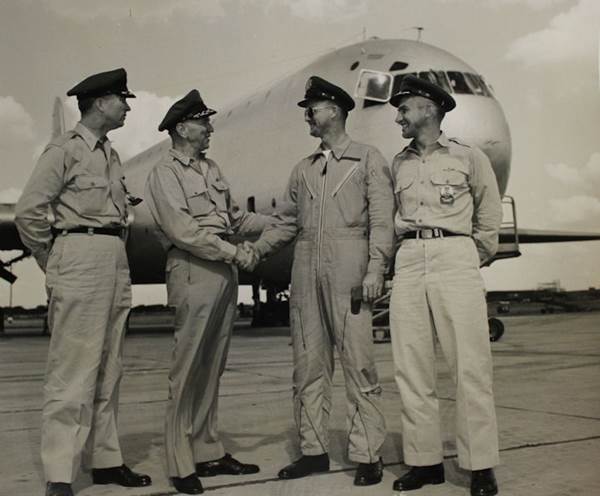
Just landed after breaking 1,000 hours
flying
the XC-99.
General McMullen shaking the hand
of the pilot
Captain Jimmie Pittard, Jr. upon landing the
XC-99.
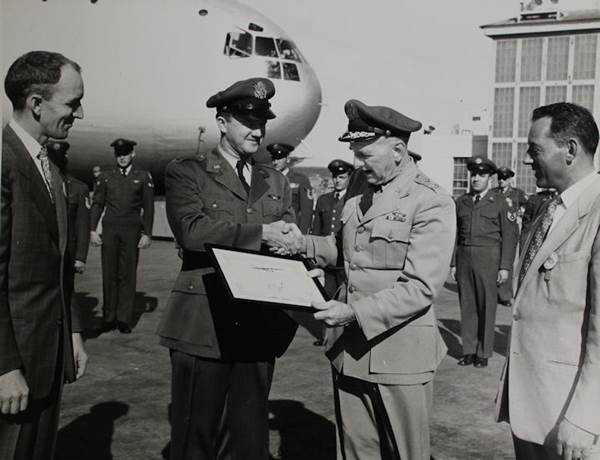
On
9 January 1953, General Clements McMullen
presents Captain Jimmie Pittard,
Jr. with a special
award for 1,000 hours of flying time with the XC-99
on scheduled runs from Kelly
to the west coast.
Notice the XC-99
in the background.
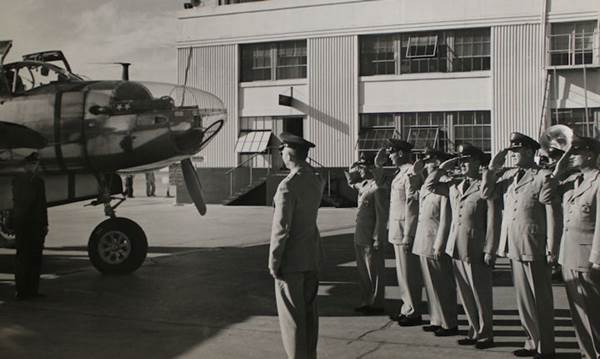
Surprise
birthday party February 5, 1953.
General Clements McMullen arrives back
at Kelly
Air Force Base as the band plays and his
men stand
At attention as he disembarks his
aircraft. General
McMullen stand to the left saluting his
command.
Note the two stars of the general on the
B-26.
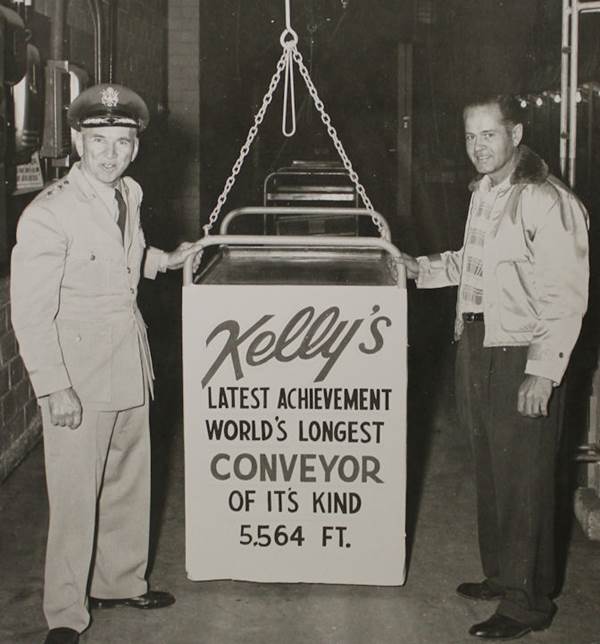
World’s longest conveyor is flanked by
Major General
Clements
McMullen and its designer, Barney Eiserloth.
The conveyor linked three east Kelly warehouses. The
first dolly to be
pulled along the new system proudly
bore a sign
proclaiming it “the world’s longest.”
13 February 1953
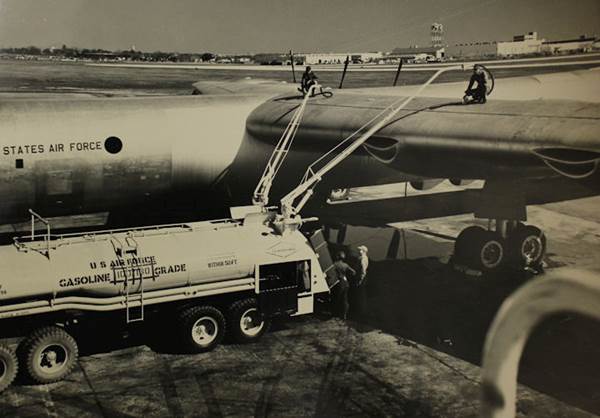
Boom service truck developed at Kelly
Air Force
Base in 1953 to meet the needs of the
XC-99 and
B-36
Bombers.
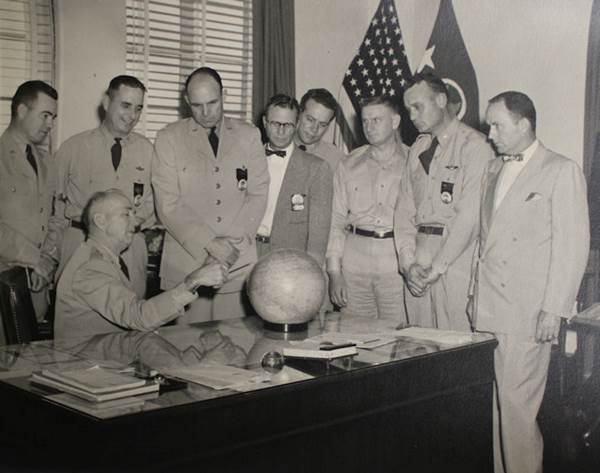
April 3, 1953. A photo of the men who
make the decisions
And plan operation at Kelly Air Force
Base, the third
Largest industry in the nation, are
shown with Major
General Clements McMullen (seated). Left
to right:
Colonel Burton H. Rowden, Deputy for
Personnel
And Administration; Colonel Monty D.
Wilson, Deputy
For Supply; Colonel Ben T. Strogner, Deputy for
Procurement; Roy H. (Barney) Van Horn,
Acting
Director of the Maintenance Division;
Lieutenant
Colonel Irving C. Eells,
InspectorGeneral; Colonel
James W. Luker,
Deputy of Special Weapons; Colonel
Laurence Growden,
Base Executive; and A.C. Heskew,
Comptroller’s Division.
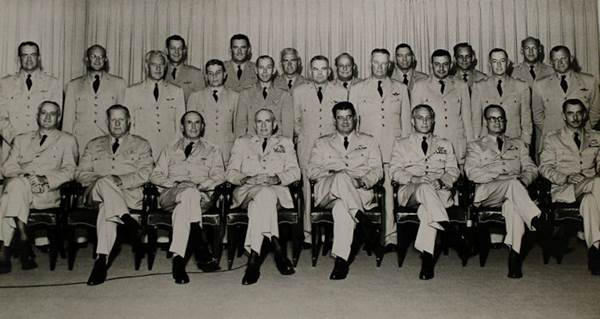
Air Materiel Commanders, 2 July 1953,
Wright-
Patterson
Air Force Base. Front Row, left to right:
Major General Kingston Eric Tibbets;
Brigadier
General Charles Pratt Brown; Major
General Arthur
W. Vanaman;
Major General Clements McMullen;
Major General Lyman P. Whitten; Major
General
Kenneth Eugene Webber; Major General
Frederick Rogers Dent, Jr.; and Major
General
Manning E. Tillery.
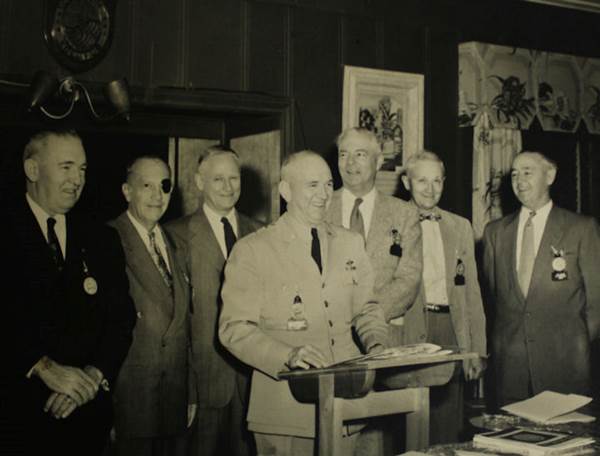
The Order of Daedalians
Staff of 1952 re-elected
1953: Orlo
Quinn, Provost; Paul Wilkins, Treasurer;
Martin Giesecke,
Adjutant; General Clements McMullen,
Commander; Joe Johnson, Vice President;
Charley Chauncey,
Member; and
Barney Giles, Member.
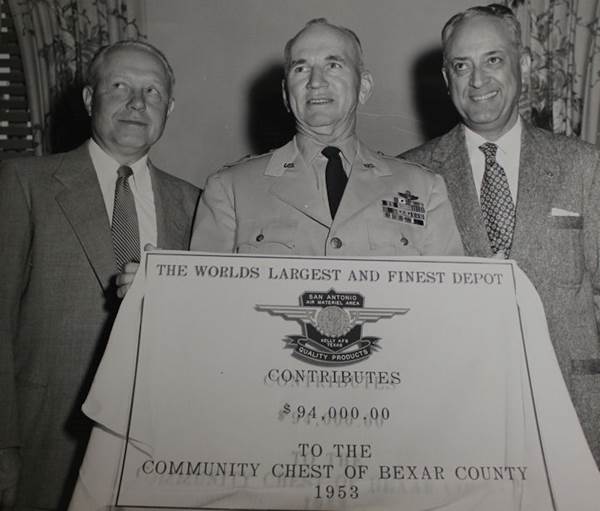
Once again, a large donation to the
Community Chest
Of Bexar
County. Outdoing his previous donation, General
Clements McMullen presents a $94,000.00
donation to the
Community Chest of Bexar County,
$4,000.00 over the amount
Given the
previous year, 1952.
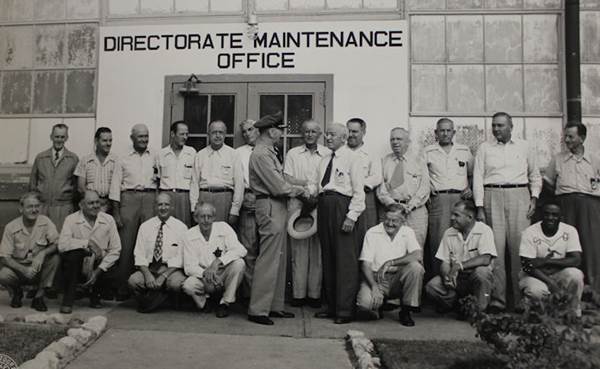
Once a head of maintenance himself,
General Clements
McMullen visits the Directorate
Maintenance Office with the
Head of the
department and its department members.
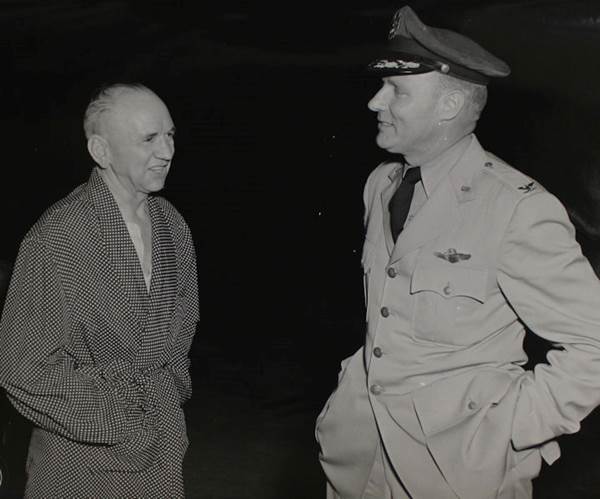
Even generals have to be waked up in the
middle of
The night. Colonel
Fred Bell conferring with General
Clements
McMullen in the middle of the night. Not having
Enough time to put on his uniform, General
McMullen
Meets with
the colonel in his night robe.
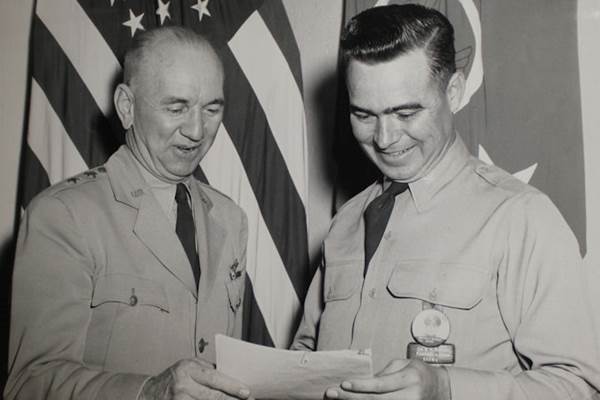
General Clements McMullen confers with
Colonel B.H.
Rowden, Personnel and Administration,
SAAMA.
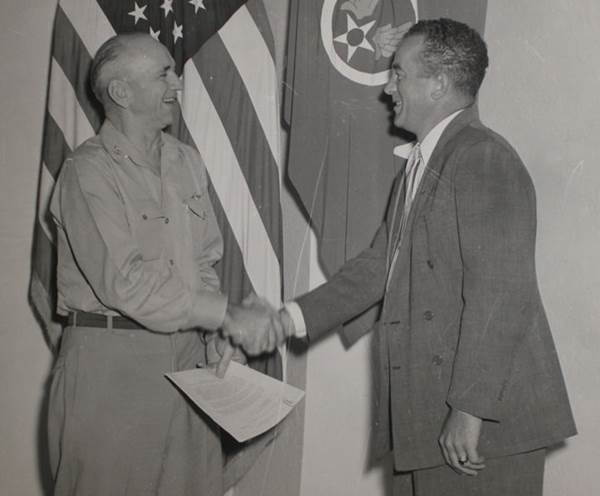
Always ready to reward those who deserve
the kudos
And accolades, General Clements McMullen
awarding
A citation
to another deserving Kelly employee.
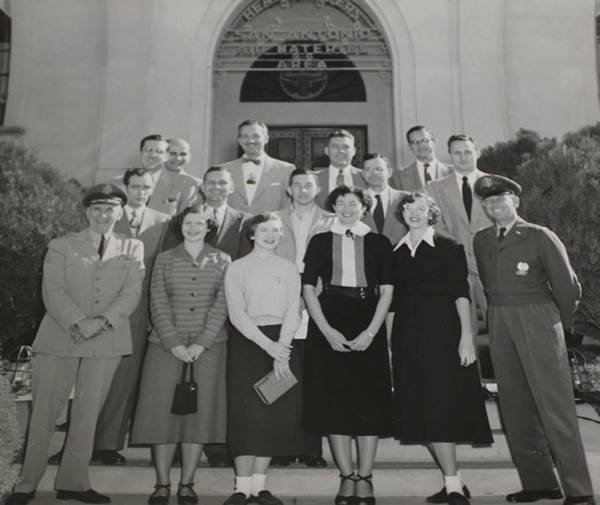
In front of
Headquarters, San Antonio Air Materiel Area.
Always trying to make people feel
positive about their
Performance, General McMullen meets with
and
Congratulates
a section chief and the personnel.
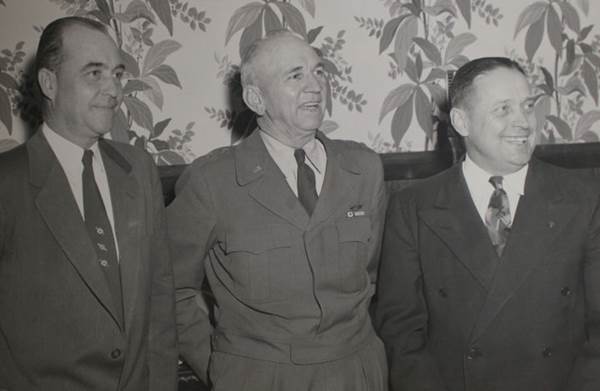
General Clements McMullen meets with
civic leaders
At Kelly Air
Force Base.
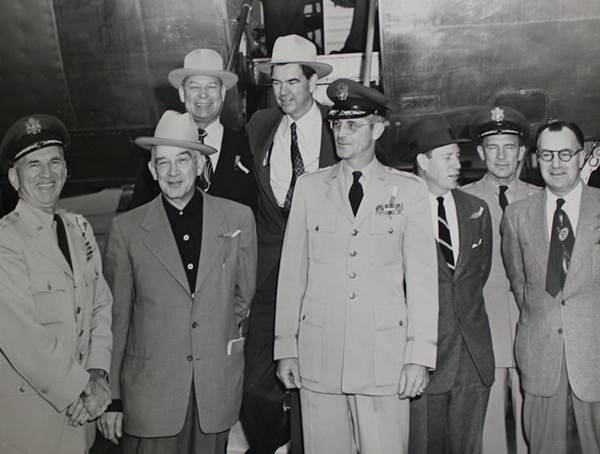
Unidentified group! General Clements
McMullen standing
With another US Air Force major general,
brigadier
General and
five other men. All are wearing small tags
Over their left pockets marked “In
Memoriam 1953.”
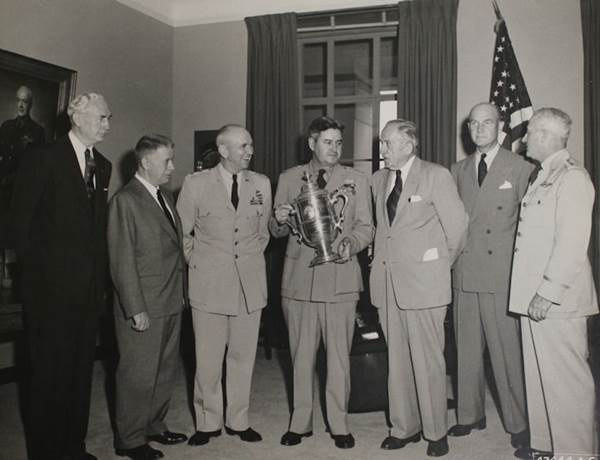
August 17,
1953 in Washington, D.C. General Nathan P.
Twining, Chief of Staff of the US Air
Force, presents the
1952 Daedalian
Trophy for flying safety to General
Curtis E. LeMay, Commander of the Strategic Air
Command. The
presentation was made in General
Twining’s office in the Pentagon. Left
to right with
General LeMay are members of the Order of
Daedalians: Brigadier
General W.W. Welsh, (Ret);
General George C. Kenney, (Ret.); Major
General
Clements McMullen, Wing Commander, Order
Of the Daedalians;
General LeMay; Brigadier
General Martin F. Scanlon, (Ret);
Colonel Arthur
Christie
(Ret.); and General Twining.
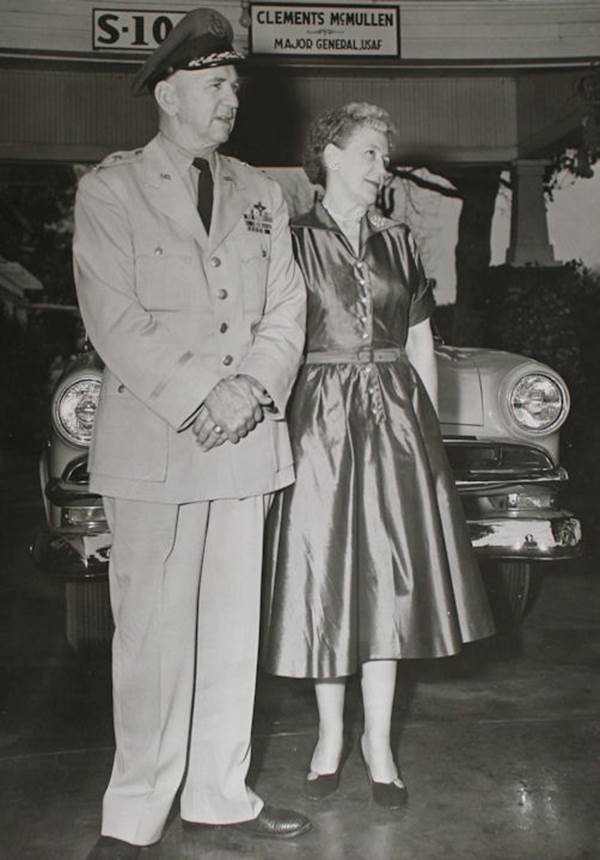
Major General Clements McMullen standing
with his
wife Nancy in
front of their car and residence on
Kelly Air
Force Base.
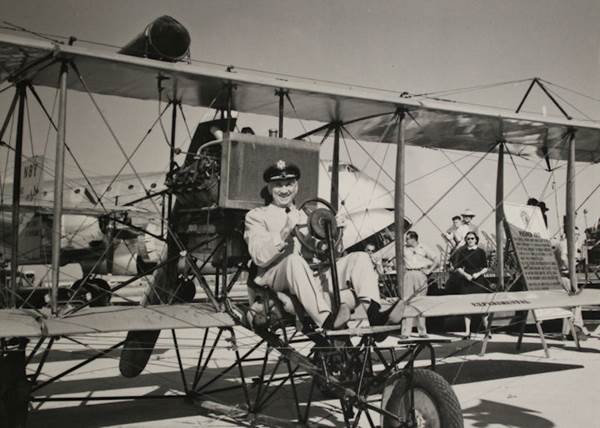
Open house at Kelley Air Force Base.
Major General Clements McMullen poses on one of first
planes while the new planes of the USAF are in
the
background. The Open House for Kelly AFB was on
Labor Day, 1953. General McMullen is sitting in a
Curtiss Pusher from 1910. In contrast the large
XC-99 is in the background.
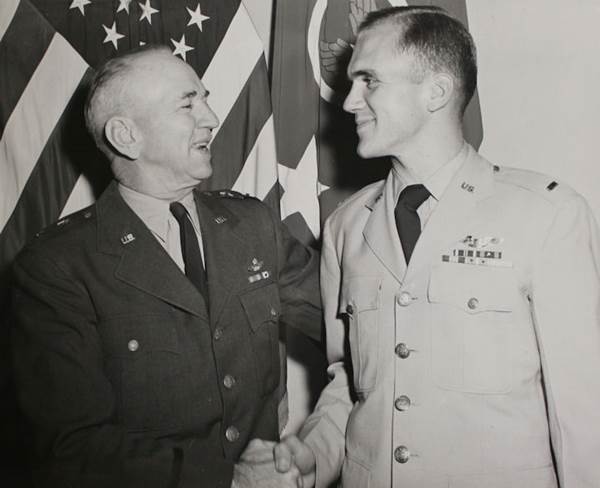
Major General Clements McMullen greets his
Son Thomas as he returns from the Korean War
And joins his command at Kelly Air Force Base.
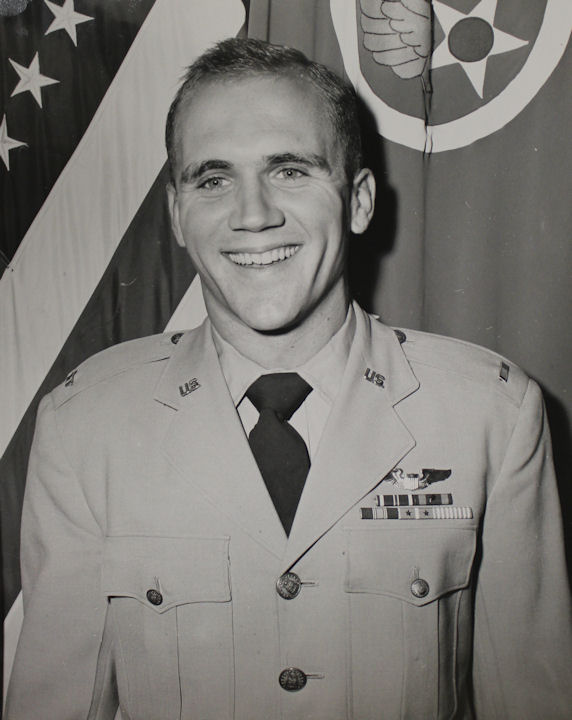
Back from the Korean War, General McMullen’s son
joins
his father at Kelly Air Force Base. In 1953,
Lieutenant Thomas McMullen joined the Kelly AFB
family as a flight test maintenance officer. Before
leaving Kelly, he test flew about 30 types of aircraft after
they
had undergone depot maintenance.
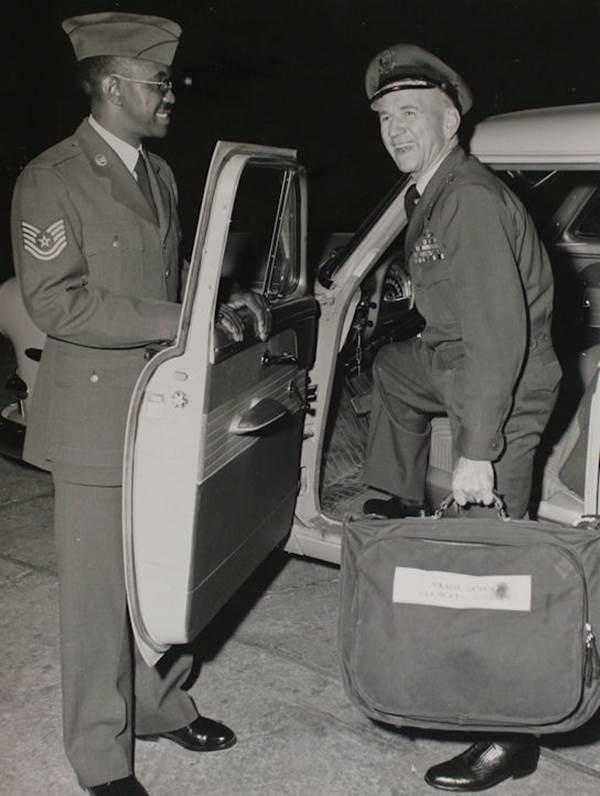
General Clements McMullen leaving on one of his
many
trips.
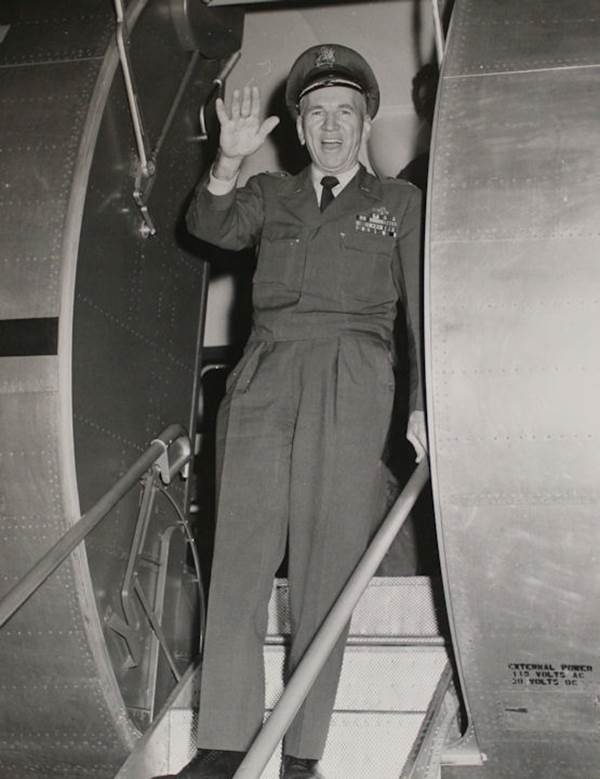
In his Eisenhower “Ike” Jacket uniform, General
McMullen is ready to go.
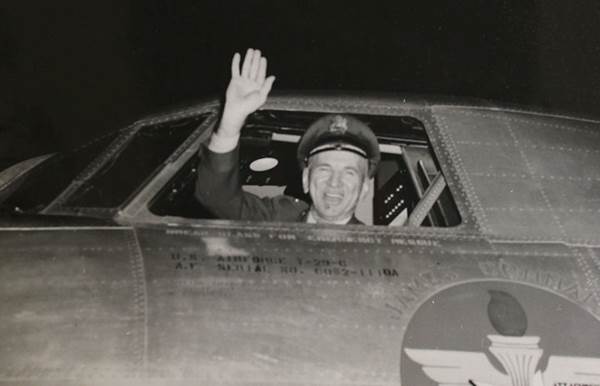
On many occasions, General McMullen would pilot
his
own airplane. In this photo, the general is flying
a
T-29. He was qualified to fly many aircraft.
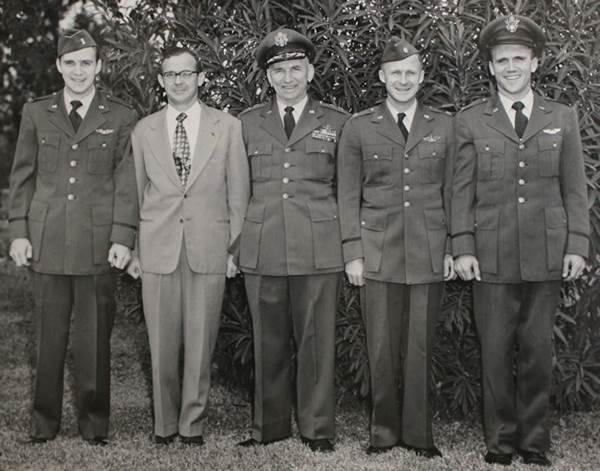
A family photo taken of the military men in the family
of
Major General Clements McMullen. The youngest,
William, to the far left, just received his wings and
commission as second lieutenant in the US Air Force.
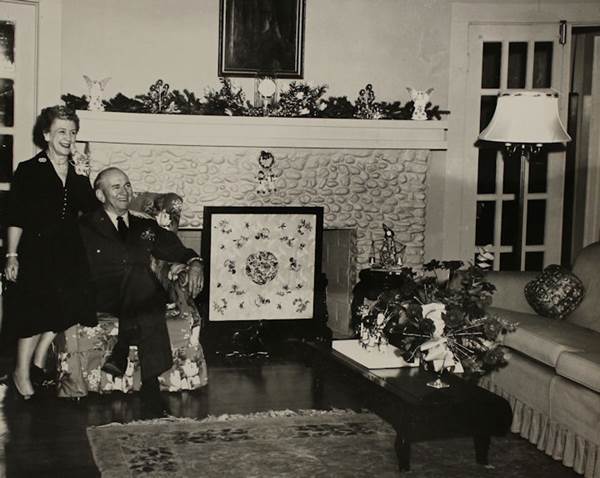
A family Christmas photo of General McMullen and his
wife
Nancy in their home, December 1953. In less
than
two months General McMullen will retire
from
the United States Air Force.
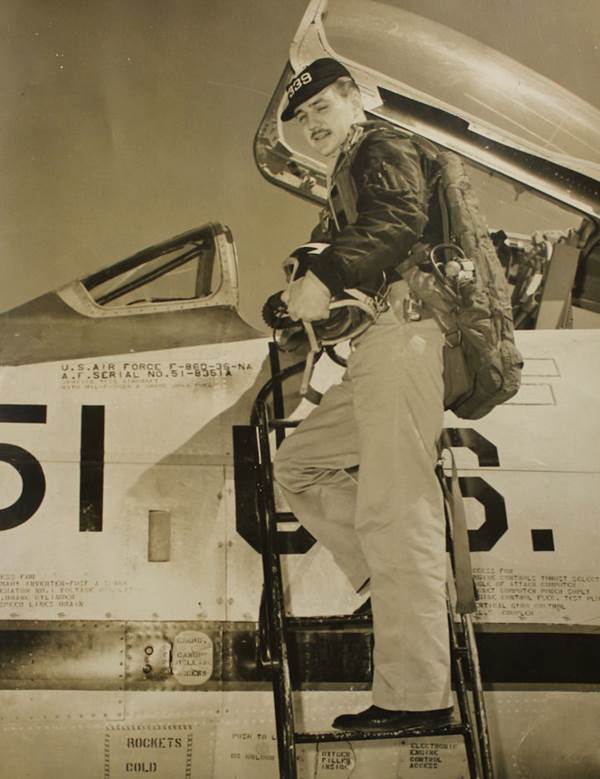
General Clements McMullen’s son William as he
Enters his jet when he was flying with the
339th Fighter Squadron.
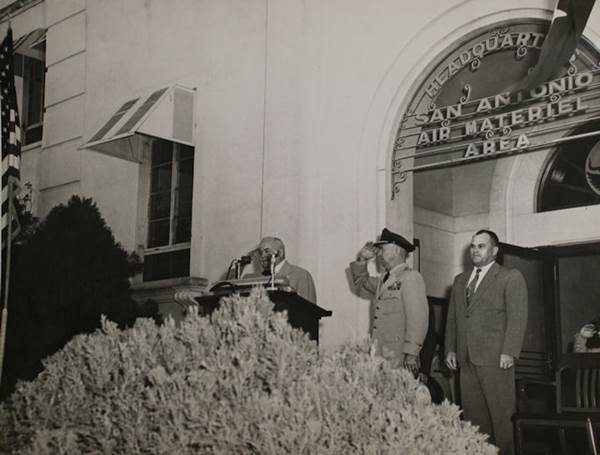
Standing in front of Headquarters, San Antonio Air
Materiel Area, General McMullen stands at attention
and
salutes the American flag with two other
unidentified men.
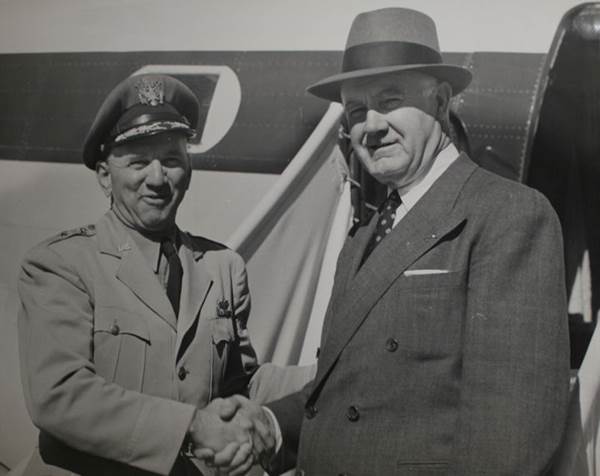
An old friend comes to visit General Clements
McMullen. Major General Edward M. (Pop)
Powers (Ret.) comes to visit his old friend Clements
at
Kelly Air Force Base.
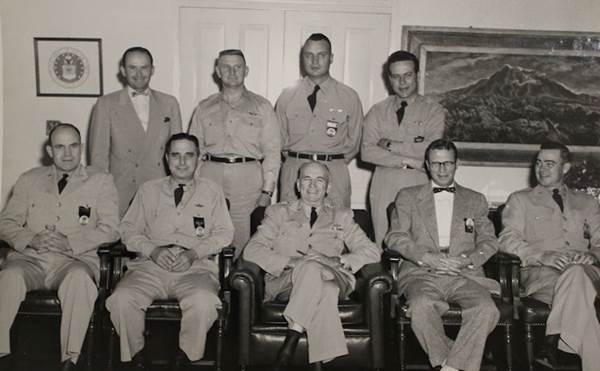
The photo has no markings. The only people identified
in
the picture is General McMullen, center, and
Barney Van Horn sitting to the right of the general.
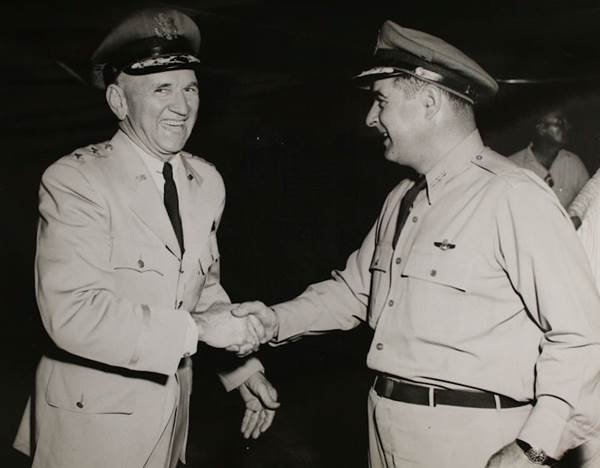
General McMullen greets Lieutenant General Edwin
William Rawlings, Commander Air Materiel Command,
as he arrives at Kelly Air Force Base for a visit.
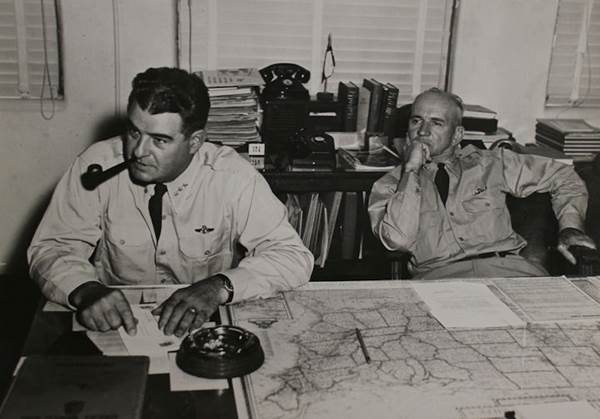
General McMullen sitting with General Rawlings
As they review information about Air Materiel
Command. Shortly after this visit, General Rawlings
earned his fourth star.
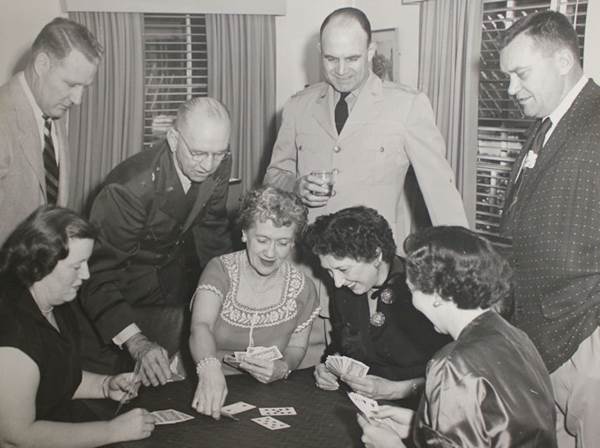
Dinner and Bridge on February 6, 1954.
General Clements McMullen, an avid Bridge player,
Giving suggestions to his wife during a playoff
Amongst friends.
The husbands all helping their wives during Bridge
Following a dinner. Playing were: Colonel Freddie Bell
And his wife Fern; General Clements McMullen and
His wife Nancy; Colonel Ben Stogner and his wife Red;
And Colonel Charley Jung and his wife Julie.
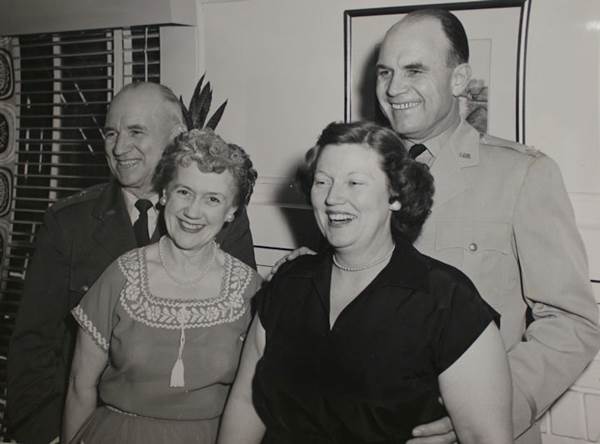
Hosting the dinner party and Bridge on February 6,
1954
Was Colonel Ben Stogner and is wife Red pictured
Standing next to General Clements McMullen and his
Wife Nancy.
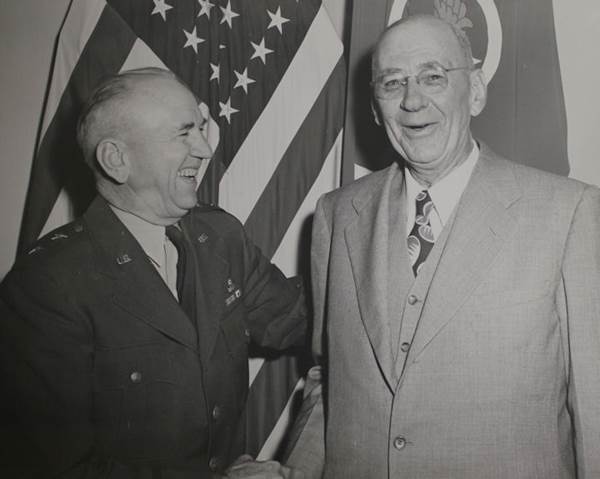
General Clements McMullen’s older brother, Alonzo B.
McMullen, visits the general at Kelly Air Force Base.
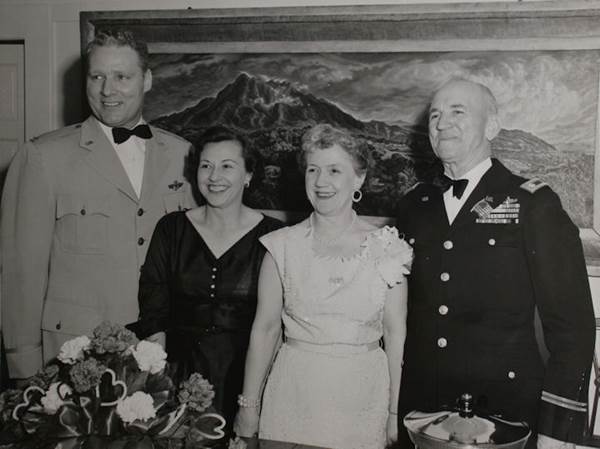
A retirement cocktail party given by Colonel Freddie
Bell and his wife Fern. General McMullen chose to
wear
his US Army dress blue uniform to the event. He
fondly recollected the period in which he was promoted
to
Lieutenant Colonel and was made the chief of
engineering at the San Antonio Air Depot at Duncan
Field, 1938.
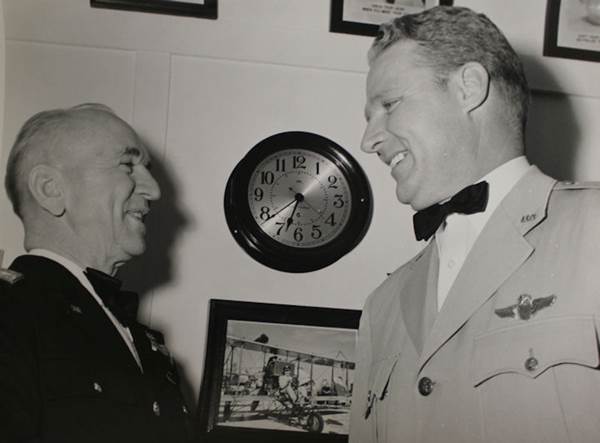
General Clements McMullen and Colonel Freddie
Bell as they reminisce over the general’s long career
That dates back to the plane pictured on the wall
Between the two men.
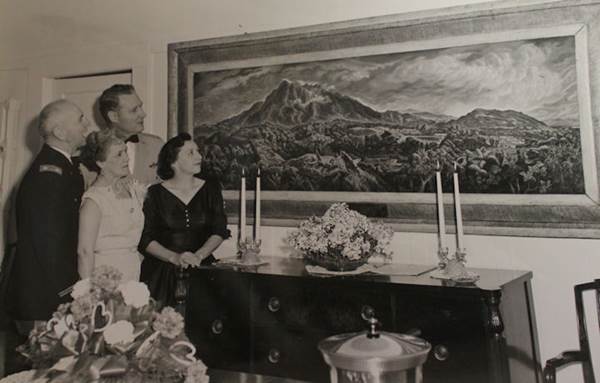
General Clements McMullen, his wife Nance, Colonel
Freddie Bell and his wife Fern as the general
reminisces
About his World War II achievements while looking
At a painting of Hollandia,
the location of his
Achievements.
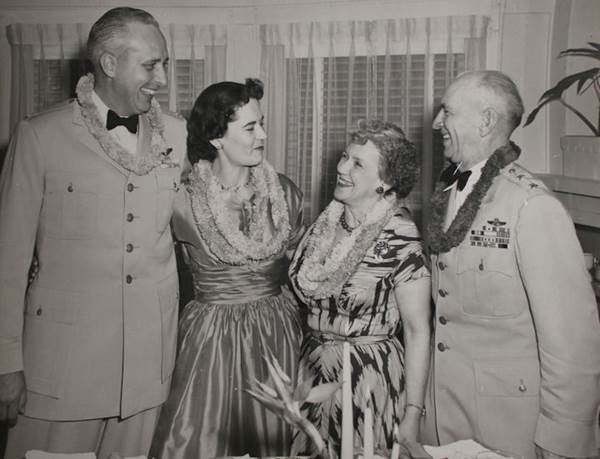
A Hawaiian retirement cocktail party given on February
7, 1954 by Colonel Al James and his wife Nan. General
Clements McMullen and his wife Nancy are dressed for
The occasion.
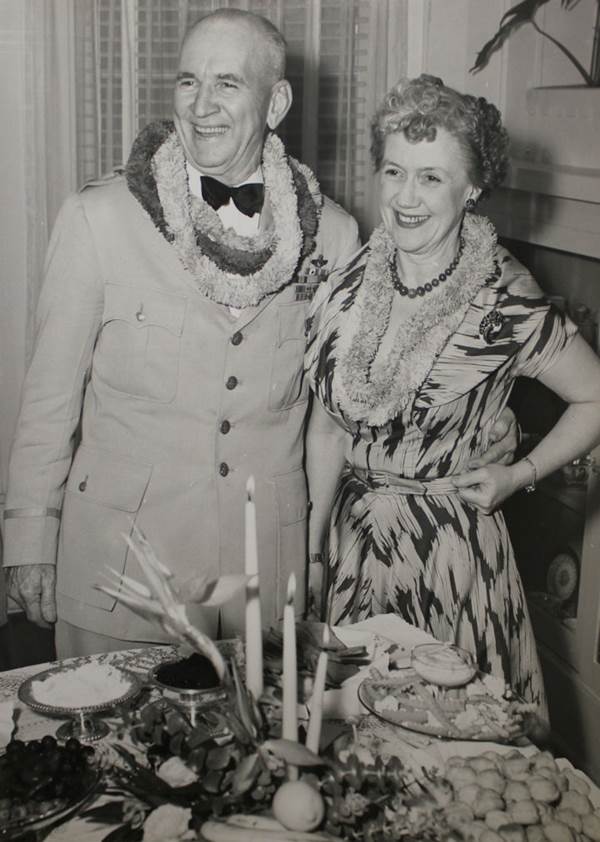
General Clements McMullen is his summer silver-tan
Uniform as formal evening dress with bow tie and
Hawaiian leis.
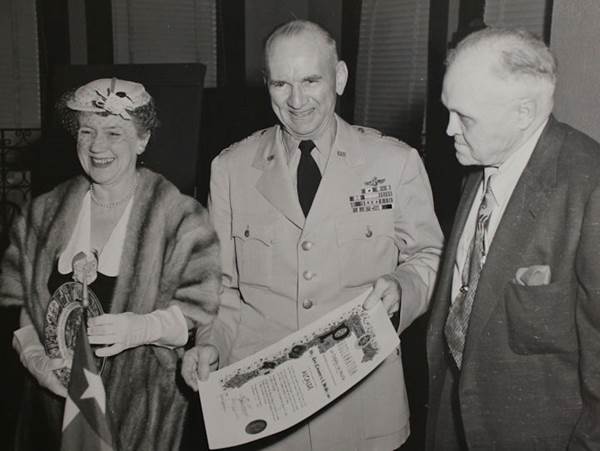
Major
General Clements McMullen and his wife
receives the certificate of “Honorary Alcalde of La Villita”
from
San Antonio City Councilman Lester. The honor
was
bestowed upon the in lieu of his retirement.
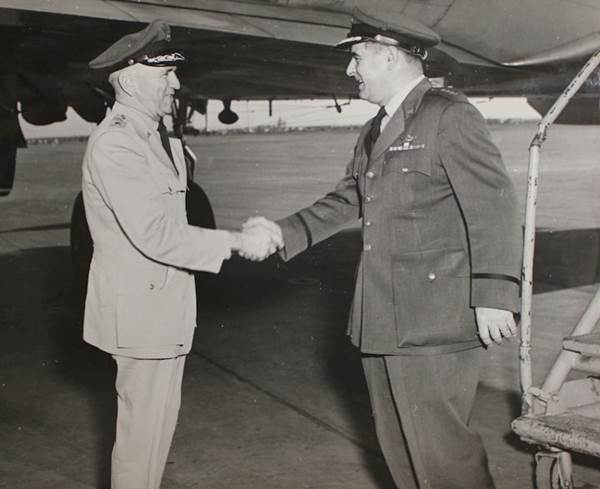
Now a four star, General Rawlings flew in the day
before
the
retirement ceremony of General McMullen. General
McMullen greets him for the final time as he arrives
at
Kelly Air Force Base, 27 February 1954.
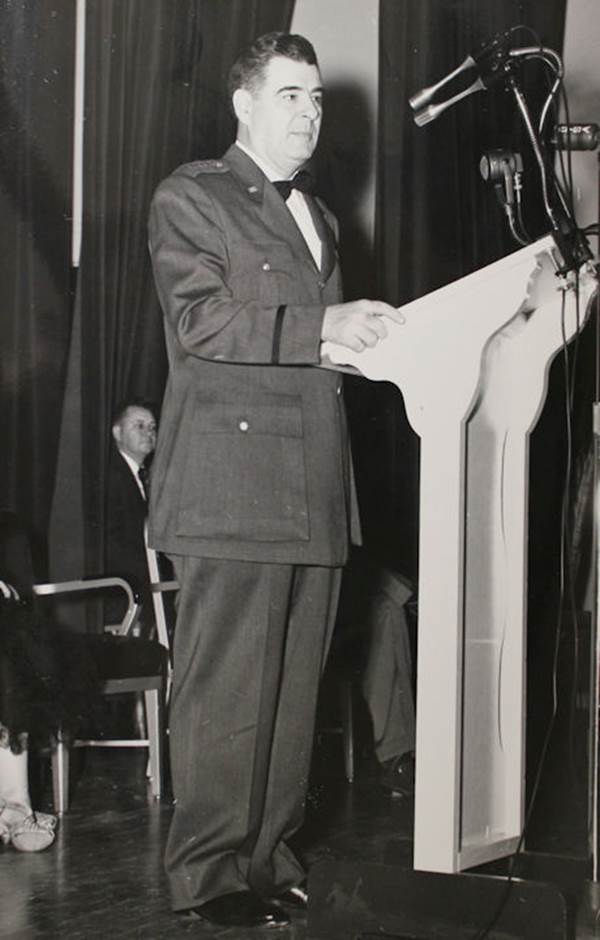
General Rawlings as the keynote speaker at a dinner in
Honor of General Clements McMullen. General McMullen
was
to officially retire the next day.
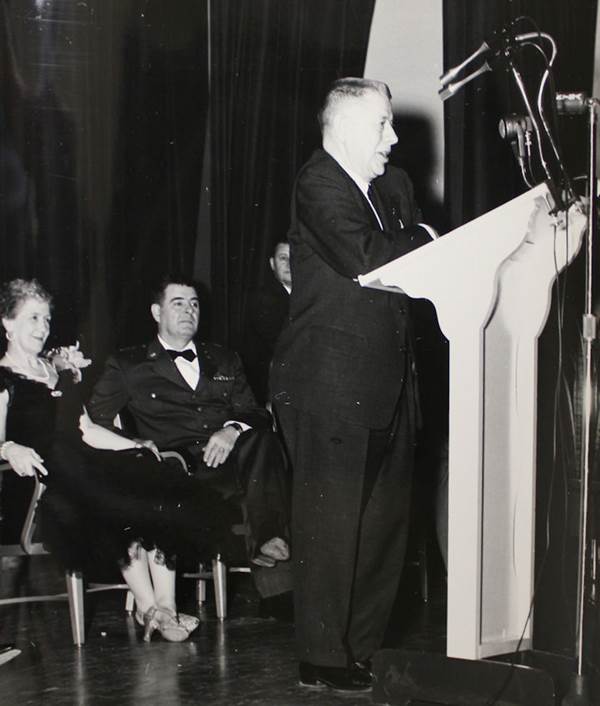
General George Kenney (Ret.) also a key note speaker
At the retirement party the night before General
Clements McMullen retired.
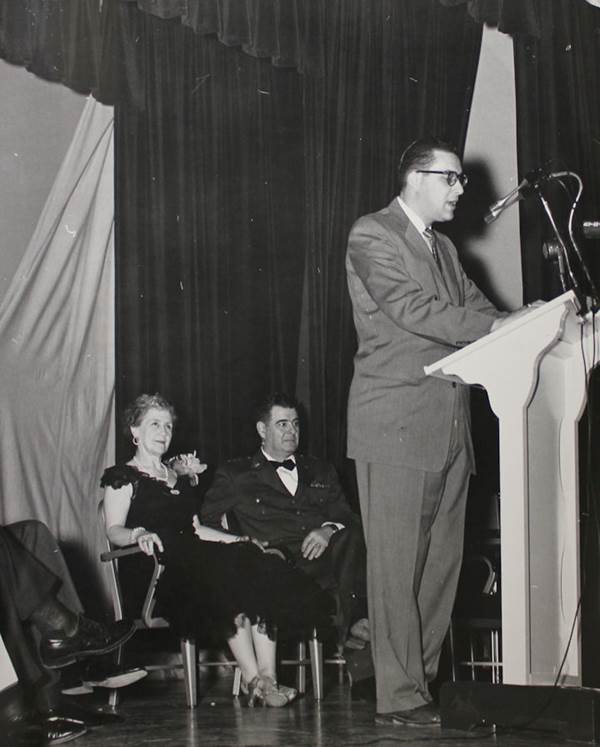
San Antonio city leaders spoke on behalf of General
Clements McMullen at his retirement party, the night
prior
to his retirement. Through the efforts of the general,
San Antonio grew and thrived as the San Antonio Air
Materiel Area became the third largest employer of
government civilian workers in the United States.
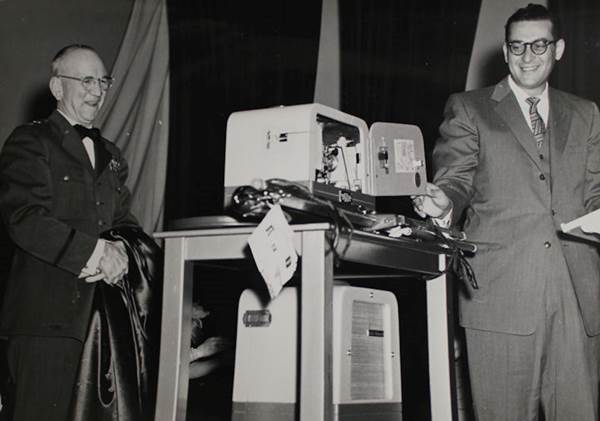
The retirement party for the general was known
officially
as
“General Clements McMullen Night.” The entire
event
was recorded. General McMullen looks at some of the
recording and playback equipment used at his event.
The next nine photos are of the retirement ceremony
of
General Clements McMullen on 28 February 1954
at
Kelly Air Force Base, San Antonio, Texas.
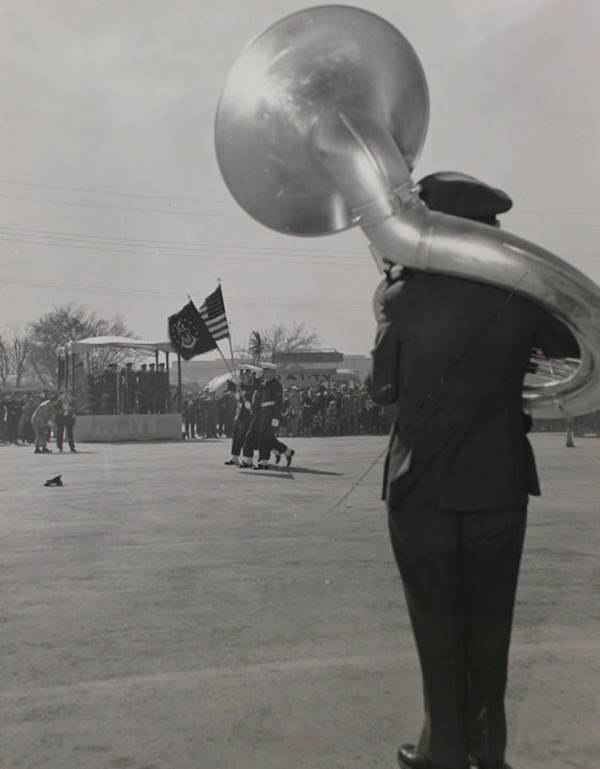
The Color Guard passes the reviewing stand of
retiring General Clements McMullen.
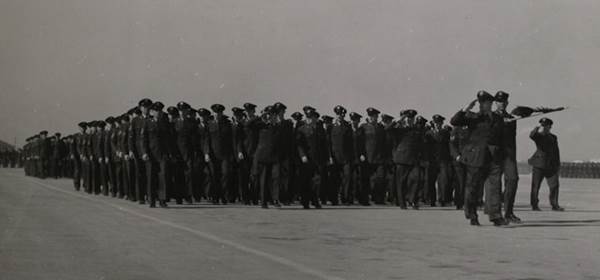
The men of Kelly Air Force Base pass-in-review as they
render and eyes-right to the retiring general.
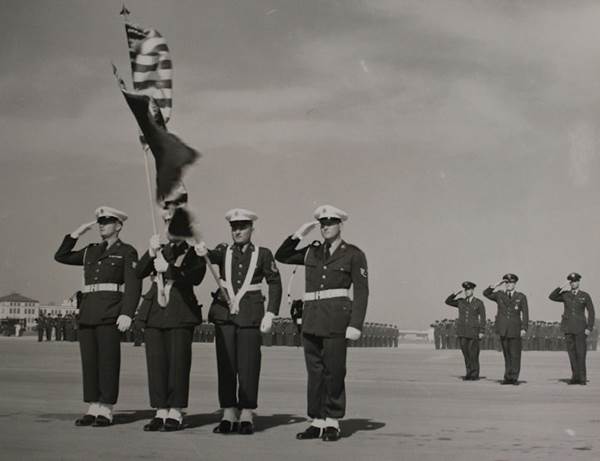
The Color Guard rendering salute and Command Flag
is
lowered as the National Anthem is played.
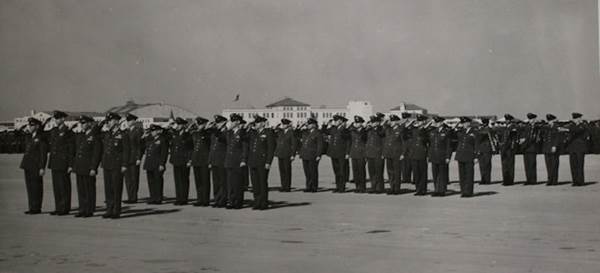
All the men of Kelly AFB rendering hand salute as
the
National Anthem is played.
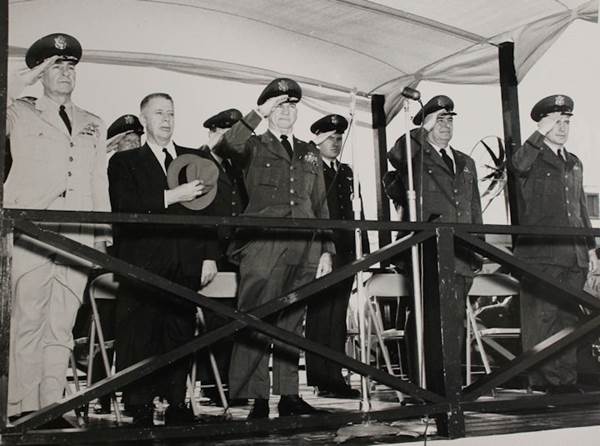
Generals McMullen, Rawlings, Kenney and other
dignitaries rendering hand-salute as the
Color-Guard passes the reviewing stand.
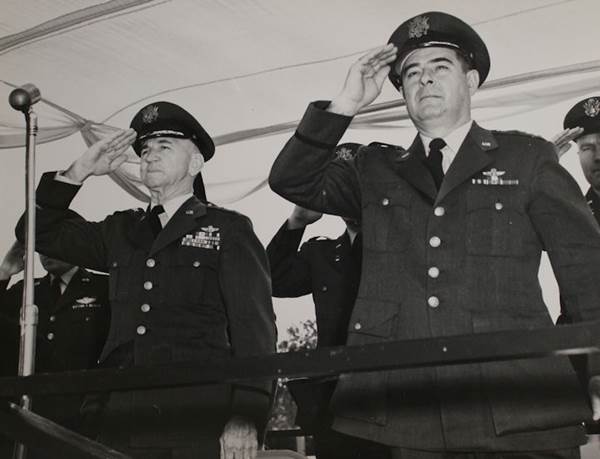
Generals McMullen and Rawlings rendering a
hand-salute as the National Anthem is played.
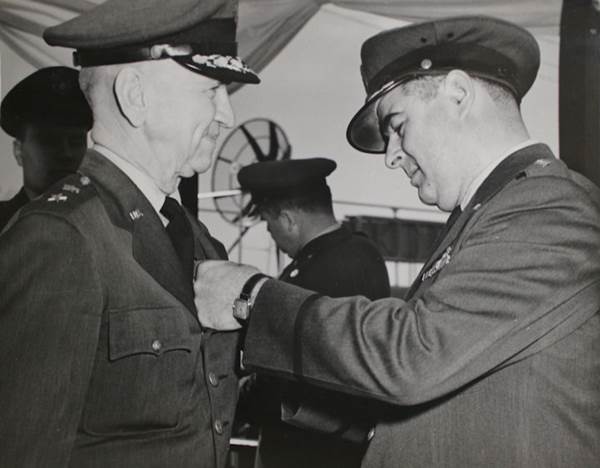
General Edwin Rawlings presenting General
Clements McMullen with his third
Distinguished Service Medal just prior to his
retirement for an job well done at Kelly AFB as the
Commanding Officer of the San Antonio Air Materiel
Area and for his long distinguished career in service
to
his country.
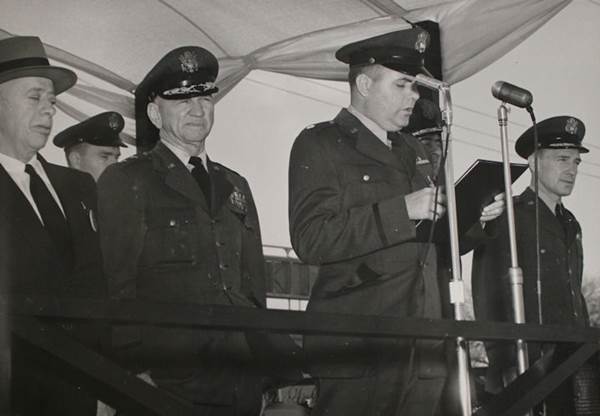
General McMullen listens as his military achievements
are
read in his honor and as he is awarded a
second cluster to the US Army Distinguished
Service Medal for accomplishments above
and
beyond the call of duty.
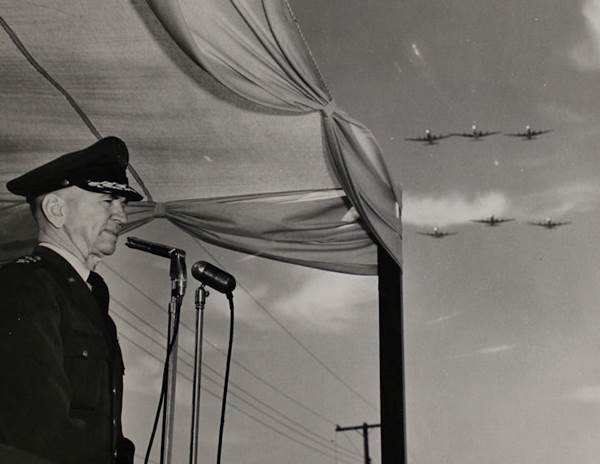
General Clements McMullen giving his speech and
looking on as a squadron of six transport aircraft flew
overhead in his honor. The XC-99 flew overhead
as
well as the general always thought of her
as
the “Queen of the Skies.”
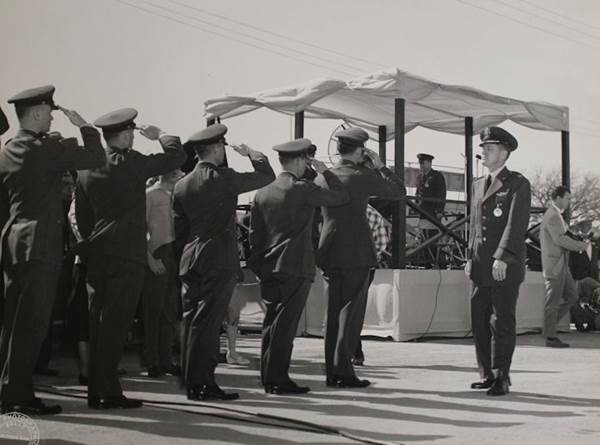
The officers of Kelly Air Force Base give their final
salute as the retired General Clements McMullen
steps
down from the reviewing stand at the end
of
the ceremony.
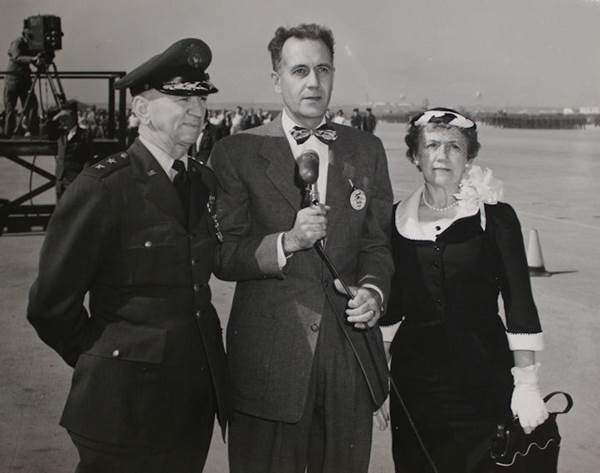
General Clements McMullen’s retirement ceremony
was
televised for the city of San Antonio. After the
retirement ceremony, General McMullen and his wife
Nancy are interviewed on the
day’s events.
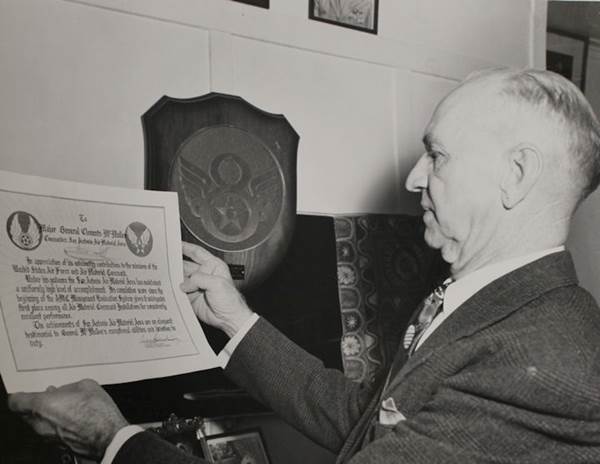
Major General Clements McMullen, (Ret.) looks at
special certificate given to him upon his retirement.
The certificate reads,
“To Major General Clements McMullen,
Commander San Antonio Air Materiel Area, In
appreciation for his noteworthy contributions
to
the missions of the United States Air Force and
Air Materiel Command. Under his guidance the San
Antonio Air Materiel Area has maintained a uniformly
high
level of accomplishment. His cumulative score since
the
beginning of the AMC Management Evaluation
System gives it undisputed first place among all Air
Materiel Command Installations for consistently
excellent performance. The achievements of San Antonio
Air Materiel Area are an
eloquent testimonial to General
McMullen’s exceptional abilities and devotion to duty.
General Edwin W. Rawlings, USAF, Commander,
Air Materiel Command”
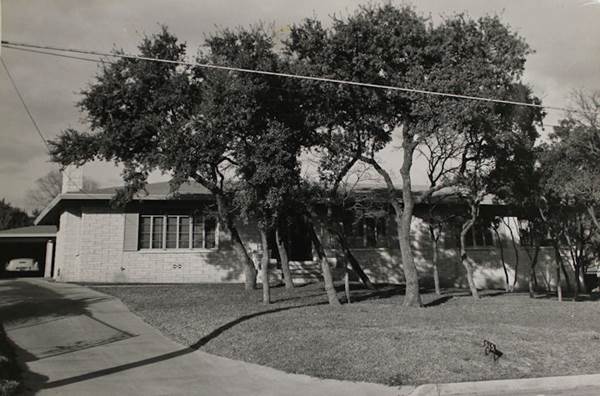
After retirement, General McMullen decided to make
San Antonio, Texas his permanent home. Pictured
is
his retirement home located at 515 Lamont Avenue.
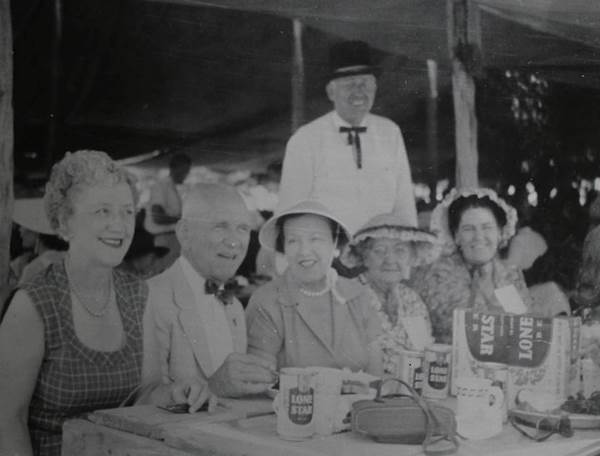
Fun after retirement! General Clements McMullen (Ret.)
with
his wife Nancy enjoying themselves with friends
at
a Texas style BBQ with a cold Lone Star Beer.
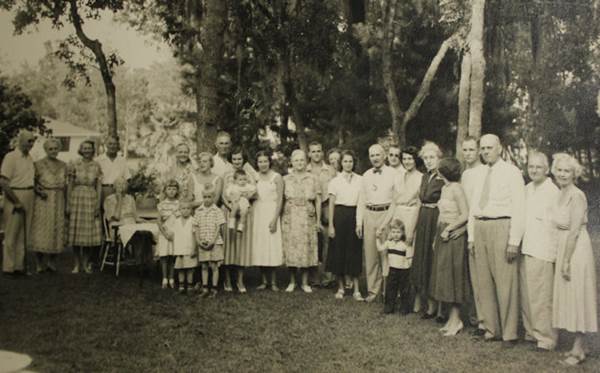
Back in Florida for a McMullen family reunion. General
Clements McMullen (Ret.) is located 10th
from the left.
Three positions over the general’s right shoulder is
his
son Thomas.
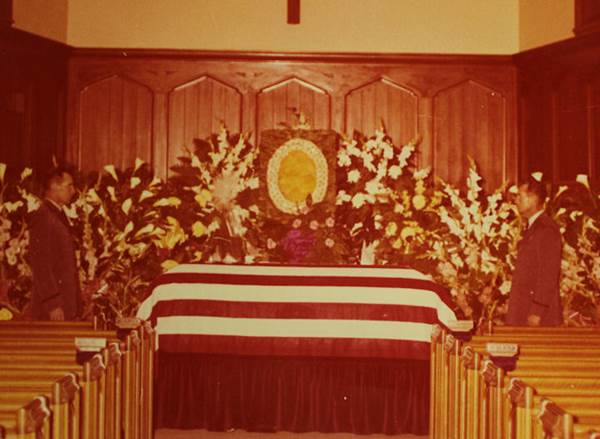
With little warning, on 9 January 1959, General Clements
McMullen, (Ret) died from a chronic heart condition.
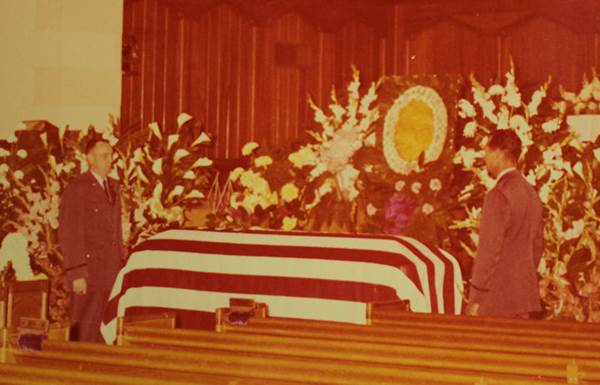
General McMullen’s coffin, draped with the American
Flag and flanked on either side with an Officer Honor
Guard.
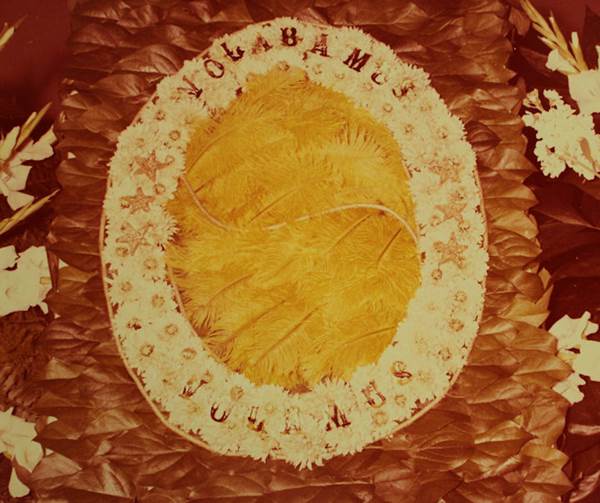
Flower arrangement presented by the Oder of
Daedalians.
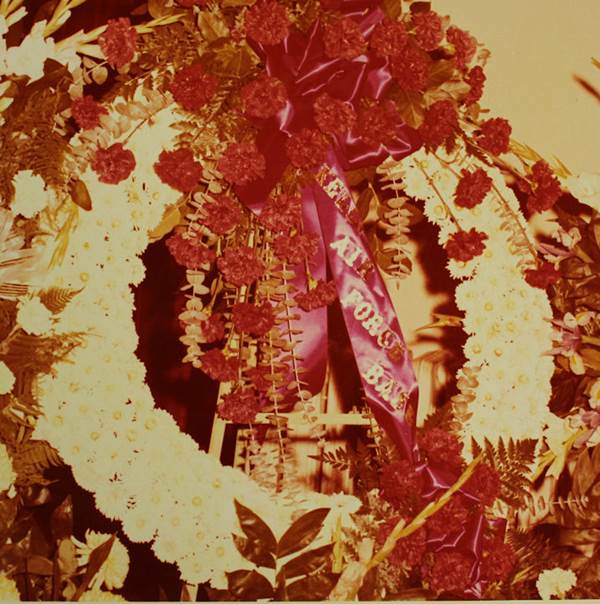
Flower arrangement presented by Kelly Air Force
Base.
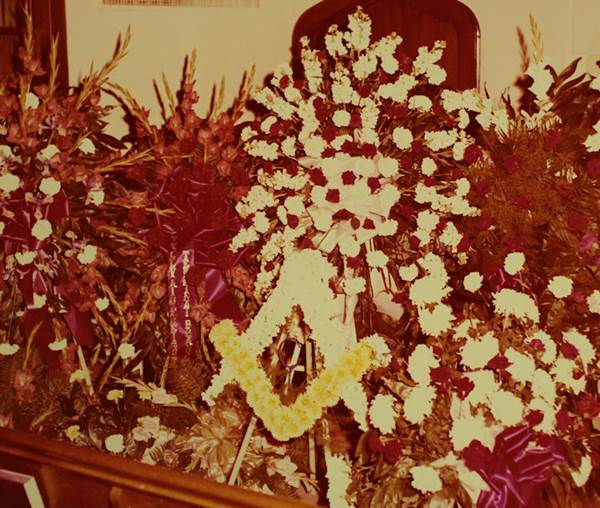
Flower arrangement presented by the Freemasons.
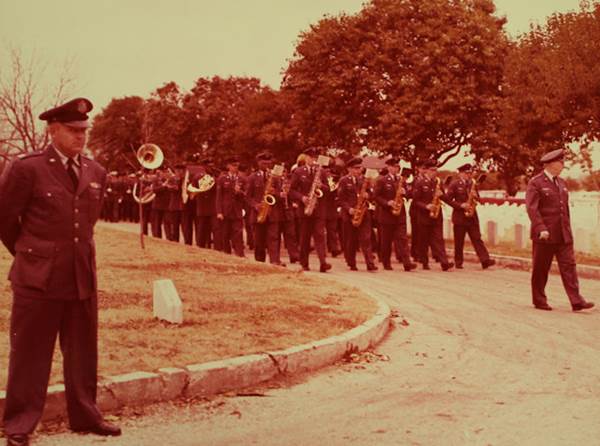
General McMullen was buried with full military honors.
The Honor Guard and band as they enter the National
Cemetery at Fort Sam Houston in San Antonio, Texas.
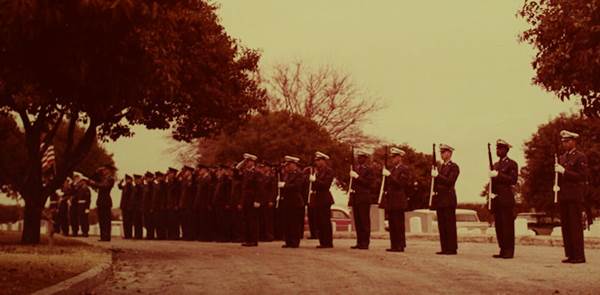
Honor Guard rendering hand-salute, rifles are
preparing
to
render twenty-one gun salute as taps are played
by
the band.
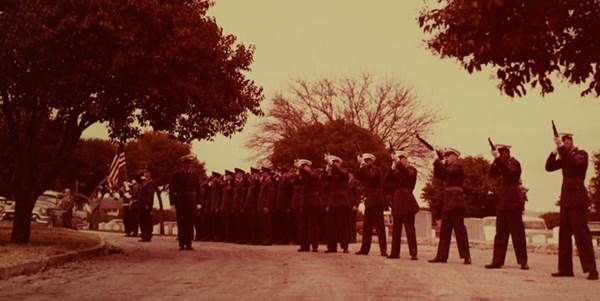
Twenty-one gun salute is rendered in honor of the
life
of Major General Clements McMullen, USAF.
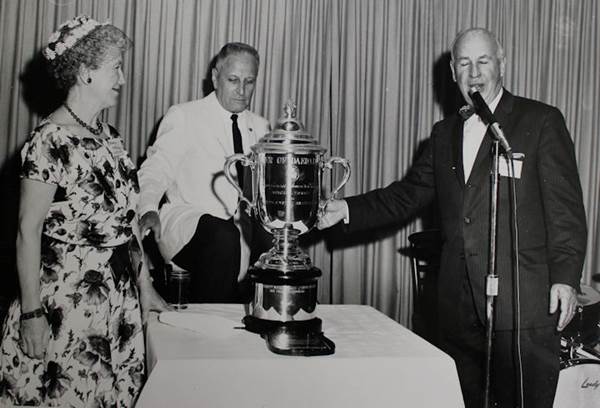
In 1960 at Kelly Air Force Base, the
Major General Clements
McMullen Weapons System
Maintenance Award was
established with the
General’s wife, Nancy and
son William, present at the
Ceremony. The national award was
started by the Order
Of Daedalians and is a
trophy that is presented
Annually. The trophy is given to a
USAF unit
(wing
level) for the best weapon system maintenance
Records for the preceding
year.
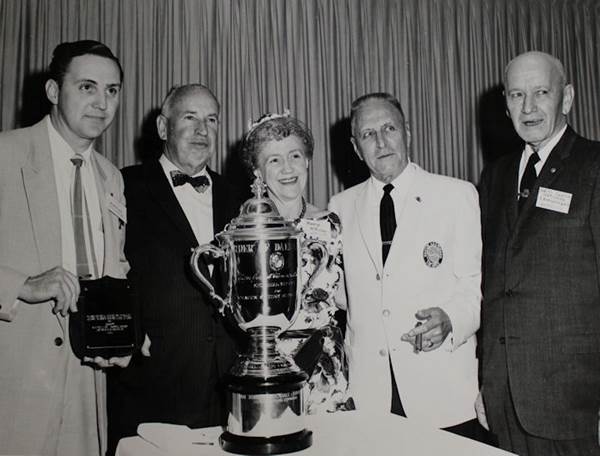
Nancy McMullen and her son William with the
Major General Clements
McMullen Weapons System
Maintenance Award
established by the Order of
Daedalians. The large trophy is displayed at
Headquarters of the winning unit,
group or command.
The large trophy travels to the new winner while the
Award plaque stays with the previous winners.
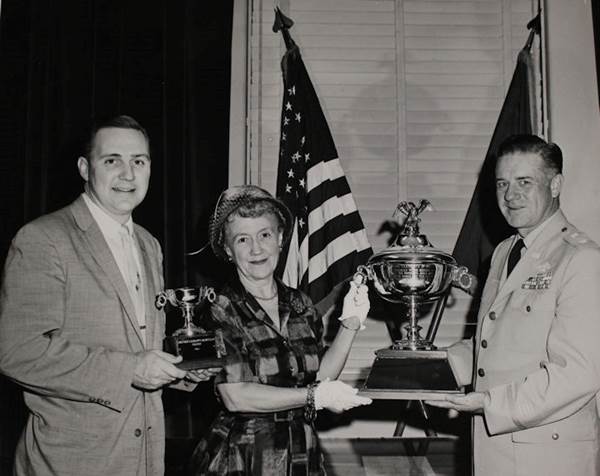
In October 1961, Mrs. Adelaide McMullen,
presents
The “McMullen Trophy” to Major General William
Thomas Hudnell, San Antonio
Air Materiel Commander,
In a ceremony at Kelly Air Force Base in memory
Of her late husband, Major General Clements
McMullen, former commander of SAAMA. William C.
McMullen, her son, holds the smaller trophy presented
To the individual.
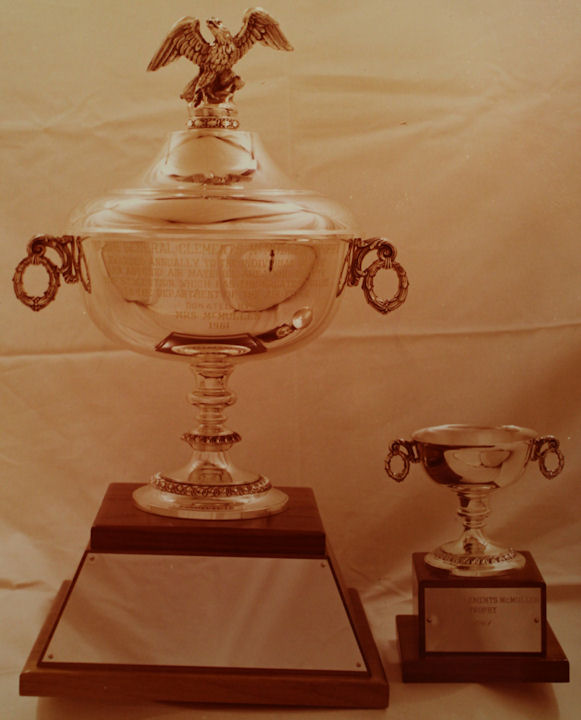
The “McMullen Trophy” is presented each year
To the SAAMA individual who submits the suggestion
Having the greatest value to the United States Air
Force.
The large trophy was displayed in various offices
Throughout the base. The name of the annual award
Winner was inscribed on the front of the permanent
Large trophy. The smaller trophy was presented
To the winner for their own possession.
Photo
Essay by:
Bro.
John Schlund, SM
18
February 2011
Revised
25
May 2011
Revised
2
June 2011
Related Topics
LIEUTENANT COLONEL FRANK MCCOY MCMULLEN, USAF
LIEUTENANT GENERAL THOMAS H. MCMULLEN,
USAF
GENERAL MCMULLEN’S SERVICE DRESS UNIFORM
GENERAL MCMULLEN’S BLUE IKE JACKET UNIFORM
GENERAL MCMULLEN’S SEMI FORMAL EVENING DRESS
GENERAL MCMULLEN’S US ARMY TRANSITIONAL UNIFORM